
How to Stop a Groodle Biting and Mouthing (Step-by-Step)
Struggling with groodle biting and mouthing? Get a realistic, positive-reinforcement plan with quick wins, common mistakes, and clear timelines. Starts today.

Written by Bradley Brown
Founder & editor · Reviewed 2026-07-12
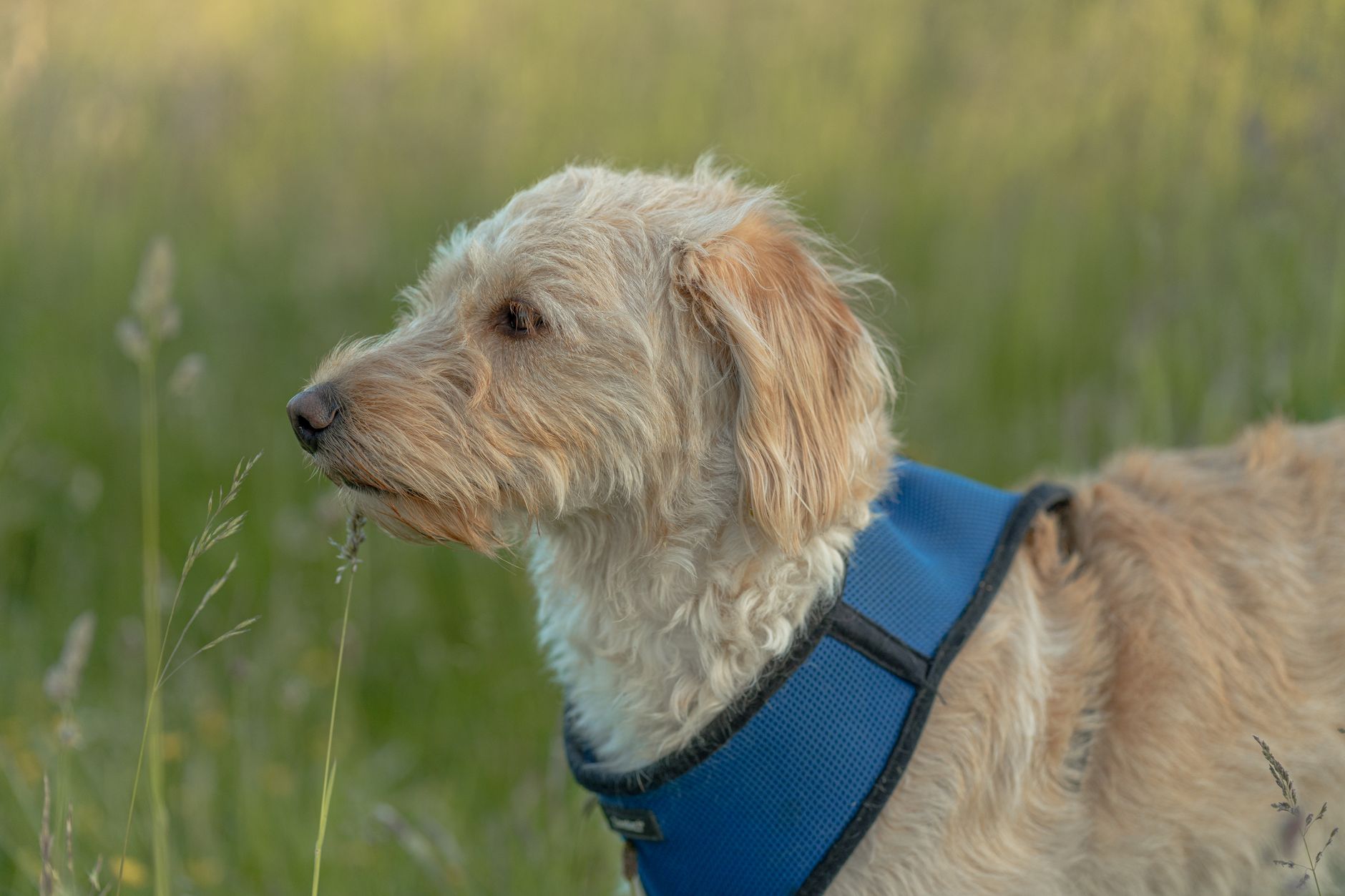
If your Groodle has left tooth marks on your hands, your kids' arms, or your favourite throw cushion, you're not alone — and you haven't ruined your dog. Groodles are playful, mouthy by nature, and absolutely fixable. This plan is built for busy people: sessions run 5–10 minutes, and there's something you can try tonight.
Why Groodles Bite and Mouth (It's Not Aggression)
Groodles — Golden Retriever × Poodle crosses — inherit a double dose of retriever instinct. Golden Retrievers were bred to carry things in their mouths all day. Poodles are sharp, high-energy dogs who get bored fast. Put those two together and you get a puppy (or adolescent) who explores the world with their teeth.
Mouthing is also how dogs communicate excitement, initiate play, and relieve teething discomfort. It feels personal. It isn't. The behaviour is completely normal, and the fact you're looking for a solution means you're already ahead.
Your Quick Win for Tonight
The freeze-and-redirect method — takes 30 seconds per repetition.
- The moment teeth touch skin, go completely still and silent. No yelping, no pushing away, no eye contact.
- Count two seconds. Most dogs release when the "game" stops responding.
- Immediately offer an appropriate chew or toy. Say "yes!" the instant they take it, then keep playing.
- If they re-engage with teeth in the next 30 seconds, calmly stand up and turn your back for 10–15 seconds (a brief social timeout).
That's it. One consistent rule, applied every time, tonight. Consistency across everyone in the house is what makes it work — so brief the family before bed.
Step-by-Step Plan (5–10 Minutes a Day)
Step 1 — Manage the Environment First
Prevention is training. Before you even begin teaching, reduce the situations where biting is likely:
- Exercise before interaction. A 20–30 minute walk or backyard fetch session before play dramatically lowers arousal.
- Don't rough-house with hands. Use a tug rope or flirt pole instead. Hands are never the toy.
- Watch for the "zoomie zone." Most mouthing spikes at the same times each day (often 6–8 pm). Have a chew ready before that window hits.
Step 2 — Teach Bite Inhibition Properly
Bite inhibition is your dog learning to control the pressure of their mouth, not just to stop mouthing entirely. It's a critical life skill — a dog who understands mouth pressure is far safer if they ever feel startled or unwell.
Use the freeze-and-redirect method above, but scale your response to pressure:
| Pressure Level | Your Response |
|---|---|
| Gentle mouthing | Redirect to toy, no drama |
| Moderate pressure (feels uncomfortable) | Freeze 2 sec → redirect |
| Hard bite (leaves a mark) | Freeze → stand up → 10-sec back-turn |
| Repeated hard biting in one session | End the session entirely, calmly |
Work through this scale gradually. You're not punishing — you're teaching that soft mouth = game continues, hard mouth = game ends.
Step 3 — Reward the Behaviour You Actually Want
Catch your Groodle not mouthing during play and make a big deal of it. If they're nudging you with a closed mouth, sitting near you calmly, or holding a toy instead of your wrist — mark it with a "yes!" and a treat or a toss of the toy.
Short, frequent sessions beat long, exhausting ones:
- 3–5 repetitions, 2–3 times a day is plenty for a puppy under 6 months.
- Adolescent Groodles (6–18 months) can handle slightly longer sessions but still fatigue mentally — keep it fun and finish before frustration sets in.
Step 4 — Build an Incompatible Behaviour
The most sustainable fix is giving your dog something else to do with their mouth during exciting moments. Common options:
- "Go get your toy" — teach your Groodle to fetch a specific item when guests arrive or play ramps up. A dog carrying a ball cannot bite your hand.
- "Sit" before pats — any child (or adult) who wants to pat the dog asks for a sit first. It breaks the arousal chain before mouthing starts.
- Frozen Kongs or bully sticks during high-energy family time — occupies the mouth without any effort from you.
Common Mistakes That Slow Progress
- Yelping loudly. This works for some dogs, but excitable Groodles often interpret it as the game escalating. If yelping makes your dog bite harder, stop doing it.
- Pushing the dog away. Pushing = pressure = play in dog language. Go still instead.
- Inconsistency. If one family member lets the dog mouth their arms "just for now," it resets progress significantly. Everyone follows the same rule, every time.
- Punishing after the fact. If you didn't catch it in the moment, it's too late. Dogs don't connect a scolding two minutes later to something they did two minutes ago.
- Waiting for the dog to "grow out of it." Some do settle at 12–18 months, but untrained mouthing often gets harder to shift in adolescence, not easier.
Realistic Timeline
| Where You Are | What to Expect |
|---|---|
| Week 1–2 | Behaviour may temporarily get worse (extinction burst) before improving. Stay consistent. |
| Week 3–4 | Noticeably less frequent mouthing, especially with redirected play |
| 6–8 weeks | Significant reduction; mouthing mostly reserved for appropriate toys |
| 3–4 months | Most Groodles are reliably soft-mouthed with good foundation training |
The extinction burst in week one — where the behaviour spikes before it drops — is the most common reason owners give up. It's actually a sign the method is working. Hang in there.
When to Get Professional Help
Most Groodle mouthing resolves with consistent positive reinforcement. Seek guidance from a qualified, force-free trainer or your vet if:
- Biting is accompanied by stiff body language, growling, or whale eye (showing the whites of the eyes)
- Your dog has broken skin on multiple occasions with no improvement after 6–8 weeks of consistent training
- The behaviour is directed at children and is escalating in intensity
- You feel genuinely unsafe or anxious around your own dog
A certified trainer (look for members of the Delta Society Australia or PPGA — Pet Professional Guild Australia) can assess in person and give you a tailored plan. A single consult (typically $150–$250 AUD) is often all it takes to get back on track.
The Short Version
You haven't done anything wrong. Your Groodle is mouthy because they're a Groodle — curious, enthusiastic, and wired to use their mouth. Every time you redirect calmly and reward the right choice, you're building the dog you want. Five minutes of consistent practice today is worth more than one exhausting hour once a week. Start tonight.
Frequently asked questions
At what age do Groodles stop biting and mouthing?
Most Groodles naturally reduce mouthing as they move through adolescence, typically between 12 and 18 months, as teething finishes and impulse control matures. However, without consistent training the habit can persist well into adulthood. Active training from puppyhood — even 5 minutes a day — significantly speeds up the process.
Should I yelp when my Groodle bites to teach bite inhibition?
Yelping works well for some dogs, but many excitable Groodles interpret a sharp yelp as the game escalating and bite harder in response. If you've tried yelping and it's not reducing biting within a week or two, switch to the freeze-and-redirect method instead — go completely still, then offer a toy.
Why does my Groodle bite more in the evenings?
Evening mouthing spikes are extremely common and are linked to accumulated arousal, tiredness, and what trainers call the 'witching hour' — usually between 6 and 9 pm. A short exercise session before this window, combined with a frozen Kong or chew, can dramatically reduce the behaviour without any formal training in that moment.
Is my Groodle biting out of aggression?
Puppy and adolescent mouthing is almost always playful or exploratory, not aggressive. True aggression involves stiff body posture, growling, a fixed stare, or snapping with no prior play signals. If you're seeing those signs alongside biting, consult a force-free trainer or your vet promptly rather than attempting to manage it alone.
How do I stop my Groodle from mouthing kids?
Supervise all interactions closely and teach children to 'be a tree' — stand still and cross their arms — the moment the dog mouths them, rather than squealing or running (which ramps up excitement). Teach your Groodle a 'go get your toy' cue so they always have something appropriate in their mouth during greetings. If biting around children is escalating, see a professional trainer sooner rather than later.
Can I use a spray bottle or say 'no' firmly to stop mouthing?
Aversive methods like spray bottles or sharp corrections can suppress the behaviour temporarily but don't teach your dog what to do instead, and they risk damaging your dog's trust in you — particularly in sensitive Groodles. Positive reinforcement (redirecting to a toy and rewarding calm, soft-mouthed behaviour) produces more reliable, lasting results and a more confident dog.
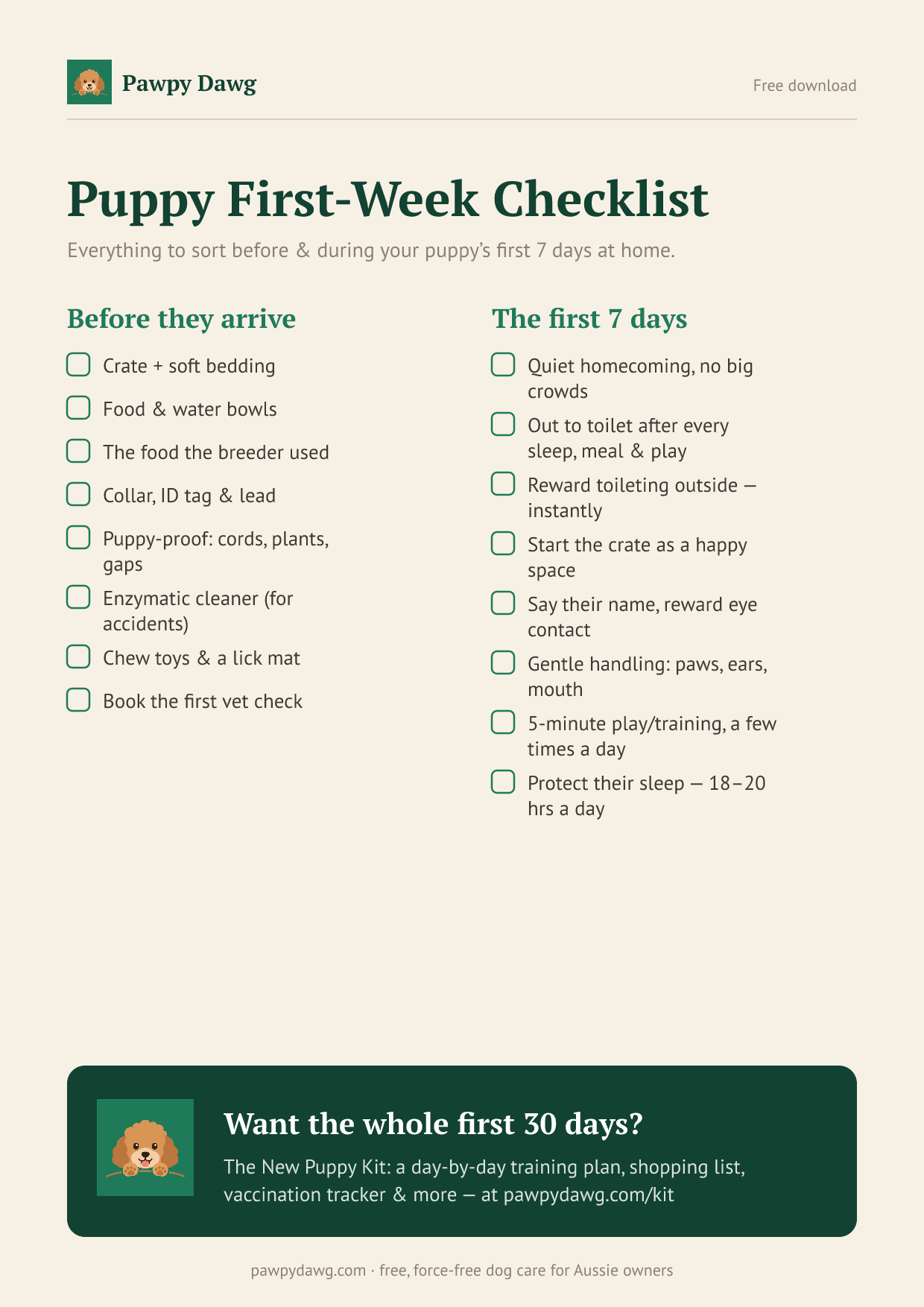
Free printable
Free: the Puppy First-Week Checklist
Everything to sort before and during your puppy's first 7 days home — a printable one-pager. Plus the occasional genuinely useful dog tip. No spam, unsubscribe anytime.
Related guides
How to Stop a Groodle Pulling on the Lead (Step-by-Step)
Groodle pulling on the lead? Get a step-by-step positive-reinforcement plan, realistic timelines, common mistakes, and when to call a pro trainer.
Read the guide →
How to Stop a Groodle Barking at Strangers (Step-by-Step)
Groodle barking at strangers driving you mad? Follow this positive-reinforcement plan with realistic timelines, common mistakes, and when to call a pro.
Read the guide →
Groodle Separation Anxiety: A Step-by-Step Fix
Groodle separation anxiety is stressful — for you and your dog. This step-by-step positive-reinforcement plan gets results in minutes a day.
Read the guide →