
How to Stop a Groodle Chewing Everything (Step-by-Step)
Groodle destructive chewing driving you mad? This step-by-step positive-reinforcement plan stops the damage fast — with 5-min daily sessions that actually work.

Written by Bradley Brown
Founder & editor · Reviewed 2026-07-12
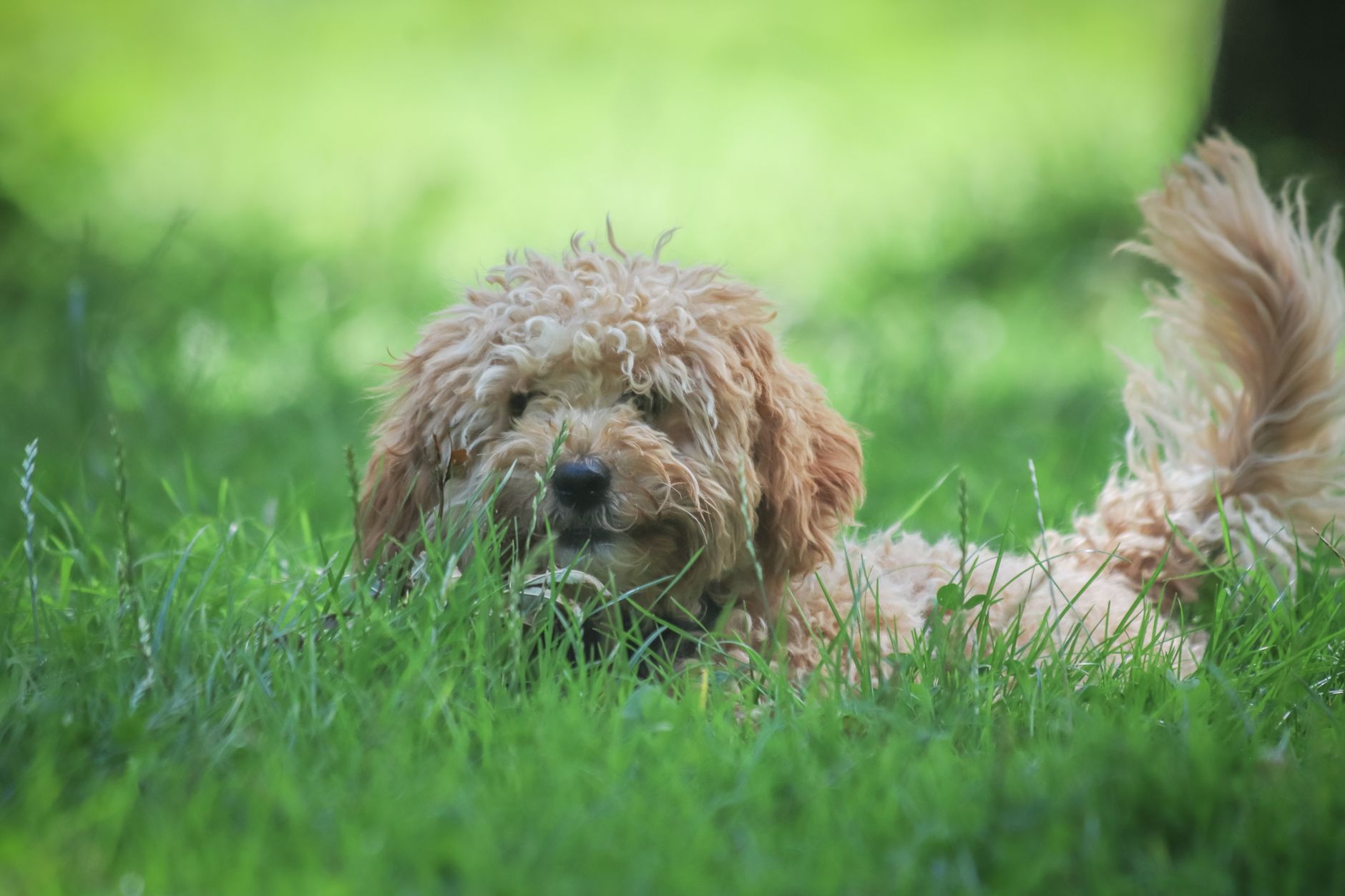
You came home to a shredded cushion (again). Or maybe the walk ended in embarrassment because your Groodle lunged at every stick, shoe, and stranger's bag in sight. Either way — you're not a bad owner, and your dog isn't broken. Groodles are bright, high-energy crosses between Golden Retrievers and Poodles, and that combination practically demands an outlet for their mouths and minds. When that outlet doesn't exist, your furniture becomes the outlet. That's not a character flaw — it's just physics.
Here's what actually helps.
Your Quick Win for Tonight
Before anything else, do this right now: do a two-minute sweep of the room your dog spends the most time in and remove everything chewable from floor level. Shoes, TV remotes, kids' toys, phone chargers. Toss a frozen Kong or a rope toy in their space instead.
That single swap won't solve everything, but it ends tonight's destruction and buys you breathing room to follow the rest of this plan. Management first, training second — always.
Why Groodles Chew So Much
Understanding the why makes the fix far easier:
- Puppies (under 12–18 months): Teething from around 3–6 months causes genuine oral discomfort. Chewing relieves it. After the adult teeth come in, adolescent Groodles chew out of boredom, excitement, and habit.
- Under-stimulated adults: Groodles need 45–60 minutes of daily exercise plus mental stimulation. Skip either and chewing fills the gap.
- Anxiety: Separation anxiety is common in velcro breeds like Groodles. Chewing releases calming endorphins — it's self-medication, not spite.
- Learned behaviour: If chewing has ever got your attention (even negative attention), the behaviour has been accidentally reinforced.
None of these causes are your fault. All of them are fixable.
Step-by-Step Plan to Stop Destructive Chewing
Step 1 — Manage the Environment (Week 1)
You can't train a dog out of chewing if they keep practising the wrong thing. Management removes the opportunity while training takes effect.
- Baby gate or pen: Restrict access to rooms with expensive or dangerous items until the habit is under control.
- Bitter apple spray: Apply to furniture legs, cables, and skirting boards. Most dogs hate the taste. Reapply every 2–3 days. (Available at Petbarn, Petstock, and most vet clinics — typically $15–$25 AUD.)
- Crate training: A crate is not punishment. A properly introduced crate gives anxious Groodles a safe den and prevents unsupervised chewing. Introduce it gradually with high-value treats inside — never force your dog in.
- Tether training: When you're home but distracted, a short house lead (1.5–2 m) clipped to your belt keeps your Groodle within arm's reach and lets you redirect instantly.
Rule of thumb: If you can't supervise, confine. No exceptions during the training period.
Step 2 — Build a Rotation of Approved Chews (Week 1–2)
Dogs don't generalise well. "Don't chew" means nothing without "chew this instead." Keep 3–5 different approved chews on rotation so novelty stays high:
| Chew Type | Best For | Notes |
|---|---|---|
| Frozen Kong stuffed with wet food/peanut butter | High-value redirect, anxiety relief | Freeze overnight for longer-lasting challenge |
| Bully sticks | Teething puppies, strong chewers | Supervise — discard when small enough to swallow whole |
| Rubber puzzle toys (KONG, West Paw) | Mental stimulation, solo play | Dishwasher safe options available |
| Raw meaty bones (species-appropriate) | Dental health, deep-chew satisfaction | Ask your vet first; never cooked bones |
| Rope toys | Moderate chewers, interactive play | Replace when fraying — fibres can cause blockages |
Rotate every 2–3 days. A chew that's always available quickly loses value.
Step 3 — Teach "Leave It" and "Drop It" (Week 1–3, 5 mins/day)
These two cues are your emergency brakes. Five minutes a day is genuinely enough — keep sessions short and stop while your dog is still engaged.
Teaching "Leave It":
- Hold a low-value treat in your closed fist.
- Let your dog sniff, lick, and paw at your hand. Say nothing.
- The moment they pull back even slightly, mark with "yes!" and reward with a different, higher-value treat from your other hand.
- Add the cue "leave it" once they're backing off reliably.
- Progress to treats on the floor, then household objects.
Teaching "Drop It":
- Let your dog pick up a toy.
- Offer a high-value treat near their nose. The moment they open their mouth, say "drop it" and reward.
- Give the toy straight back — dropping should never mean losing the item permanently, or they'll start resource-guarding.
Step 4 — Increase Mental and Physical Output (Ongoing)
A tired Groodle is a less destructive Groodle. If physical exercise alone isn't cutting it, add mental work:
- Sniff walks: Let your dog stop and sniff freely for 10–15 minutes. Sniffing is genuinely exhausting for dogs — research from dog behaviour scientists confirms it activates the parasympathetic nervous system more effectively than trotting.
- Scatter feeding: Throw their dry kibble across the backyard or in the grass. Ten minutes of foraging tires them more than a five-minute game of fetch.
- Training micro-sessions: Three 3-minute sessions of sit/stay/drop it throughout the day counts as mental exercise.
Step 5 — Manage Your Own Reaction (Week 1 onwards)
This one's hard but critical. When you catch your Groodle chewing something they shouldn't:
- Don't yell or chase — it becomes a game, or worse, creates anxiety that fuels more chewing.
- Calmly interrupt with a noise (clap once), then immediately redirect to an approved chew.
- Reward the switch — the moment they engage with the right item, mark it with "good!" and give quiet praise.
Punishment after the fact (coming home to a mess and scolding) achieves nothing. Dogs live in the moment; they cannot connect a past action to your current frustration.
Realistic Timeline
| Week | What to Expect |
|---|---|
| 1 | Less destruction (management is working), dog learning "leave it" basics |
| 2–3 | Fewer incidents; dog choosing approved chews more often |
| 4–6 | Reliable "leave it/drop it"; chewing shifting to appropriate items |
| 3–6 months | Habit fully replaced, management restrictions can gradually ease |
Progress isn't linear. A stressful event (house guests, a loud storm) can trigger regression. That's normal — just return to tighter management briefly.
Common Mistakes That Slow Progress
- Giving old shoes or socks as toys. Your dog cannot tell the difference between an "okay" shoe and a new one.
- Inconsistency between family members. One person allowing the couch while another doesn't creates confusion, not learning.
- Giving attention when chewing occurs — even negative attention ("No! Stop!") is rewarding to a bored dog.
- Expecting instant results and giving up at week two. Habit replacement takes weeks, not days.
When to Get Professional Help
See your vet or a qualified positive-reinforcement trainer (look for PPGA or APDT Australia members) if:
- Chewing is accompanied by pacing, excessive vocalisation, or toileting when left alone — this points to separation anxiety requiring a specific protocol.
- Your dog is chewing themselves (paws, tail, flank) — this is a medical and/or anxiety issue, not a training one.
- There's no improvement after 6 weeks of consistent management and training.
- You're feeling overwhelmed. A single session with a good trainer ($100–$180 AUD on average) can save months of frustration.
You haven't ruined your dog. You're reading a step-by-step plan at whatever hour it is — that already puts you ahead.
As an Amazon Associate we earn from qualifying purchases.
Frequently asked questions
At what age do Groodles stop chewing everything?
Most Groodles settle significantly between 18 months and 2 years of age, once adolescence ends and they've learned what's appropriate to chew. Consistent training and management during this window makes a big difference. Without guidance, some dogs continue destructive chewing well into adulthood simply because the habit was never replaced.
Is destructive chewing a sign my Groodle has separation anxiety?
It can be, but not always. Chewing from boredom or under-stimulation looks similar to anxiety-driven chewing. Key signs of separation anxiety include chewing that only happens when you're gone, combined with other stress behaviours like barking, howling, pacing, or toileting indoors. If you suspect anxiety, film your dog for the first 30 minutes after you leave — a vet or behaviourist can review the footage and advise.
What are the best chew toys for Groodles?
Groodles tend to be strong, enthusiastic chewers, so durability matters. Frozen Kongs stuffed with wet food or xylitol-free peanut butter are a top choice for mental engagement. West Paw Zogoflex toys, rubber Nylabones, and bully sticks are also popular. Rotate 3–5 options to keep novelty high — a chew that's always available quickly loses its appeal.
Can I use bitter spray to stop my Groodle chewing furniture?
Bitter apple or bitter cherry sprays work well for many dogs and are a useful short-term management tool. Apply to furniture legs, skirting boards, and cables, and reapply every 2–3 days. Note that some Groodles barely notice the taste, so always pair it with redirecting your dog to an approved chew rather than relying on the spray alone.
How much exercise does a Groodle need to reduce destructive chewing?
Most adult Groodles need 45–60 minutes of physical exercise daily, but mental stimulation is equally important and often overlooked. Sniff walks, scatter feeding, and short training sessions can tire a Groodle more effectively than pure physical exercise. If your dog is still chewing after adequate exercise, focus on increasing mental enrichment rather than just adding more kilometres.
Should I scold my Groodle for chewing things they shouldn't?
Scolding after the fact is ineffective — dogs can't connect past behaviour to a delayed reaction, so they don't understand what they're being told off for. If you catch them in the act, a single calm interruption (one clap) followed by a redirect to an approved chew is far more effective. Calm, consistent redirection teaches the right behaviour; punishment mostly teaches the dog to chew when you're not watching.
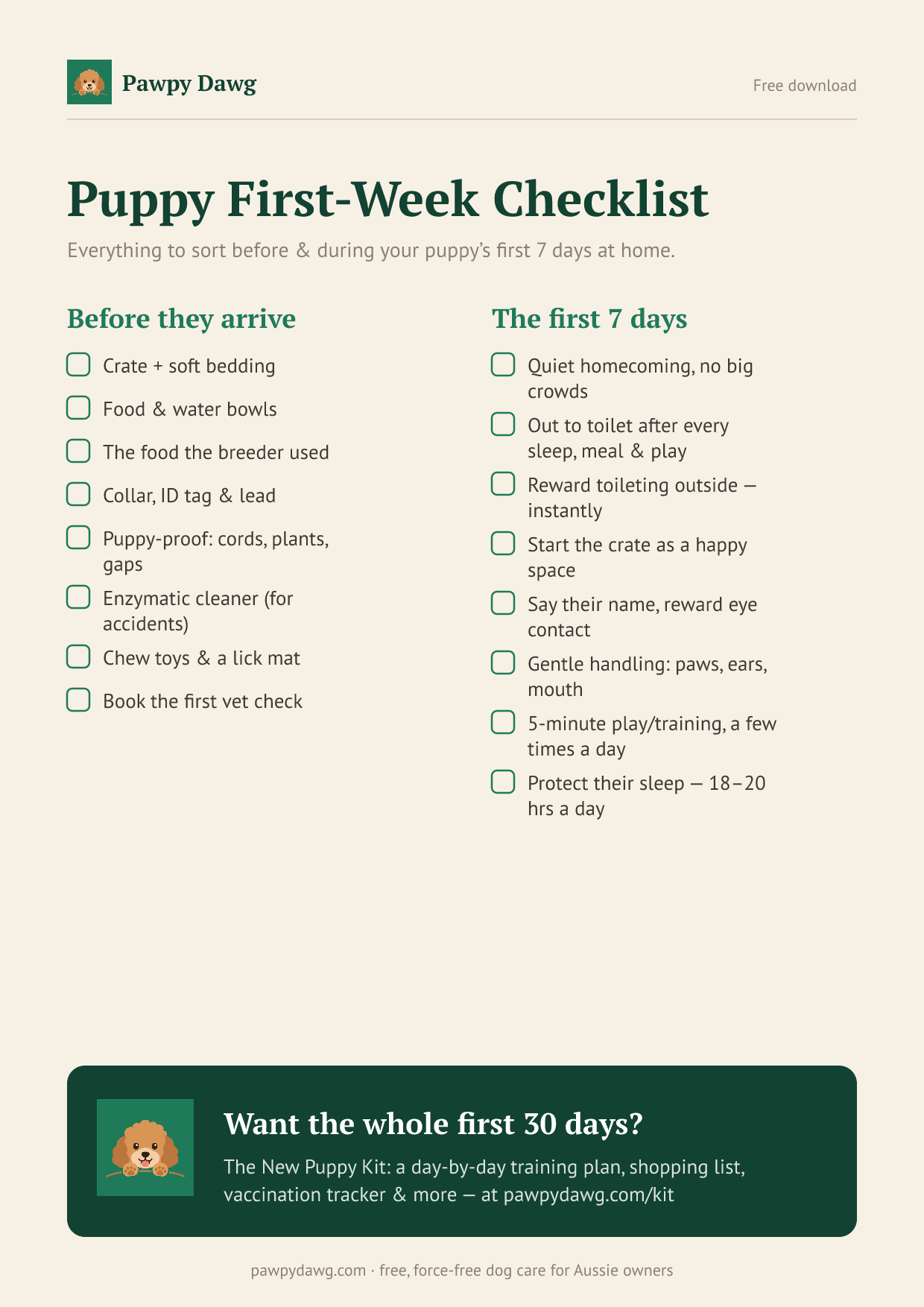
Free printable
Free: the Puppy First-Week Checklist
Everything to sort before and during your puppy's first 7 days home — a printable one-pager. Plus the occasional genuinely useful dog tip. No spam, unsubscribe anytime.
Related guides
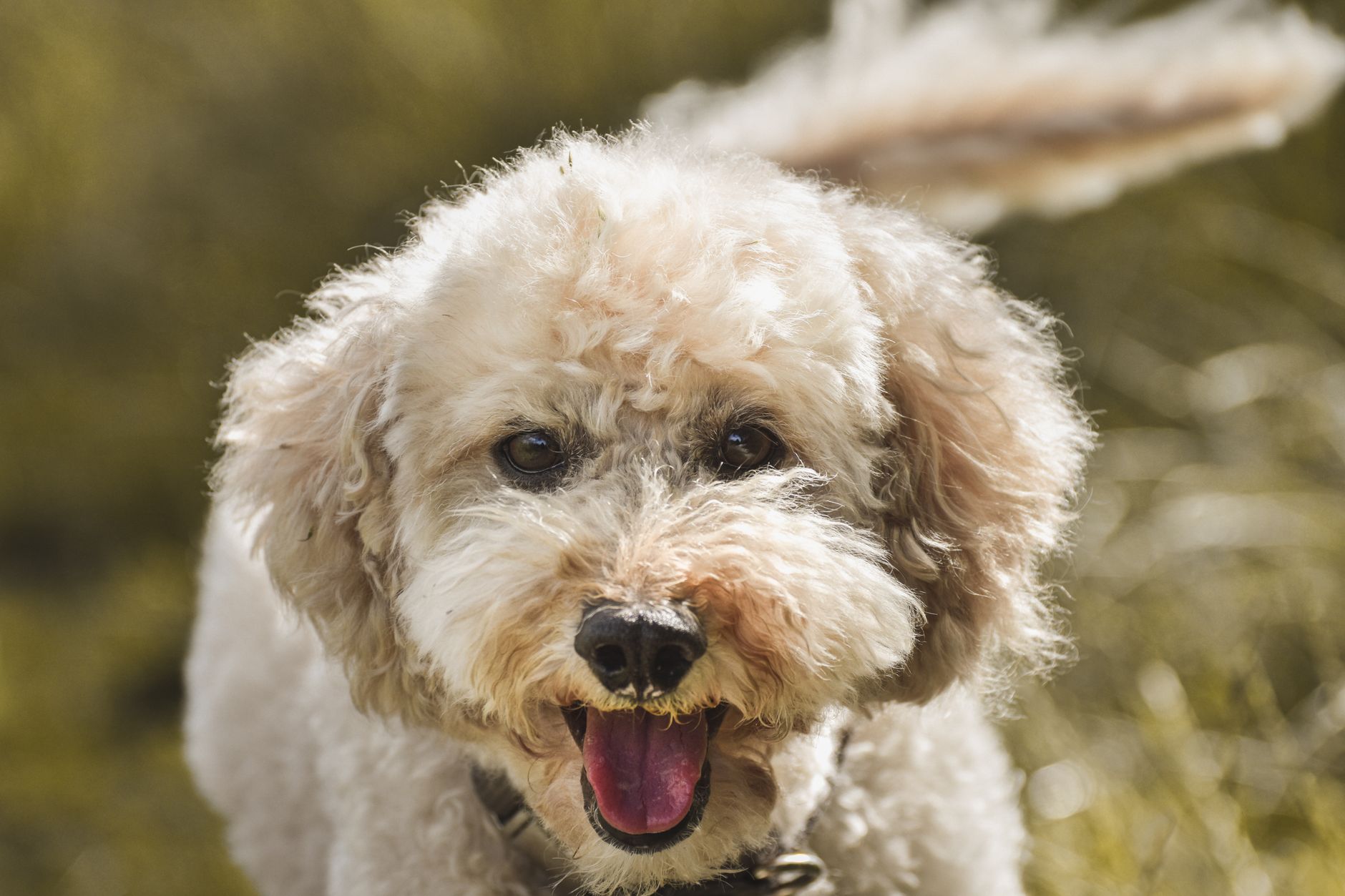
How to Stop a Groodle Pulling on the Lead (Step-by-Step)
Groodle pulling on the lead? Get a step-by-step positive-reinforcement plan, realistic timelines, common mistakes, and when to call a pro trainer.
Read the guide →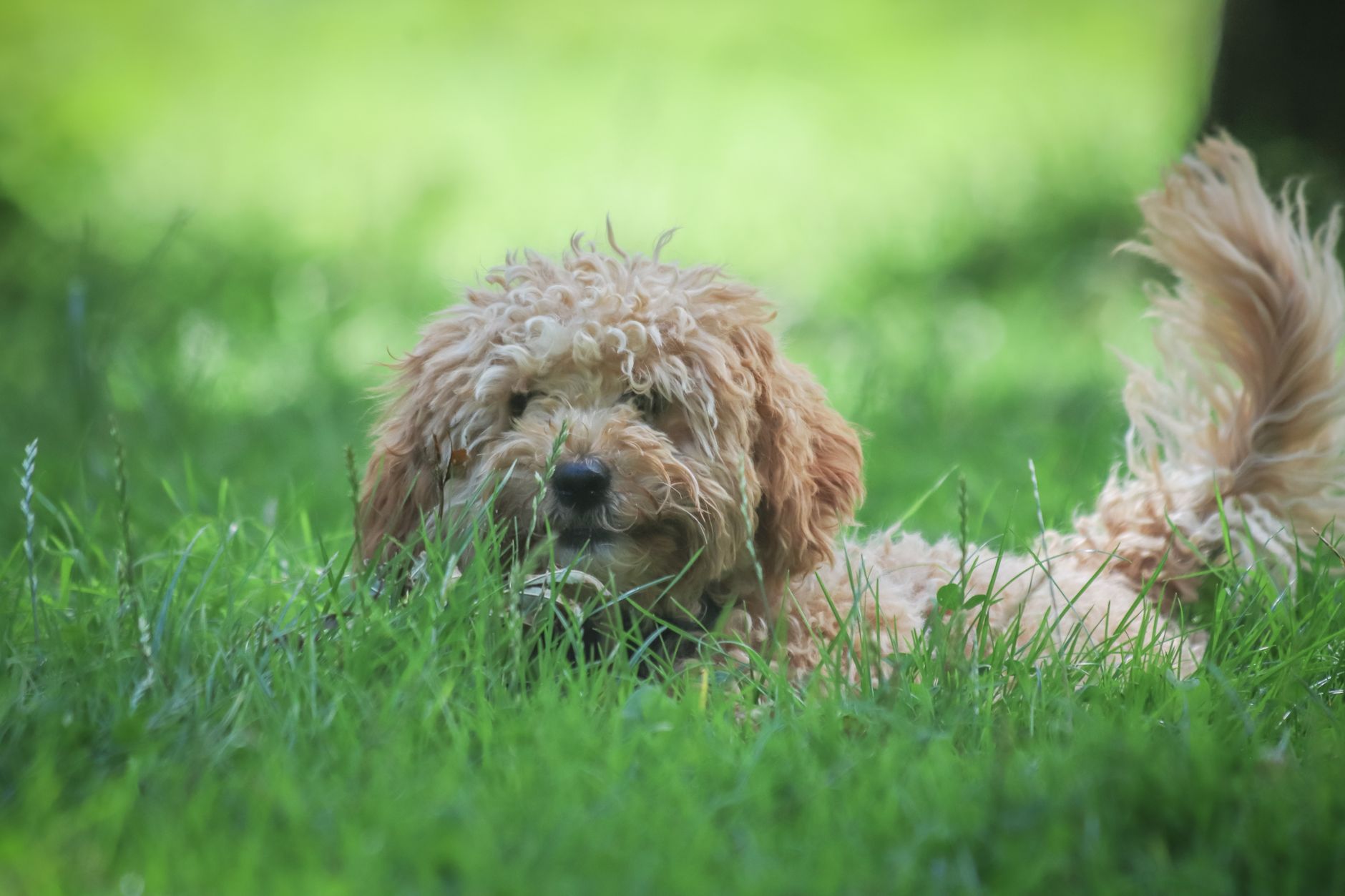
How to Stop a Groodle Barking at Strangers (Step-by-Step)
Groodle barking at strangers driving you mad? Follow this positive-reinforcement plan with realistic timelines, common mistakes, and when to call a pro.
Read the guide →
Groodle Separation Anxiety: A Step-by-Step Fix
Groodle separation anxiety is stressful — for you and your dog. This step-by-step positive-reinforcement plan gets results in minutes a day.
Read the guide →