
How to Stop a Groodle Jumping Up on People (Step-by-Step)
Tired of your Groodle knocking people over? Here's a step-by-step positive-reinforcement plan to stop groodle jumping up on people — fast, realistic, and guilt-free.

Written by Bradley Brown
Founder & editor · Reviewed 2026-07-12
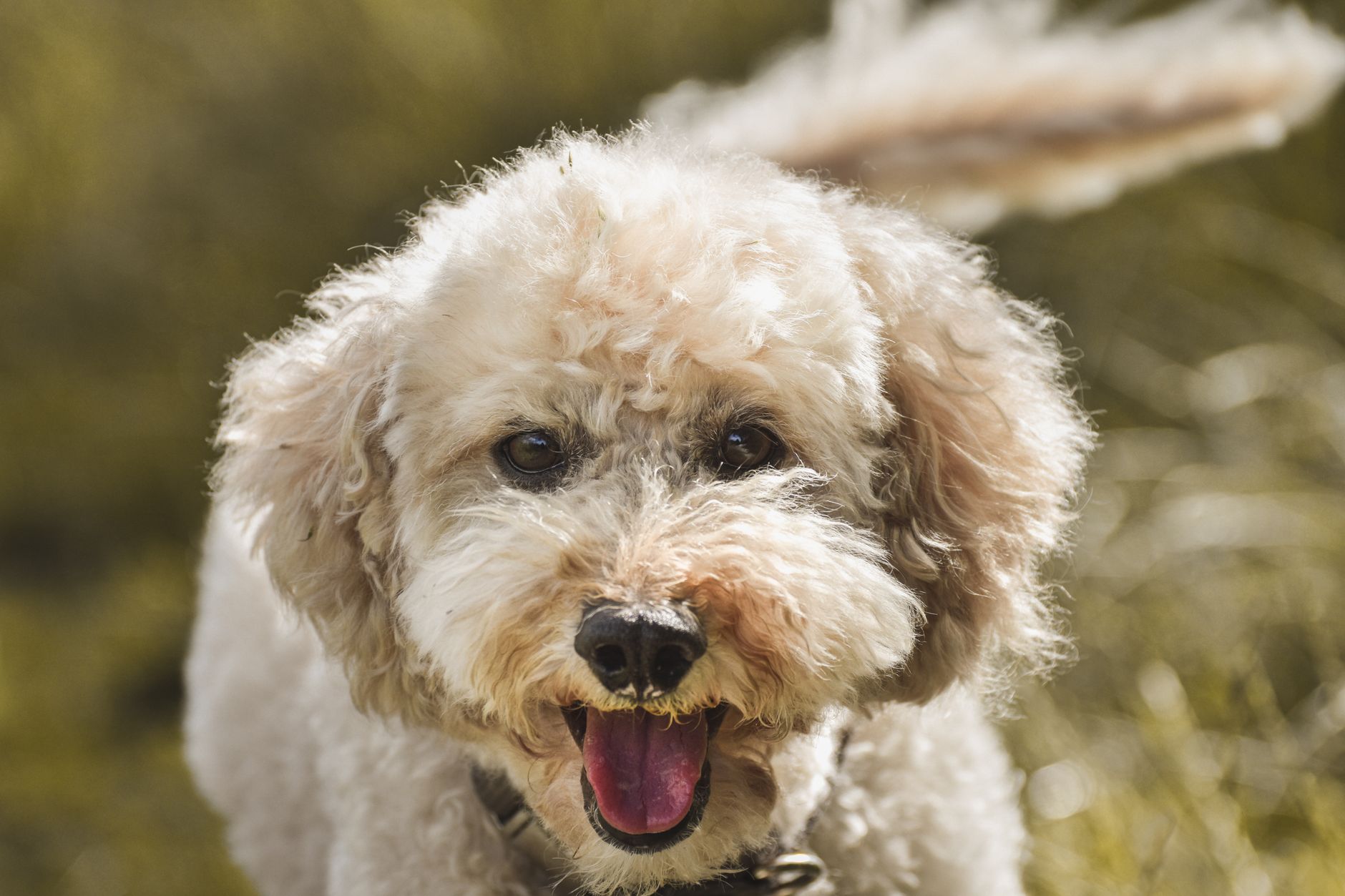
You've just come in from another walk where your Groodle launched itself at a stranger, and you're either mortified, exhausted, or both. You're not alone, and you haven't ruined your dog. Jumping up is one of the most common complaints from Groodle owners — it's a breed that combines boundless Poodle enthusiasm with Golden Retriever sociability. The result is a dog who genuinely loves people too much, and expresses it at chest height.
The good news: this is completely fixable. You don't need hours of daily training. Five focused minutes, done consistently, will get you there.
Why Groodles Jump Up (It's Not Dominance)
Jumping up is a greeting behaviour. Puppies lick their mother's face to stimulate feeding — adult dogs carry that impulse forward and aim for your face. Every time someone laughed, squealed, patted, or even pushed your Groodle away in the past, the dog learned: jumping gets a reaction, and reactions are exciting. You didn't cause this. You just had a very social dog doing what social dogs do.
Your Quick Win for Today: The "Four Paws" Rule
Before you read another word, here's something you can try at your next greeting:
- The moment your Groodle begins to jump, turn your back completely — no eye contact, no "off," no pushing.
- Cross your arms. Say nothing.
- The instant all four paws hit the floor, turn back and calmly praise ("yes") and offer a treat or calm pat.
- If they jump again, repeat the turn-away immediately.
That's it. You're teaching that jumping makes you disappear, and four paws on the ground makes you appear. Most dogs start to figure this out within a handful of repetitions — though it takes weeks of consistency to stick.
The Step-by-Step Training Plan
Step 1: Get Everyone on the Same Page (Day 1)
The single biggest reason this training fails is inconsistency. If one family member lets the dog jump "just this once," you're back to square one. Jumping that's rewarded intermittently is actually harder to extinguish than jumping that's always rewarded — it's the same psychology as a poker machine.
- Hold a two-minute family meeting. Agree on the rule: no one interacts with the dog while four paws aren't on the floor.
- Put a sign on your door if guests visit: "Please ignore Biscuit until he sits — we're training!"
- Brief your regular dog-walking contacts or neighbours.
Step 2: Teach an Incompatible Behaviour (Days 1–7)
A dog can't sit and jump at the same time. Teach your Groodle that sitting is the golden ticket to greetings.
- Load the sit cue in a calm environment first — ask for a sit, reward with a small, high-value treat (chicken, cheese). Do 10 repetitions. Done.
- Practice at the door. Before you open it, ask for a sit. If they hold it while the door opens, jackpot reward. If they break, close the door, wait, ask again.
- Build duration gradually. Start with a one-second sit, then two, then five. Don't rush to full greetings until the sit is rock-solid at home.
Step 3: Add Real-World Greetings (Week 2 Onwards)
Now you start generalising — training in the actual situations that trigger jumping.
- On walks: When someone asks to pat your Groodle, ask your dog to sit first. If they can't hold the sit as the stranger approaches, you've gone too fast — practise with someone stationary before adding movement.
- Arm volunteers. Ask a friend or family member to run mock greetings five to eight times in a session. Repetition is where the learning lives.
- Keep sessions to 5–10 minutes. Groodles have a fantastic work ethic but they also switch off if overworked. Short and positive beats long and tedious every time.
Step 4: Manage the Environment While You Train
Training takes time. In the meantime, prevent rehearsal of the jumping behaviour — every successful jump reinforces the habit.
| Situation | Management Strategy |
|---|---|
| Guests arriving at front door | Tether dog to a fixed point or put behind a baby gate until calm |
| Off-lead in the backyard | Practice the turn-away before rewarding any greeting |
| Kids running up to the dog | Ask kids to stop, crouch down, and wait for four paws first |
| Walks past strangers | Keep a shorter lead; reward attention on you as strangers pass |
| Dog park greetings | Work the perimeter until sit-for-greetings is reliable |
Common Mistakes That Slow Progress
- Saying "off" or "down" repeatedly. If the command isn't trained yet, it's just noise — and noise can still be stimulating attention to a Groodle.
- Pushing the dog away with your hands or knees. For an attention-hungry dog, this is contact — and contact can be a reward.
- Only training at home. Behaviour learned in the lounge room doesn't automatically transfer to the footpath. You have to train where the problem happens.
- Quitting after three days. Behaviour that's been reinforced for months won't disappear in 72 hours. Expect two to six weeks of consistent work for a meaningful shift.
- Rewarding the sit too enthusiastically. A loud "YES GOOD DOG!" with vigorous patting can trigger jumping all over again. Keep rewards calm: a quiet "yes," a treat, a gentle stroke.
Realistic Timeline
- Days 1–3: Your Groodle is confused. Jumping may briefly increase as they try harder at the old strategy. This is normal — it's called an extinction burst. Hold the line.
- Week 1–2: You'll see four paws on the floor happening more often, especially with familiar people at home.
- Week 3–6: Greetings with known people should be mostly calm. Strangers on walks will still need active management.
- Beyond 6 weeks: Occasional jumping under high excitement (dog park, kids sprinting over) is normal and will continue to improve with practice.
When to Call in a Pro
Most Groodles respond well to the steps above. Consider booking a session with a qualified, positive-reinforcement trainer (look for a member of the Pet Professional Guild Australia or a Delta Society-certified trainer) if:
- Your dog's jumping is accompanied by mouthing, nipping, or scratching that breaks skin.
- The jumping is so intense or frantic that your dog can't settle even after several minutes.
- You have young children or elderly family members who are at risk of being knocked over and you need faster, safer results.
- You've been consistent for six weeks and seen no improvement at all.
A good trainer won't judge you. They'll watch what's actually happening and give you feedback that's tailored to your specific dog — something no article can fully replicate.
The Short Version
Turn your back on jumping. Reward four paws on the floor. Ask for a sit at greetings. Keep everyone consistent. Do five minutes a day. Give it six weeks. Your Groodle isn't broken — they're just a very enthusiastic dog who needs a clearer set of rules about how to say hello.
Frequently asked questions
How long does it take to stop a Groodle from jumping up on people?
Most owners see a noticeable improvement within two to six weeks of consistent training. The key word is consistent — if everyone in the household applies the same rules every single time, progress comes faster. Don't expect overnight results, but don't be discouraged either; jumping is one of the more straightforward behaviours to change with positive reinforcement.
Why does my Groodle jump up on everyone it meets?
Groodles are a highly social, people-oriented breed — a combination of Golden Retriever friendliness and Poodle exuberance. Jumping is a natural canine greeting behaviour that's been accidentally rewarded by attention, laughter, or even being pushed away (which still counts as contact). It's not aggression or dominance; it's an over-enthusiastic hello.
Should I use the word 'off' or 'no' when my Groodle jumps?
Only use a verbal cue like 'off' if you've already trained what it means — otherwise it's just background noise that can actually provide stimulating attention. For most owners starting out, a silent turn-away is more effective because it removes all reward (eye contact, voice, touch) in one move. Once 'off' is properly trained, it can be a useful shortcut.
Is it okay to knee my dog in the chest to stop jumping?
This technique is not recommended. Beyond the risk of injuring your dog, for many enthusiastic dogs any physical contact — even an uncomfortable one — can still register as attention and reinforce the jumping. Positive-reinforcement approaches like the turn-away and rewarding four paws on the floor are safer and more effective in the long run.
My Groodle puppy jumps up — should I start training now or wait until they're older?
Start now. Puppies learn incredibly fast, and every greeting where jumping is rewarded builds the habit deeper. The turn-away method and sit-for-greetings work perfectly well with puppies — just keep sessions very short (two to three minutes) and use tiny, soft treats. The earlier you start, the less work you'll have to undo later.
What if guests ignore my training rules and let my Groodle jump on them?
This is one of the most common frustrations in jumping training. Manage the situation rather than relying on guests' cooperation: use a baby gate, a tether near the door, or put your dog in another room until greetings are calm. You can't control everyone, but you can control your dog's access to the situation. Once the sit-for-greetings behaviour is very strong, the occasional lapse from a guest has much less impact.
Free printable
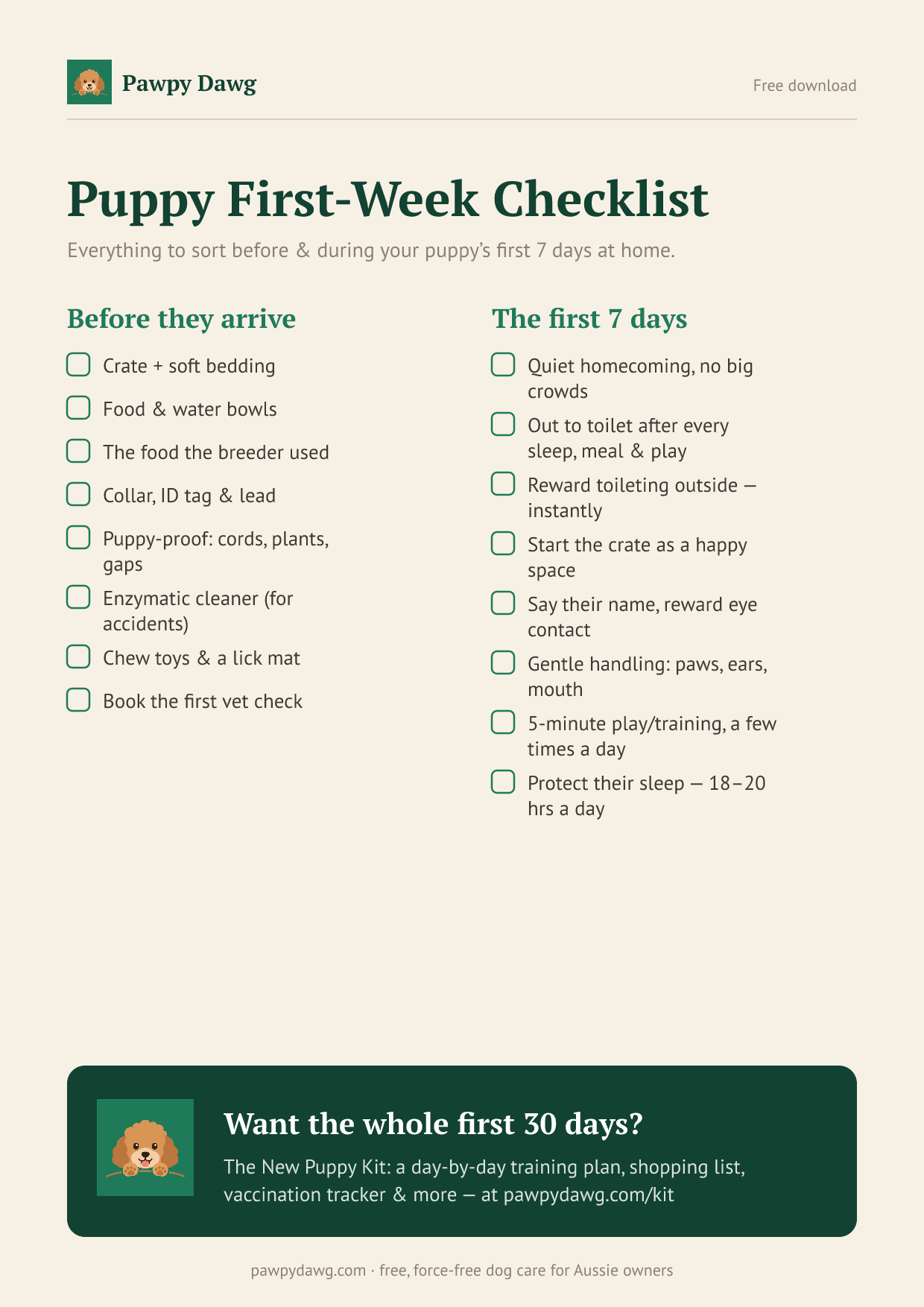
Free: the Puppy First-Week Checklist
Everything to sort before and during your puppy's first 7 days home — a printable one-pager. Plus the occasional genuinely useful dog tip. No spam, unsubscribe anytime.
Related guides
How to Stop a Groodle Pulling on the Lead (Step-by-Step)
Groodle pulling on the lead? Get a step-by-step positive-reinforcement plan, realistic timelines, common mistakes, and when to call a pro trainer.
Read the guide →
How to Stop a Groodle Barking at Strangers (Step-by-Step)
Groodle barking at strangers driving you mad? Follow this positive-reinforcement plan with realistic timelines, common mistakes, and when to call a pro.
Read the guide →
Groodle Separation Anxiety: A Step-by-Step Fix
Groodle separation anxiety is stressful — for you and your dog. This step-by-step positive-reinforcement plan gets results in minutes a day.
Read the guide →