
Groodle Not Coming When Called? A Step-by-Step Recall Fix
Groodle not coming when called? Get a realistic, positive-reinforcement recall fix—with a quick win you can try today. No guilt, no harsh methods.

Written by Bradley Brown
Founder & editor · Reviewed 2026-07-12
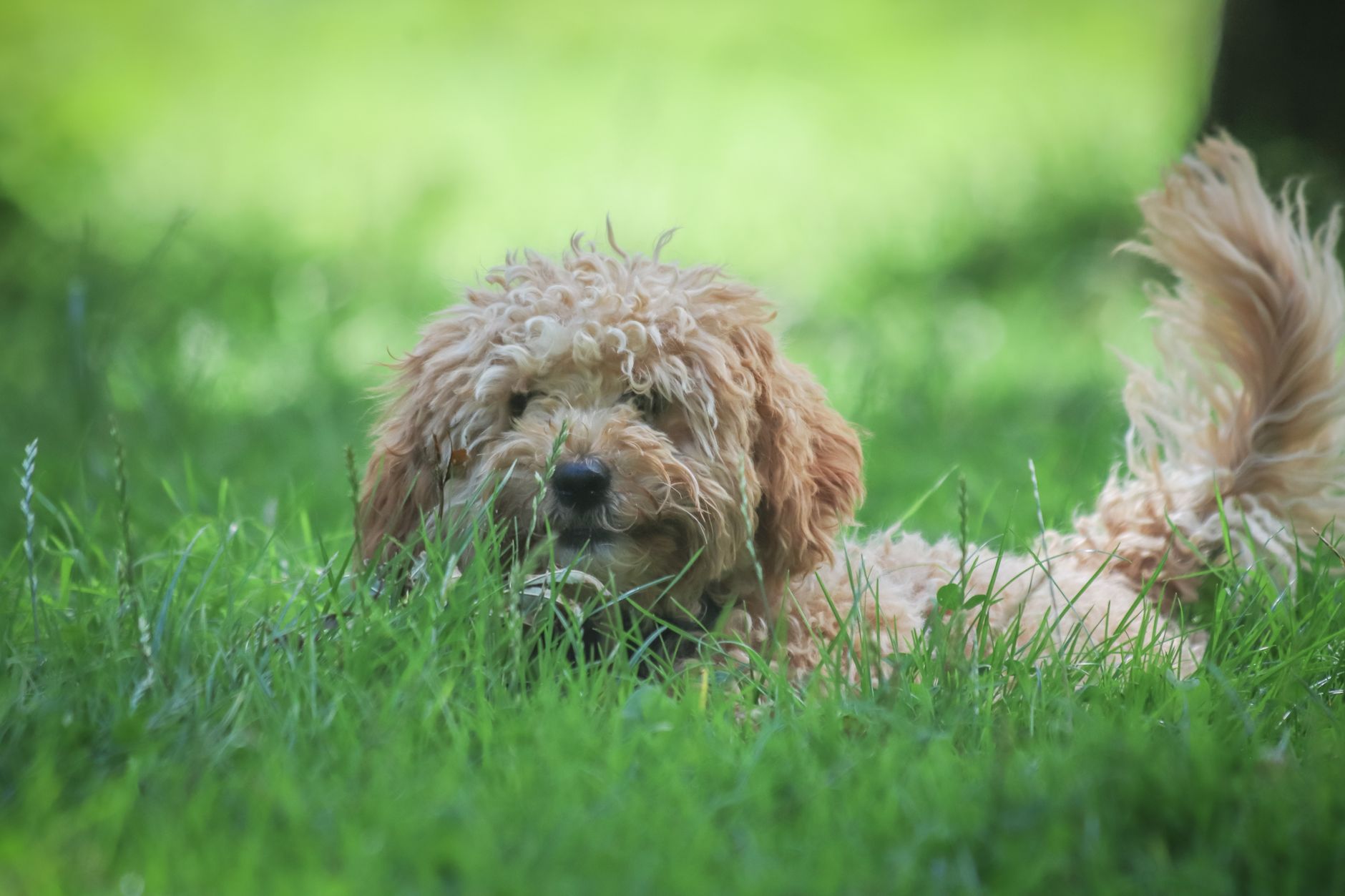
You called. Your Groodle looked right at you — and bolted the other way. Maybe it happened at the dog park, in front of other owners, or just in your own backyard. Either way, that sinking feeling is real, and you're not alone. Groodles are bright, social, nose-led dogs, and a shaky recall is one of the most common complaints their owners have. It doesn't mean you've ruined your dog. It means recall just hasn't been made more rewarding than whatever else is going on — yet.
Here's the good news: recall is a trainable skill, not a personality trait. You can start making progress tonight.
Your Quick Win: The "Surprise Party" Game (Try This Today)
Before you read anything else, try this once in your backyard or lounge room — it takes two minutes.
- Wait until your Groodle isn't paying attention to you.
- Crouch down, open your arms, and say your recall word once in a bright, happy voice (use "come," "here," or whatever you normally use — just pick one and stick to it).
- The moment they move toward you, keep talking excitedly — "yes, yes, yes, good dog!" — to keep them coming.
- When they arrive, deliver a high-value treat (think small pieces of cooked chicken, cheese, or Fritz) right at your knees, and make a fuss of them.
That's it. You've just made "come" predict the best thing that's happened to your dog all day. Repeat 5–10 times across the day in different spots. Short, sharp, always positive. This is the foundation everything else builds on.
Why Groodles Specifically Struggle with Recall
Groodles (Golden Retriever × Poodle) inherit some wonderful traits — and a few that make recall harder than average:
- High social drive: They'd rather greet that stranger/dog/pigeon than return to you.
- Poodle smarts: They quickly learn that "come" sometimes means fun is over (lead goes on, park trip ends). They're not being naughty — they're being logical.
- Golden Retriever independence on a scent: Once the nose is engaged, the ears switch off.
None of this is your fault. It's breed tendency, and it responds well to the right training.
The Core Recall Training Plan (5–10 Minutes a Day)
Consistency over a few weeks beats one epic training session. Here's a progression that works in real life.
Week 1–2: Build the Reflex Indoors
- Practice in your house and backyard only — low distraction, high success rate.
- Call your dog 5–10 times per day in short bursts, always rewarding with something genuinely good.
- Never call them to do something they don't like (bath, nail trim, leaving the park). Go and get them instead.
- End every recall session before your dog loses interest. Stop at success.
Week 3–4: Add a Long Line Outdoors
A 5–10 metre long line (a light rope attached to a harness — not a collar) is your safety net and your training tool.
- Head to a quiet park or oval at an off-peak time.
- Let your dog explore on the long line, then call them when you see their attention drift your way naturally. This stacks success.
- If they don't come, don't repeat the cue. Simply reel the line in gently, reward when they reach you, and keep going.
- Practise multiple recalls per outing — not just at the end when the lead goes on.
Week 5+: Proof Against Distractions
- Gradually increase distraction level (busier parks, dogs in the distance).
- Use your highest-value treats in harder environments — save the chicken for when it counts.
- Introduce the long line drop: let the line trail on the ground (you can step on it if needed) before moving to off-lead recall in a securely fenced area.
The Mistakes That Keep Recall Broken
| Common Mistake | Why It Backfires | What to Do Instead |
|---|---|---|
| Repeating the cue ("Come! Come! COME!") | Teaches them to ignore the first call | Say it once, then go help them |
| Punishing slow returns | Makes coming to you feel risky | Always reward arrival, no matter how long it took |
| Only calling at the end of a walk | "Come" = fun is over | Recall 5–10 times mid-walk, reward, release back to play |
| Using food then stopping | Reward schedule drops too fast | Fade treats slowly and unpredictably, not all at once |
| Practising only at home | Dog can't generalise the skill | Train in multiple locations every week |
Realistic Timelines
Most Groodles show meaningful improvement in 2–4 weeks of consistent daily practice. A reliable off-lead recall in real-world environments — busy parks, distractions everywhere — typically takes 2–3 months. That's not a flaw in the method; that's just how dogs learn.
If your dog is an adolescent (roughly 6–18 months), expect some regression. Teenage dogs are not broken — their brains are genuinely undergoing change, and impulse control temporarily drops. Stay consistent, drop back to the long line, and push through.
Choosing the Right Reward
Not all treats are equal in a dog's mind. Match the reward to the difficulty of the environment:
- Easy environment (backyard): Kibble, commercial training treats
- Moderate (quiet park): Cheese, Fritz, dried liver
- Hard (busy park, other dogs nearby): Cooked chicken breast, roast meat, squeeze tube with peanut butter or Vegemite
You can also use life rewards — a throw of the ball, permission to go sniff, a quick game of tug — once the behaviour is solid. But in the early weeks, food wins.
When to Get Professional Help
Recall training is DIY-friendly, but there are situations where a professional trainer is genuinely worth the investment (sessions typically run $80–$150 AUD):
- Your dog has bolted into traffic or gone completely out of sight
- They show high prey drive and chase bikes, joggers, or wildlife obsessively
- Anxiety or reactivity is contributing — a fearful dog has different recall challenges
- You've trained consistently for 6+ weeks with no improvement
Look for a trainer who uses positive reinforcement methods and holds qualifications through the Delta Society Australia, NDTF, or equivalent. Avoid anyone who recommends punishment or e-collars as a first resort.
A Note on Off-Lead Laws
In most Australian states and territories, dogs must be on lead in public unless you're in a designated off-lead area. Until your Groodle's recall is bombproof, keep the long line on in public spaces. It protects your dog, protects others, and protects you from a fine. Check your local council's website for off-lead zone locations near you.
Recall isn't about dominance or obedience — it's about making yourself the most interesting thing in your dog's world, consistently enough that coming back becomes a habit. You're not starting from zero. You're starting from today.
As an Amazon Associate we earn from qualifying purchases.
Frequently asked questions
Why does my Groodle ignore me when I call them but listen inside the house?
Your Groodle isn't being defiant — they simply haven't learned to generalise the recall cue to high-distraction environments yet. Dogs learn in context, so a skill practised only indoors doesn't automatically transfer outdoors. You need to rebuild the behaviour gradually in new locations, starting at low distraction levels and working up.
Is it too late to train recall if my Groodle is already 2 or 3 years old?
Not at all. Adult dogs can absolutely learn reliable recall — and in some ways it's easier than with adolescents, because their impulse control is better developed. The same positive-reinforcement process applies regardless of age. Consistent daily practice of 5–10 minutes will produce results in most adult Groodles within a few weeks.
Should I use a whistle instead of a verbal cue for recall?
A whistle can be a great recall tool because it produces a consistent sound regardless of your mood or volume — unlike your voice, which can sound frustrated or urgent. It works especially well at distance. If you choose to use one, condition it the same way you'd condition a verbal cue: pair it with high-value rewards until the sound reliably predicts good things.
My Groodle comes most of the time — do I still need to train recall?
A recall that works 'most of the time' is not yet reliable enough to trust in situations where it really matters, like near traffic or off lead in an unfenced area. 'Most of the time' means the cue is competing with the environment and sometimes losing. Continuing to proof the behaviour in more distracting locations will get you to the level of reliability that keeps your dog safe.
Will using treats for recall mean my dog only comes when I have food?
Only if you stop rewarding too quickly and too predictably. The key is to fade treats gradually and use a variable schedule — reward sometimes with food, sometimes with play, sometimes with praise — so your dog never quite knows what's coming but always expects something good. This 'slot machine' effect actually strengthens behaviour over time.
Can I use recall training to fix other off-lead behaviour problems in my Groodle?
A strong recall is the foundation of safe off-lead freedom, but it won't automatically fix other issues like jumping on strangers or chasing animals. Those behaviours need their own training plans. That said, a dog who reliably returns to you gives you far more control and opens up more training opportunities, so it's always a great place to start.
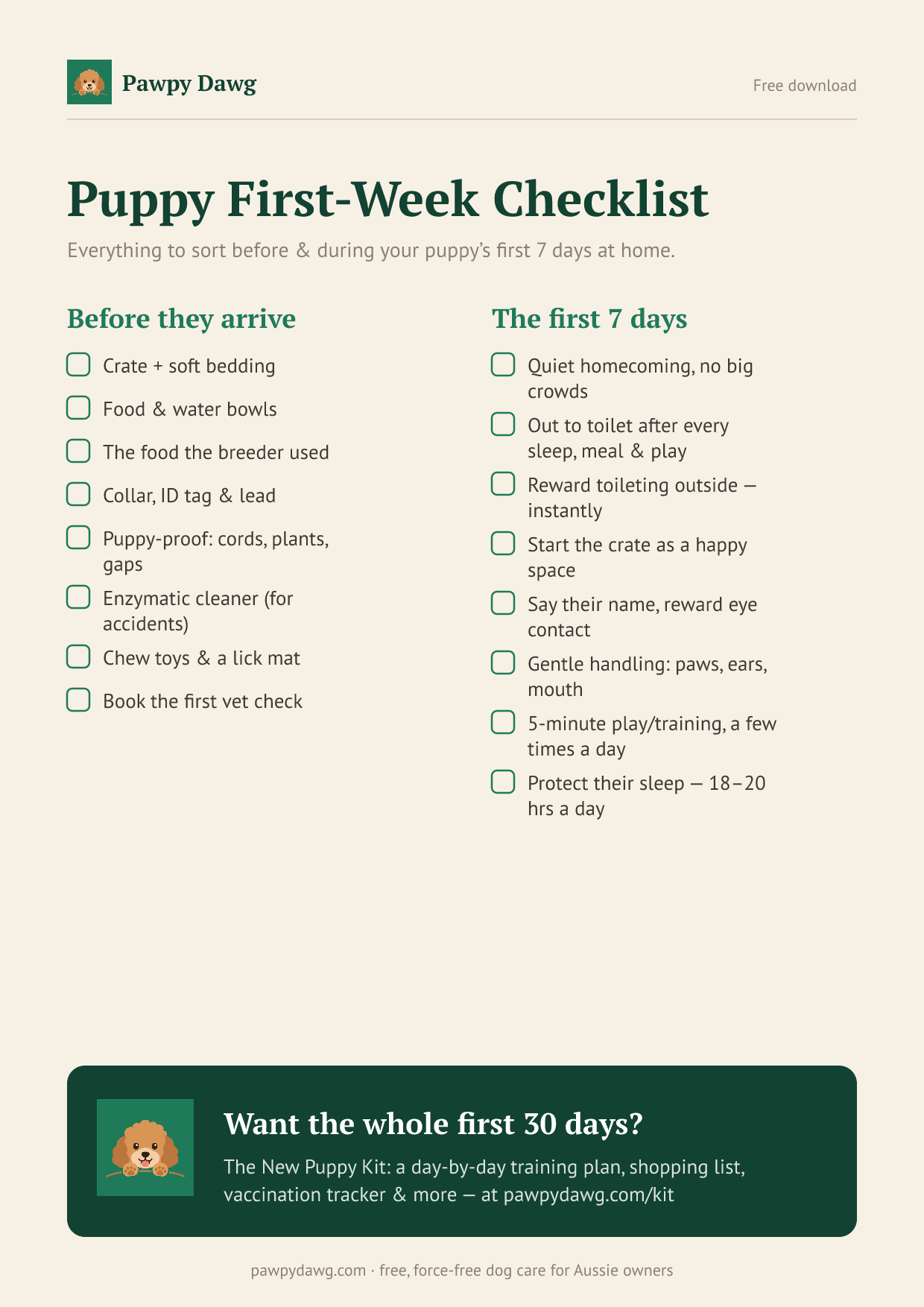
Free printable
Free: the Puppy First-Week Checklist
Everything to sort before and during your puppy's first 7 days home — a printable one-pager. Plus the occasional genuinely useful dog tip. No spam, unsubscribe anytime.
Related guides
How to Stop a Groodle Pulling on the Lead (Step-by-Step)
Groodle pulling on the lead? Get a step-by-step positive-reinforcement plan, realistic timelines, common mistakes, and when to call a pro trainer.
Read the guide →
How to Stop a Groodle Barking at Strangers (Step-by-Step)
Groodle barking at strangers driving you mad? Follow this positive-reinforcement plan with realistic timelines, common mistakes, and when to call a pro.
Read the guide →
Groodle Separation Anxiety: A Step-by-Step Fix
Groodle separation anxiety is stressful — for you and your dog. This step-by-step positive-reinforcement plan gets results in minutes a day.
Read the guide →