
Cane Toads and Dogs: What to Do in the First 10 Minutes
Cane toad dog Australia: what to do in the first 10 minutes, which symptoms mean emergency vet now, and how to toad-proof your yard tonight.

Written by Bradley Brown
Founder & editor · Reviewed 2026-11-06

A quick note: this guide is general information, not veterinary advice. For anything urgent or specific to your dog, your vet is always the right call.
The advice you'll see shared most often in Facebook groups and backyard chat is this: make your dog vomit. It sounds logical — something toxic went in, get it out. But it's wrong, and it can cost your dog their life. Cane toad toxin is absorbed through the mucous membranes of the mouth, not swallowed in a meaningful quantity. Inducing vomiting wastes precious minutes, stresses the dog, and does nothing to address the poison already absorbing through the gums. The first ten minutes are what matter, and they need to be spent on the right thing.
"Rinse the mouth with water from the hose"
This one is partly right — rinsing is the correct instinct — but the execution is usually wrong, and wrong execution makes things worse.
Blasting water from a hose into your dog's mouth can wash the toxin further back toward the throat, increasing absorption and risking aspiration. Pouring water from a bottle over the tongue has the same problem if you're not careful about angle.
What actually works: Use a damp cloth — a flannel, a tea towel, even a folded piece of kitchen paper — and physically wipe the gums, the roof of the mouth, and the tongue. Work from the back of the mouth toward the front, rinsing the cloth under running water and re-wiping. Do this for a full five minutes. It feels like a long time when you're panicking, so set a timer.
If you want to use water, hold your dog's head angled downward and to the side so water drains out of the mouth, not down the throat. A gentle stream from a garden tap (not a hose on full pressure) while wiping simultaneously is fine.
The goal is mechanical removal of the milky white bufadienolide toxin from the mucosal surfaces — not flushing the throat.
"It was only a quick lick — she'll be fine in an hour"
Cane toad toxicity isn't dose-dependent in a simple, forgiving way. A small dog can be critically affected by brief contact; larger dogs sometimes shake off the same exposure. What matters more than contact time is the size of the dog, the size of the toad (bigger toads produce more toxin), and how quickly you act.
Symptoms typically appear within minutes and can escalate fast:
| Symptom | What it looks like | Urgency |
|---|---|---|
| Hypersalivation | Thick, foamy drool | Act now — start wiping |
| Pawing at mouth | Frantic face-rubbing | Act now — start wiping |
| Red/brick-coloured gums | Check against normal pink | Head to vet |
| Disorientation or stumbling | Drunk-looking gait | Head to vet |
| Seizures or muscle rigidity | Trembling, collapse, stiffness | Emergency vet immediately |
| Vomiting | Often accompanies other signs | Head to vet |
| Irregular heartbeat | Rapid, weak, or irregular pulse | Emergency vet immediately |
If your dog is showing only drooling and pawing at the mouth, the wipe-first-aid protocol buys you time and may be sufficient for a mild exposure in a larger dog. But monitor continuously for 30 minutes afterward.
If you see red gums, seizures, collapse, or anything from the lower half of that table: stop reading, call your vet, drive. There is no home remedy for moderate-to-severe cane toad poisoning. The vet will likely administer diazepam for seizure control, atropine for cardiac effects, and supportive care. Treatment is effective when it's timely.
"Toads are only a problem in Far North Queensland"
Cane toads (Rhinella marina) have established populations through most of Queensland, the Northern Territory, and are well into northern New South Wales — including the coastal areas around Tweed Heads, Byron Bay, and the Lismore basin. They've been moving south for decades and the range keeps expanding.
For owners in these regions, toad encounters aren't a freak event — they're a seasonal routine. Toads are most active from dusk to dawn, especially on warm, humid nights after rain. That's also when most dogs are let outside for a final toilet break.
The "it won't happen to me" assumption is one of the most dangerous. Cane toad dog Australia emergency presentations spike every summer across a much wider corridor than most owners expect.
"Toads are hard to keep out of a yard"
A fully toad-proof yard takes effort, but a substantially safer yard takes one afternoon. Here's what genuinely makes a difference:
Physical barriers
- Use fine-mesh fencing (shade cloth or similar) along the bottom 30–40 cm of your fence line. Toads can't jump high — they squeeze through gaps at ground level.
- Block any gaps under gates with a rubber strip or timber batten.
Remove what attracts them
- Pet food bowls left outside overnight draw insects, which draw toads. Bring them in at dusk.
- Fix dripping taps and check for pooled water — toads need moisture and will congregate around any standing water source.
- Garden lights attract insects at night. Motion-sensor lights used briefly are better than leaving them on all evening.
Night-routine habit
- Do a quick torch sweep of the yard before letting your dog out after dark. It takes 60 seconds.
- Supervise outdoor time between dusk and dawn during toad season (roughly October–April in most affected areas).
Know your enemy Cane toads are dull brown, warty, and squat with a distinctive triangular head and large parotoid glands (the lumpy ridges behind the eyes — this is where the toxin comes from). They move in slow hops rather than fast leaps. Native frogs tend to be smoother-skinned, more colourful, and faster. If you're unsure, don't let your dog near it.
Your 10-minute action plan
If your dog has just mouthed a toad, run through this in order:
- Stay calm — your dog reads your panic.
- Wipe the gums, tongue, and roof of the mouth with a wet cloth for 5 minutes, rinsing the cloth frequently. Work front-to-back, draining out of the mouth.
- Check the gum colour — press a fingertip to the gum, release, and see if colour returns within 2 seconds (normal). Pale, white, blue, or brick-red gums = vet now.
- Watch for escalating symptoms for at least 30 minutes.
- Call your vet or emergency animal hospital if anything beyond drooling and pawing appears.
Save your nearest 24-hour emergency vet number in your phone before toad season starts. That five-second moment of searching for the number in a crisis is five seconds you don't have.
Frequently asked questions
How long does it take for cane toad poisoning to affect a dog?
Symptoms usually appear within minutes of contact — heavy drooling and pawing at the mouth are often the first signs. Severe effects like seizures or collapse can follow within 15–30 minutes in smaller dogs or after significant exposure, which is why acting immediately matters.
Can a dog survive a cane toad encounter without going to the vet?
Mild exposures in larger dogs sometimes resolve with thorough mouth-wiping and close monitoring, but there's no reliable way to judge severity at home. If your dog shows anything beyond brief drooling — especially red gums, stumbling, tremors, or vomiting — veterinary treatment is essential and can be life-saving.
What does cane toad toxin actually do to a dog?
Cane toad toxin (bufadienolide) is absorbed through the mucous membranes and acts on the heart and nervous system. It can cause dangerous cardiac arrhythmias, seizures, and respiratory distress. This is why the toxin is considered potentially fatal, particularly in small dogs.
Are cane toads dangerous to dogs in Sydney or Melbourne?
Cane toads are not currently established in Sydney or Melbourne. They are present throughout Queensland, the Northern Territory, and parts of northern New South Wales. If you live in or are travelling through these areas, the risk is real and owners should be prepared.
How do I tell a cane toad apart from a native frog?
Cane toads are large, stocky, and dull brown or grey-brown with dry, warty skin and prominent ridges (parotoid glands) behind the eyes. Native frogs tend to be smaller, smoother-skinned, often more colourful, and much quicker. When in doubt, keep your dog away and don't handle it barehanded.
Is it safe to pick up a cane toad to remove it from my yard?
Cane toad toxin can irritate human skin and eyes, so always wear gloves when handling them. Never squeeze or stress the toad, as this can cause it to release more toxin. Place it in a sealed container and check your local council's guidelines on humane disposal, as regulations vary by state.
Free printable
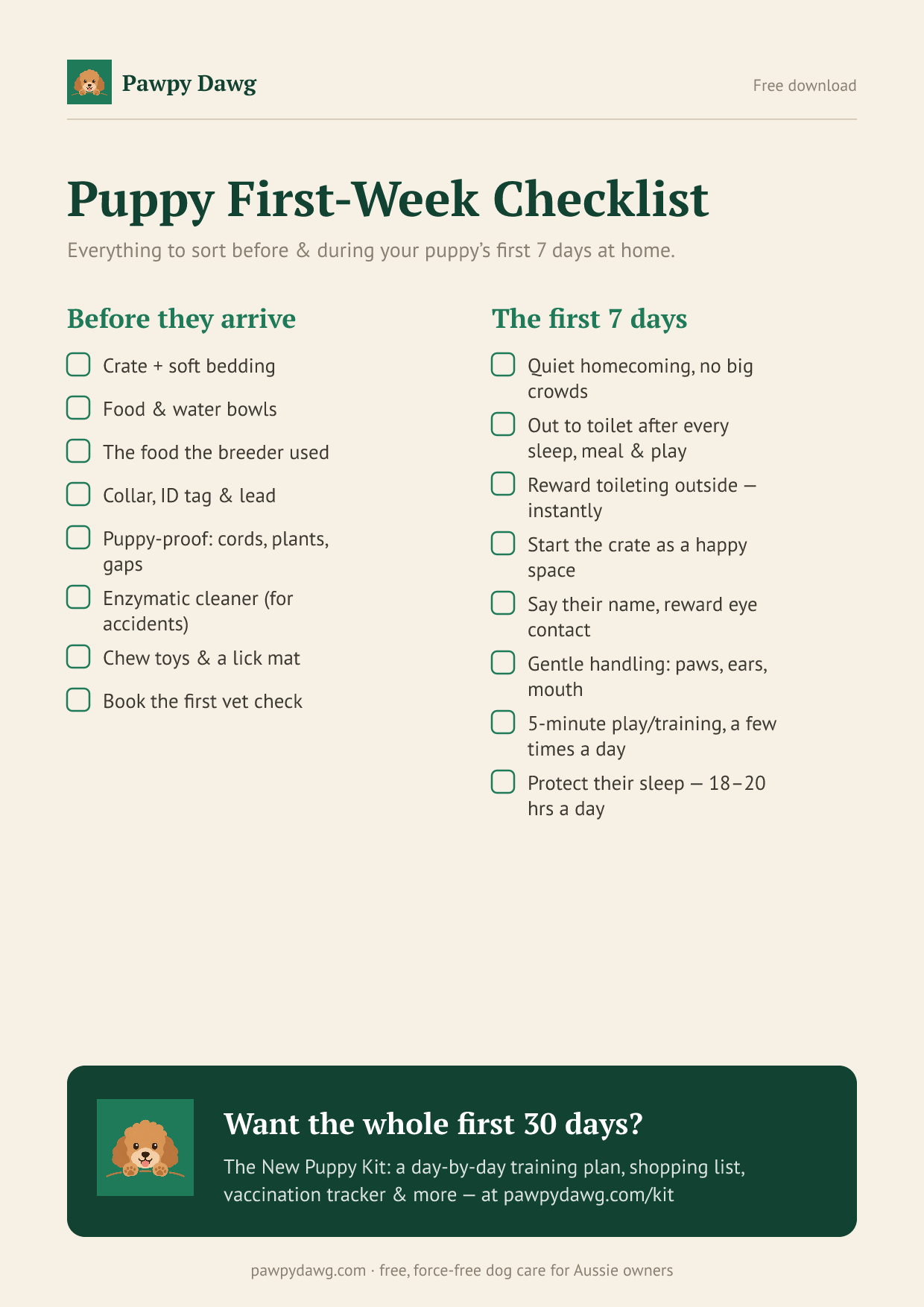
Free: the Puppy First-Week Checklist
Everything to sort before and during your puppy's first 7 days home — a printable one-pager. Plus the occasional genuinely useful dog tip. No spam, unsubscribe anytime.
Related guides

Is Pet Insurance Worth It in Australia? The Honest Maths
Is pet insurance worth it in Australia? We crunch real premiums vs real vet bills — cruciate surgery, snake bite & more — so you can decide with confidence.
Read the guide →
How Much a Dog Really Costs Per Year in Australia (2026 Breakdown)
How much does a dog cost per year in Australia? 2026 line-item breakdown covering food, vet, insurance, grooming & the costs first-timers always miss.
Read the guide →
Dog Vaccination Schedule in Australia: What, When and What It Costs
Confused by C3, C5 and kennel cough? Here's your complete dog vaccination schedule Australia cost guide — puppy timelines, adult boosters & typical AUD prices.
Read the guide →