
Hip Dysplasia in Dogs: Signs, Treatment Options and Costs in Australia
Hip dysplasia dog Australia: spot the early signs, understand your treatment options, what surgery costs, and how pet insurance handles it.

Written by Bradley Brown
Founder & editor · Reviewed 2026-11-12
A quick note: this guide is general information, not veterinary advice. For anything urgent or specific to your dog, your vet is always the right call.
Hip dysplasia is one of those diagnoses that lands hard. One minute your dog is "just a bit stiff in the mornings," and the next you're in a specialist's office hearing words like femoral head ostectomy and bilateral surgery. If you're somewhere in between those two moments, this is for you.
The dogs most likely to end up in your vet's X-ray room
Large and giant breeds carry the most risk — Labrador Retrievers, Golden Retrievers, German Shepherds, Rottweilers, Bernese Mountain Dogs, and Great Danes are consistently overrepresented in Australian veterinary caseloads. But medium breeds aren't off the hook: Bulldogs, Pugs, and Spaniels show higher rates than their size would suggest, largely due to decades of selective breeding compressing their skeletal structure.
Hip dysplasia is a developmental condition, not simply an old-dog problem. The joint forms incorrectly as the puppy grows — the ball and socket don't fit snugly, the cartilage wears unevenly, and secondary osteoarthritis follows. Genetics load the gun, but rapid weight gain, high-impact exercise during growth phases, and certain nutritional imbalances can pull the trigger earlier than they otherwise would.
Weeks one to twelve of puppyhood: what's already happening beneath the surface
Here's the uncomfortable truth: by the time most owners suspect something is wrong, the joint has been deteriorating for months. During the first three months of a puppy's life, the hip is still largely cartilaginous and malleable. Overfeeding a large-breed puppy to get them to "full size faster" is one of the most reliably harmful things an owner can do — excess weight loads joints that aren't ready for it.
There are no visible signs at this stage. What you can do is feed a large-breed puppy formula (calibrated calcium-to-phosphorus ratios matter), keep growth steady rather than rapid, and avoid repetitive high-impact activity like long runs or jumping from height until growth plates close — typically 12 to 18 months depending on breed.
Four to eighteen months: the signs that read as "just being clumsy"
This is the window where owners most often miss what's happening. Early signs are easy to rationalise:
- Bunny hopping — both back legs swing forward together when the dog runs, rather than moving independently. It looks endearing. It's the dog compensating for bilateral hip pain.
- Reluctance to use stairs or jump into the car when they were previously happy to do so.
- Sitting sideways ("sloppy sits") with one or both hind legs flopped to the side rather than tucked neatly under.
- Stiffness after rest that eases after a few minutes of movement — classic for joint issues, easy to dismiss as "sleeping in a funny position."
- Muscle loss in the hindquarters compared to the front — run your hands along both sides; asymmetry is a flag.
If you're seeing two or more of these in a dog under two years old, ask your vet for hip radiographs. Don't wait for a limp.
The diagnosis appointment: what to expect and what to push for
Standard hip radiographs are the first step, usually taken under sedation so the dog is relaxed enough for accurate positioning. Your general practice vet can do this. If dysplasia is confirmed or suspected, they may refer you to a veterinary orthopaedic specialist, particularly if surgery is on the table.
The PennHIP method — a specific radiographic technique that measures joint laxity — is more sensitive than standard extended-hip views, especially in young dogs. Not every practice offers it, but it's worth asking about if your dog is under 12 months and you want the most accurate picture of long-term risk.
Managing the condition without surgery: what the daily reality looks like
For many dogs, particularly those diagnosed in middle age or with moderate dysplasia, non-surgical management is effective and sustainable. It is not a consolation prize.
Weight is the single most powerful lever you have. Every kilogram of excess bodyweight multiplies the load on already-compromised joints. Your vet can give you a target weight; treat it seriously. If your dog is currently overweight and dysplastic, reducing body condition score alone can produce noticeable improvement in comfort and mobility within six to eight weeks.
Exercise should be low-impact and consistent rather than the classic Australian weekend-warrior pattern of quiet weekdays and a long Saturday hike. Lead walks on flat surfaces, hydrotherapy (underwater treadmill or swimming), and short, frequent sessions beat occasional long outings. Many specialist rehabilitation centres now operate in major Australian cities and offer hydrotherapy packages starting around $80–$120 per session.
Pain management typically involves a combination of NSAIDs (veterinary-prescribed anti-inflammatories), joint supplements such as fish oil and glucosamine/chondroitin, and in some cases newer options like monoclonal antibody injections (Librela), now available in Australia. Monthly Librela injections run approximately $120–$180 depending on the dog's weight and clinic.
Orthopaedic bedding and ramps aren't optional extras — they reduce the number of painful load events each day. A good memory-foam dog bed costs $80–$200 and pays for itself in reduced medication requirements.
Surgical options and what they cost in Australia
Surgery is typically recommended for dogs in significant pain that isn't responding to conservative management, or for young dogs with severe laxity where early intervention can reshape outcomes.
Triple Pelvic Osteotomy (TPO) — performed in dogs under 10 months old before arthritis has set in. The pelvis is cut in three places and the socket repositioned to improve coverage of the ball. Cost: approximately $4,000–$6,500 per hip.
Juvenile Pubic Symphysiodesis (JPS) — a minor procedure performed before 20 weeks of age that changes how the pelvis develops. Requires very early diagnosis. Cost: $800–$1,500.
Femoral Head and Neck Ostectomy (FHO) — the femoral head is removed entirely; the dog walks on a muscular "false joint." Effective for smaller dogs and those where cost is a barrier. Recovery is lengthy but outcomes are generally good. Cost: $2,500–$4,500 per hip.
Total Hip Replacement (THR) — the gold standard. A prosthetic ball and socket replaces the damaged joint. Best long-term outcomes, particularly for large active dogs. Cost: $7,000–$10,000+ per hip, with bilateral cases pushing past $18,000 at specialist centres.
How pet insurance handles hip dysplasia in Australia
This is where many owners get a painful surprise. Most Australian pet insurers — including PetSure-underwritten policies (which cover a large portion of the market), Bow Wow Meow, and others — classify hip dysplasia as an orthopaedic condition subject to waiting periods, typically 6 months from policy commencement. Some policies exclude bilateral conditions after one side has been claimed.
Crucially, if signs appeared before you took out the policy, it will almost certainly be treated as a pre-existing condition and excluded entirely. "Signs" can include clinical notes, vet consultations, or even a vet noting a gait abnormality in passing.
If your dog is a high-risk breed, insure them before 8 weeks of age if possible, read the orthopaedic exclusions specifically, and ask insurers directly whether bilateral claims are covered under a single condition or treated separately. Get the answer in writing.
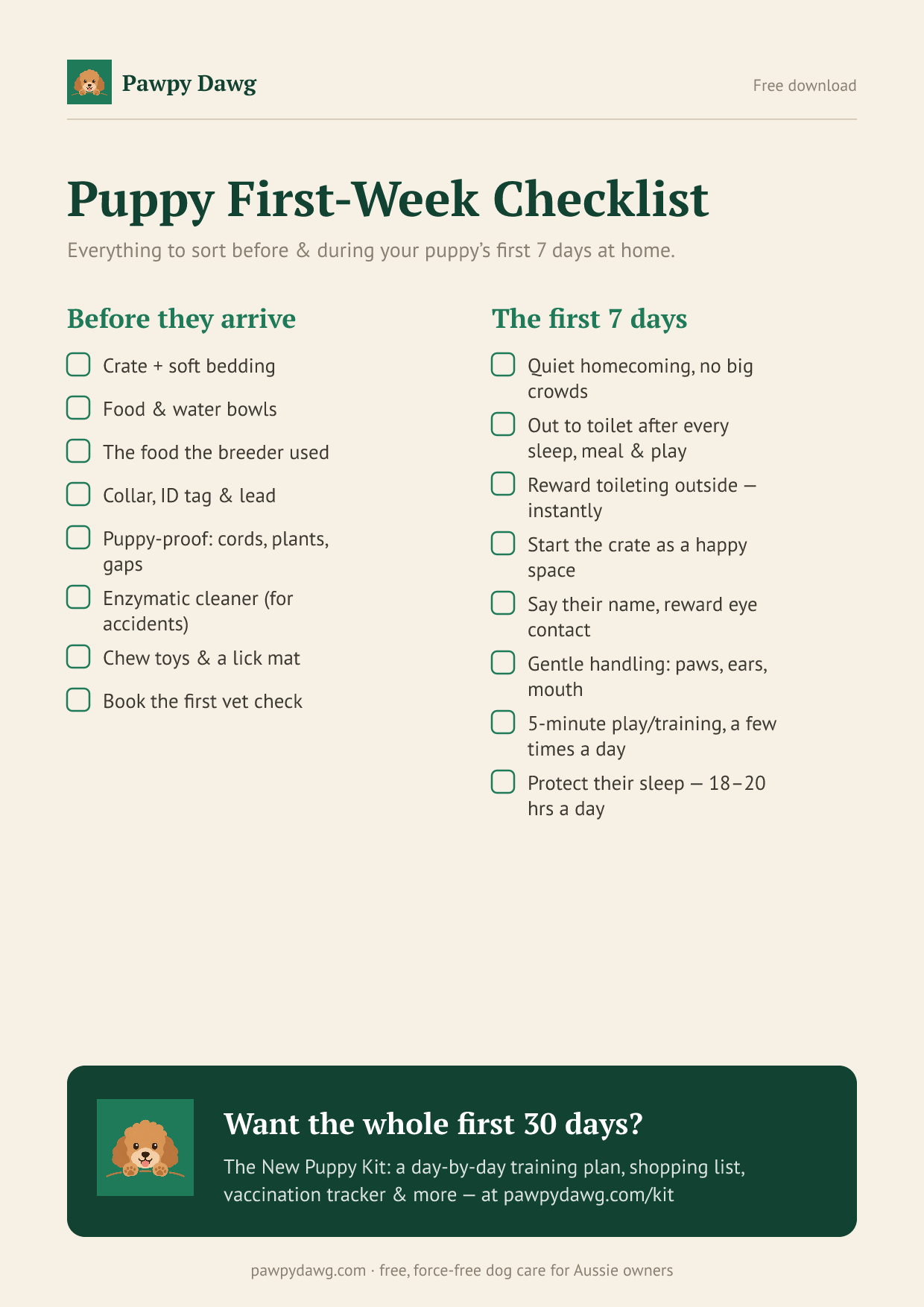
Free printable
Free: the Puppy First-Week Checklist
Everything to sort before and during your puppy's first 7 days home — a printable one-pager. Plus the occasional genuinely useful dog tip. No spam, unsubscribe anytime.
Related guides

Is Pet Insurance Worth It in Australia? The Honest Maths
Is pet insurance worth it in Australia? We crunch real premiums vs real vet bills — cruciate surgery, snake bite & more — so you can decide with confidence.
Read the guide →
How Much a Dog Really Costs Per Year in Australia (2026 Breakdown)
How much does a dog cost per year in Australia? 2026 line-item breakdown covering food, vet, insurance, grooming & the costs first-timers always miss.
Read the guide →
Dog Vaccination Schedule in Australia: What, When and What It Costs
Confused by C3, C5 and kennel cough? Here's your complete dog vaccination schedule Australia cost guide — puppy timelines, adult boosters & typical AUD prices.
Read the guide →