
Why Is My Dog Limping? Causes, Home Checks and When to See the Vet
Worried about your dog limping? Learn the most common dog limping causes, how to do a home check from paw to shoulder, and which signs need a vet today.

Written by Bradley Brown
Founder & editor · Reviewed 2026-11-11
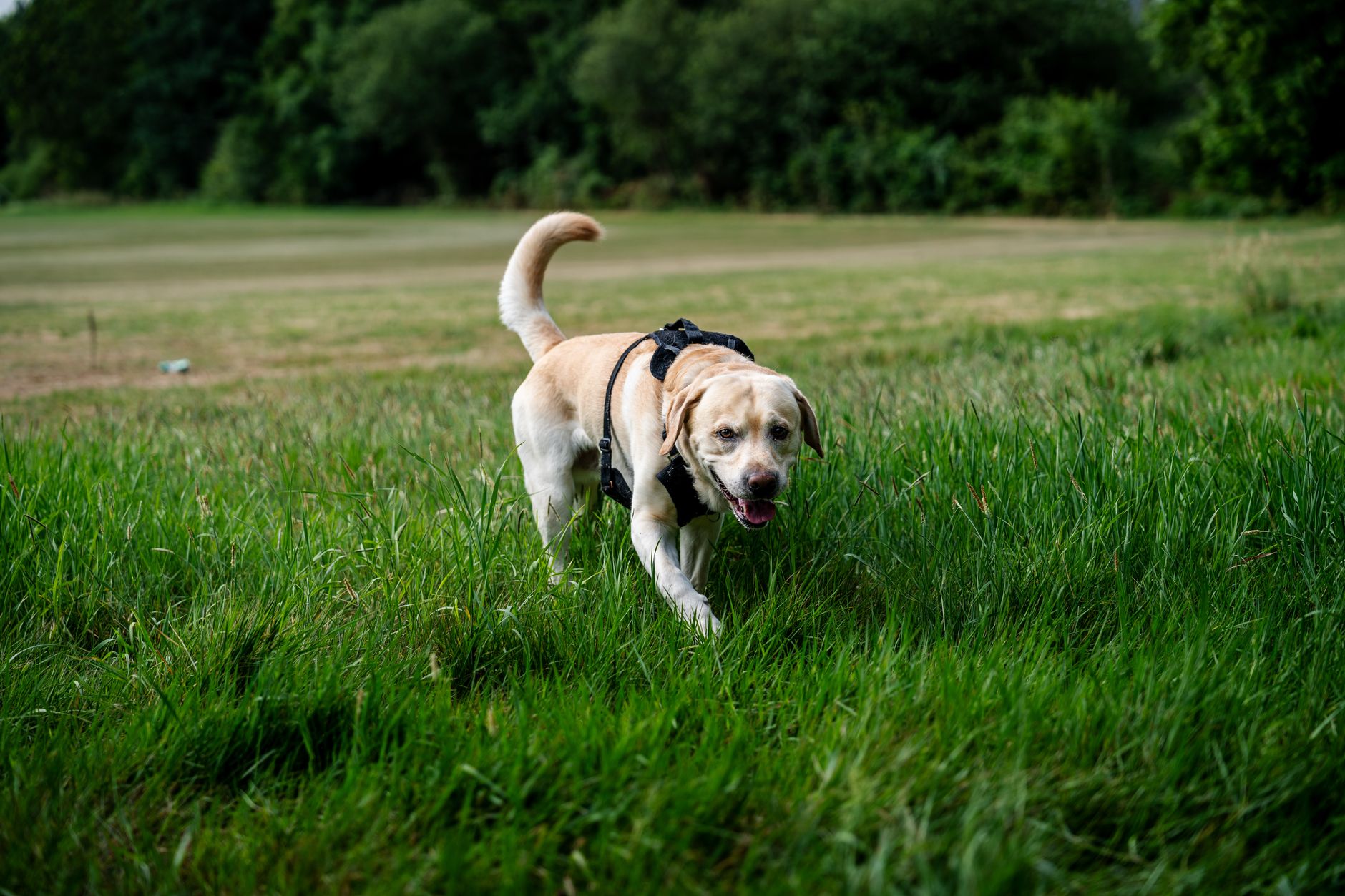
A quick note: this guide is general information, not veterinary advice. For anything urgent or specific to your dog, your vet is always the right call.
Six things that actually matter when your dog is limping
Before you spiral, run through these. Most limps have a straightforward cause — and catching it early makes the difference between a quick fix and a long recovery.
- Stop the exercise now. Even a mild limp can worsen fast if the dog keeps loading the leg. Rest first, assess second.
- Check the paw before anything else. Grass seeds, cuts, cracked pads and broken nails account for a large slice of sudden limps and are easy to find.
- Feel for heat and swelling. Run your hand along the leg from toes to shoulder. Heat or puffiness points you toward the problem area.
- Note whether it's a toe-touch limp or a full non-weight-bearing limp. This one observation tells the vet a great deal and helps you decide how urgently to call.
- Watch when the limp is worst. Stiff after rest but loosening up with movement suggests joint disease; worse after exercise suggests soft-tissue injury.
- Don't give human pain relief. Ibuprofen and paracetamol are toxic to dogs. No exceptions.
Start at the paw: your home check, step by step
Sit your dog somewhere calm and work from the ground up. You don't need tools — just good light and a gentle touch.
Paw and nails Part the fur between the toes and look closely. Grass seeds (particularly common in Australian summers) can enter the skin between the toes and burrow inward within hours. Early signs are redness, a small lump, or obsessive licking. Check the pads for cuts, abrasions or embedded debris. Press each pad firmly — flinching tells you where it hurts. Look at every nail: a broken or torn nail is intensely painful and often causes sudden, dramatic lameness.
Lower leg Run two fingers slowly up the leg from the paw. Feel for swelling, heat or any crunching sensation. A sharp reaction when you flex the wrist (carpus) or hock can indicate a sprain or fracture.
Elbow and knee Gently flex and extend each joint through its natural range. Resistance, clicking or pain on extension of the stifle (knee) is a red flag for cruciate ligament injury — one of the most common orthopaedic problems in dogs and one that rarely resolves without veterinary treatment.
Shoulder and hip These are harder to assess at home. If the dog is reluctant to extend the front leg back or the rear leg forward, or if you feel muscle wasting on one side compared to the other, the problem may be higher up than it looks.
If you find nothing obvious in this check, that doesn't mean there's nothing there — it means you need a vet's hands and, often, X-rays.
Common dog limping causes, from minor to serious
Grass seeds and foreign bodies An Australian summer staple. The barbed seeds of species like barley grass work their way into the skin and don't come back out. Early removal is a minor procedure; a seed that's tracked up the leg for a week may require surgery. Act early.
Pad injuries and nail problems Hot pavements, rough bush tracks, broken glass — Australian dogs get pad injuries year-round. A torn dew claw or broken nail needs cleaning and sometimes bandaging, but heals relatively fast with rest.
Sprains and soft-tissue strains A dog that lands awkwardly from a jump or twists chasing a ball may strain a muscle or ligament. These limps are usually mild-to-moderate and improve with two to five days of rest. If there's no improvement in 48 hours, see the vet.
Cruciate ligament rupture The cranial cruciate ligament (equivalent to the human ACL) is a leading cause of rear-leg lameness in dogs. It can go suddenly — a yelp, then three-legged walking — or degrade gradually over months. It does not heal on its own. Surgery is the standard of care for most dogs, with costs typically ranging from $3,500 to $6,000+ AUD depending on the procedure and location.
Arthritis and hip dysplasia Older dogs and certain breeds (Labradors, German Shepherds, Golden Retrievers) are prone to degenerative joint disease. The hallmark is stiffness that eases once the dog is moving. This is manageable — weight control, appropriate exercise and veterinary pain management make a significant difference — but it needs a diagnosis before you assume it.
Panosteitis Affects large-breed puppies between four and eighteen months. It causes shifting lameness that moves between legs for no obvious reason. It's painful but self-limiting; veterinary pain relief carries most dogs through it.
Bone fractures and dislocations Usually obvious — sudden complete non-weight-bearing after trauma, sometimes visible deformity. This is an emergency.
The limps that cannot wait until tomorrow
Call your vet the same day if you see any of these:
- Complete non-weight-bearing (the dog won't put the foot down at all)
- Visible bone, severe swelling or obvious deformity
- A yelp followed by sudden three-legged walking, especially in the rear
- Swollen, hot joint in a young dog (possible infection)
- Known trauma — hit by a car, a fall, a dog fight
A limp that is mild, weight-bearing, with no heat or swelling and an obvious minor cause (small cut, brief soreness after a big run) can reasonably be monitored for 24–48 hours with rest. Any doubt: call. Most clinics will give you a quick phone triage for free.
What to expect in the first two weeks
Days 1–2: Rest and your home check. If you've found a grass seed or minor cut, clean it and monitor closely.
Days 3–5: A mild sprain or strain should be visibly improving. Still limping the same or worse? Book the vet.
Week 2: Any limp still present after ten days warrants X-rays. Cruciate damage, early arthritis and stress fractures won't resolve with rest alone, and delayed diagnosis adds recovery time.
You haven't ruined your dog by not catching this sooner. Dogs hide pain well — it's instinct, not deception. The fact that you're checking now is exactly the right move.
Frequently asked questions
Can a dog limping get better on its own?
Some can — mild sprains and pad soreness often resolve with 24 to 48 hours of rest. However, limps caused by grass seeds, cruciate tears, fractures or joint disease won't improve without treatment and can worsen quickly. If there's no clear minor cause or no improvement within 48 hours, see a vet.
My dog is limping but not crying — does that mean it's not serious?
Not necessarily. Dogs are instinctively stoic and often don't vocalise pain even when it's significant. A dog limping without crying can still have a cruciate tear, early fracture or embedded grass seed. Use the degree of weight-bearing and the presence of heat or swelling as your guide, not whether the dog is whimpering.
What can I give my dog for pain when it's limping?
Nothing from the human medicine cabinet — ibuprofen, paracetamol and aspirin are all toxic to dogs. If pain relief is needed, your vet can prescribe appropriate canine anti-inflammatories. Rest is the safest thing you can offer at home while you arrange a vet visit.
Why is my dog limping on and off, then seeming fine?
Intermittent or shifting lameness is common with early cruciate ligament disease, arthritis, panosteitis in young large-breed dogs, and occasionally grass seeds that haven't yet caused a visible wound. 'Fine in between' doesn't mean nothing is wrong — an intermittent limp that recurs over more than a week deserves a vet check.
How much does it cost to treat a limping dog in Australia?
It depends heavily on the cause. A vet consultation with X-rays typically runs $200–$450 AUD. Grass seed removal under sedation is usually $300–$600 AUD. Cruciate ligament surgery is the big-ticket item, commonly $3,500–$6,000+ AUD. Pet insurance that covers orthopaedic conditions can significantly offset these costs.
Should I walk my dog if it's limping?
No — rest the dog until you've identified the cause. Continuing to exercise a limping dog can convert a mild soft-tissue strain into a more serious injury, or drive a grass seed deeper into the tissue. Short toilet trips on lead are fine; anything beyond that should wait until you've had a vet assessment.
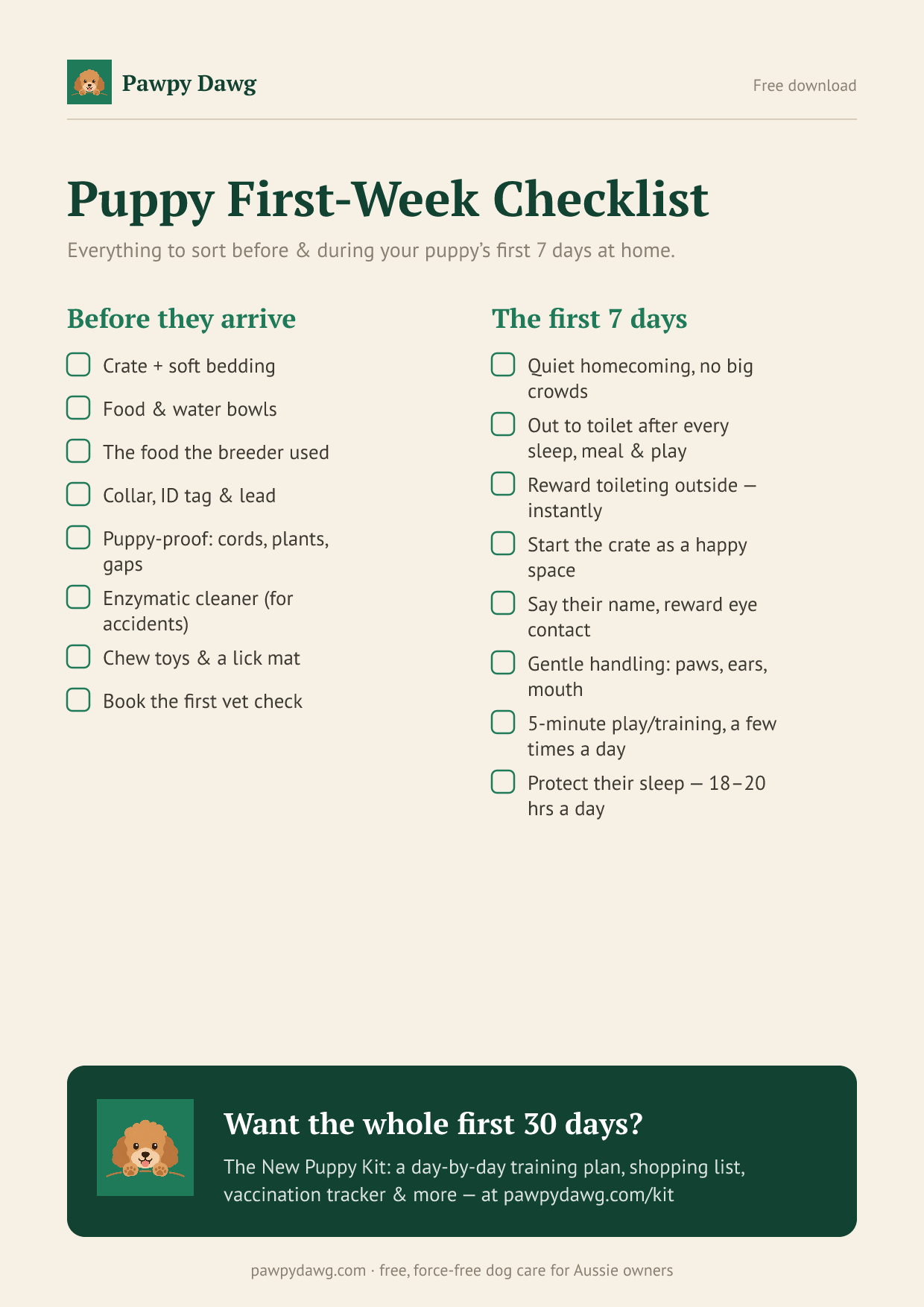
Free printable
Free: the Puppy First-Week Checklist
Everything to sort before and during your puppy's first 7 days home — a printable one-pager. Plus the occasional genuinely useful dog tip. No spam, unsubscribe anytime.
Related guides

Is Pet Insurance Worth It in Australia? The Honest Maths
Is pet insurance worth it in Australia? We crunch real premiums vs real vet bills — cruciate surgery, snake bite & more — so you can decide with confidence.
Read the guide →
How Much a Dog Really Costs Per Year in Australia (2026 Breakdown)
How much does a dog cost per year in Australia? 2026 line-item breakdown covering food, vet, insurance, grooming & the costs first-timers always miss.
Read the guide →
Dog Vaccination Schedule in Australia: What, When and What It Costs
Confused by C3, C5 and kennel cough? Here's your complete dog vaccination schedule Australia cost guide — puppy timelines, adult boosters & typical AUD prices.
Read the guide →