
Dog Worming Schedule in Australia: Puppies, Adults and What to Use
A vet-aligned dog worming schedule Australia owners can actually follow — from 2-week-old pups to seniors, plus which products work and how to remember every dose.

Written by Bradley Brown
Founder & editor · Reviewed 2026-11-05

A quick note: this guide is general information, not veterinary advice. For anything urgent or specific to your dog, your vet is always the right call.
If You Only Do Five Things, Do These
- Worm puppies every two weeks from 2 weeks old until 12 weeks, then monthly until 6 months.
- Switch adult dogs to quarterly worming (every three months) once they hit six months, unless they're high-risk.
- Use a broad-spectrum product that covers tapeworm — many popular "all-wormers" sold in supermarkets miss it entirely.
- Treat on a fixed calendar date, not by feel — worms are invisible until the burden is already heavy.
- Don't skip the vet check at 6–8 weeks — this is when a professional eyes your pup's overall parasite load and recommends a protocol for your area.
That's it. Everything below explains why each of these matters and where most owners quietly go wrong.
The Full Timeline: Worm Every Dog From Week Two
The standard Australian worming timeline recommended by vets and bodies like the Australian Veterinary Association looks like this:
| Age | Frequency |
|---|---|
| 2 weeks | First dose (breeder's responsibility) |
| 4 weeks | Second dose |
| 6 weeks | Third dose |
| 8 weeks | Fourth dose (usually at first vet visit) |
| 10 weeks | Fifth dose |
| 12 weeks | Sixth dose |
| 4 months | Monthly until 6 months |
| 5 months | Monthly until 6 months |
| 6 months | Switch to every 3 months |
| Adult (6 months+) | Every 3 months, lifelong |
Why so often in puppies? Roundworm larvae can pass through a mother's placenta and milk, meaning pups can be infected before they're even born. A single dose doesn't eliminate larvae already migrating through tissue — repeated short-interval dosing catches each wave as larvae mature. Skipping even one round during this window allows worm burdens to build quickly in a small body that can't afford the protein loss.
A common mistake: owners who get their pup at 8 weeks assume the breeder has handled everything. Always ask for written worming records. If you're not sure, treat at 8 weeks regardless — it's safe to give an extra dose.
Which Worms Actually Matter in Australia
Australia has a broader worm problem than many countries because of our warm, humid conditions across much of the eastern seaboard and Queensland. The key players are:
Roundworm (Toxocara canis) — The number-one concern in puppies. Can cause pot-bellied appearance, poor growth, vomiting and diarrhoea. Also a human health risk, particularly for young children (a condition called visceral larva migrans).
Hookworm (Ancylostoma caninum) — Common in warm, sandy soils — think coastal Queensland, NSW and the NT. Larvae penetrate skin and can cause cutaneous larva migrans in humans who walk barefoot on contaminated ground. In puppies, hookworm causes serious anaemia.
Whipworm (Trichuris vulpis) — Picked up from contaminated soil. Less dramatic than hookworm but causes chronic large-bowel diarrhoea that is easy to mistake for dietary issues.
Tapeworm (Dipylidium caninum and Taenia spp.) — Transmitted via fleas (Dipylidium) or by eating raw offal and wild prey (Taenia). You'll often see small rice-grain segments around the dog's tail. This is the worm most commonly missed because many budget worming tablets don't include praziquantel, the ingredient that actually kills tapeworm.
Hydatid tapeworm (Echinococcus granulosus) — Mostly a risk for dogs in rural areas that eat raw sheep or cattle offal. A serious zoonotic risk to humans. If you're in a farming region, treat for tapeworm every six weeks and never feed raw offal.
Heartworm is a separate issue entirely — it's a worm but it's transmitted by mosquitoes and requires dedicated prevention (monthly tablets or an annual injection). Your standard gut wormer does nothing for heartworm. Discuss this with your vet, especially if you're in northern Australia.
All-in-One vs Separate Products: What to Actually Buy
Walk into any pet shop and the shelf is bewildering. Here's how to cut through it.
Supermarket "all-wormers" (e.g. some generic brands): Often only cover two or three worm species. Check the active ingredients — if you don't see praziquantel on the label, it won't touch tapeworm. These products aren't necessarily bad; they're just incomplete for many Australian dogs.
Vet or pet-shop broad-spectrum wormers (e.g. Cazitel, Drontal, Milbemax, Interceptor Spectrum): These cover all four major gut worm types. Some also cover lungworm or other parasites. Milbemax and Interceptor Spectrum additionally prevent heartworm, which is worth considering if you want to consolidate tablets.
Spot-on and chewable combination products (e.g. Nexgard Spectra, Simparica Trio, Bravecto Plus for cats — dogs have their own range): These combine flea, tick, heartworm and intestinal worm prevention in one monthly dose. They're expensive — expect $25–$60 per month depending on dog size — but for time-poor owners they dramatically reduce the number of products to track. Note: most of these monthly products require quarterly praziquantel top-ups for full tapeworm cover, so read the data sheet carefully.
A practical rule of thumb: If your dog eats grass, roams freely or lives with young children, spend the extra dollars on a named broad-spectrum product with praziquantel. The price difference between a cheap supermarket tablet and a quality wormer is often under $10 per dose — not worth the compromise.
The Most Common Mistake: Dosing by Weight, Then Guessing the Weight
Every worming product is dosed by body weight. Underdosing — the most common owner error — means the worm burden isn't fully cleared. Overdosing is rarely dangerous with modern wormers but wastes money.
Weigh your dog before every dose. If you have a small dog, step on your bathroom scales holding the dog, then subtract your own weight. For giant breeds, most vet clinics will let you pop in just to use their scales for free.
High-Risk Dogs Need a Tighter Schedule
Quarterly worming is the baseline for a low-risk adult dog. Treat more frequently if your dog:
- Lives with or regularly contacts children under five
- Eats raw meat or hunts/scavenges
- Is in contact with livestock or visits farms
- Lives in a tropical or subtropical region (hookworm risk is higher)
- Visits dog parks or beaches frequently
- Has had a recent flea infestation (tapeworm risk spikes after fleas)
For these dogs, every 4–6 weeks for tapeworm (praziquantel) alongside the standard quarterly broad-spectrum dose is a sensible approach. Talk to your vet for a protocol tailored to your situation.
How to Actually Remember Every Dose
This is the part nobody talks about, and it's why most adult dogs are under-treated. Here are methods that genuinely work:
- Pick the same four dates each year — the first day of each season works well: 1 September, 1 December, 1 March, 1 June. Set a recurring calendar reminder today.
- Link it to something you already do — many owners tie worming to their dog's quarterly vet check, monthly heartworm tablet, or the day they pay a recurring bill.
- Use a physical chart on the fridge. Write the dog's name, weight and product, then tick each date. Takes 10 seconds, removes all ambiguity.
- Buy in bulk when products are on special (pet supply websites like VetShopAustralia regularly discount multi-packs). Having the product already in the cupboard removes friction.
What to Expect Week by Week After Starting a Proper Schedule
Week 1–2 after first puppy dose: You may see worms passed in the stool — this is normal and means the product worked. Don't be alarmed by the volume; some pups pass dozens of roundworms.
Weeks 2–8 (puppy phase): Each fortnight, the cycle repeats. Energy and coat condition typically improve visibly by week 4–6 as the worm burden drops.
Months 2–6: Monthly dosing bridges the gap to adulthood. Stools normalise; any pot-bellied appearance resolves. Growth rate often improves noticeably.
6 months onward: Quarterly dosing becomes routine. A healthy adult dog on a consistent schedule rarely shows overt symptoms — which is exactly the point. You're preventing problems, not reacting to them.
12 months+: At the annual vet visit, it's worth mentioning your worming protocol so your vet can flag any regional risks you might not be aware of. Resistance to some wormers is an emerging concern, particularly in areas with heavy anthelmintic use in livestock — your vet will know the local picture.
The reality is that a consistent dog worming schedule in Australia takes about five minutes, four times a year once your dog is an adult. The hard work is in the puppy months — but that's also when it matters most.
Frequently asked questions
How often should I worm my adult dog in Australia?
Every three months (quarterly) is the standard recommendation for most adult dogs in Australia. If your dog is high-risk — eating raw meat, living with young children, or spending time on farms — your vet may recommend treating for tapeworm every 4–6 weeks on top of the quarterly broad-spectrum dose.
What worms do dogs get in Australia that I need to treat for?
The main gut worms in Australian dogs are roundworm, hookworm, whipworm and tapeworm. Hookworm is especially common in warm, coastal areas. Tapeworm is frequently missed because many cheap supermarket products don't contain praziquantel, the ingredient needed to kill it. Heartworm is a separate parasite requiring its own prevention product.
Can I use a supermarket dog wormer or do I need one from the vet?
Some supermarket wormers are effective, but check the label carefully. If the active ingredients don't include praziquantel, the product won't cover tapeworm. Vet-clinic and reputable pet-shop brands like Cazitel, Drontal and Milbemax list all active ingredients clearly and cover the full spectrum of common Australian worms.
When do I start worming a new puppy?
Worming ideally begins at two weeks of age — the breeder's responsibility. When you collect your pup, ask for a written record of doses already given. If no records exist, treat at 8 weeks and continue every two weeks until 12 weeks, then monthly until 6 months. It's safe to give a dose even if you're unsure whether one is overdue.
Does my dog's wormer also cover heartworm?
Standard gut wormers do not protect against heartworm. Heartworm is transmitted by mosquitoes and requires a separate monthly tablet, a topical product, or an annual injection from your vet. Some combination products like Nexgard Spectra or Interceptor Spectrum cover both intestinal worms and heartworm, which can simplify your routine.
My puppy just passed worms after worming — is that normal?
Yes, completely normal. Seeing worms in the stool after treatment means the product is working. Roundworms in particular can appear in large numbers in young pups. Continue the fortnightly schedule as planned, and the worm burden will steadily reduce over the following weeks.
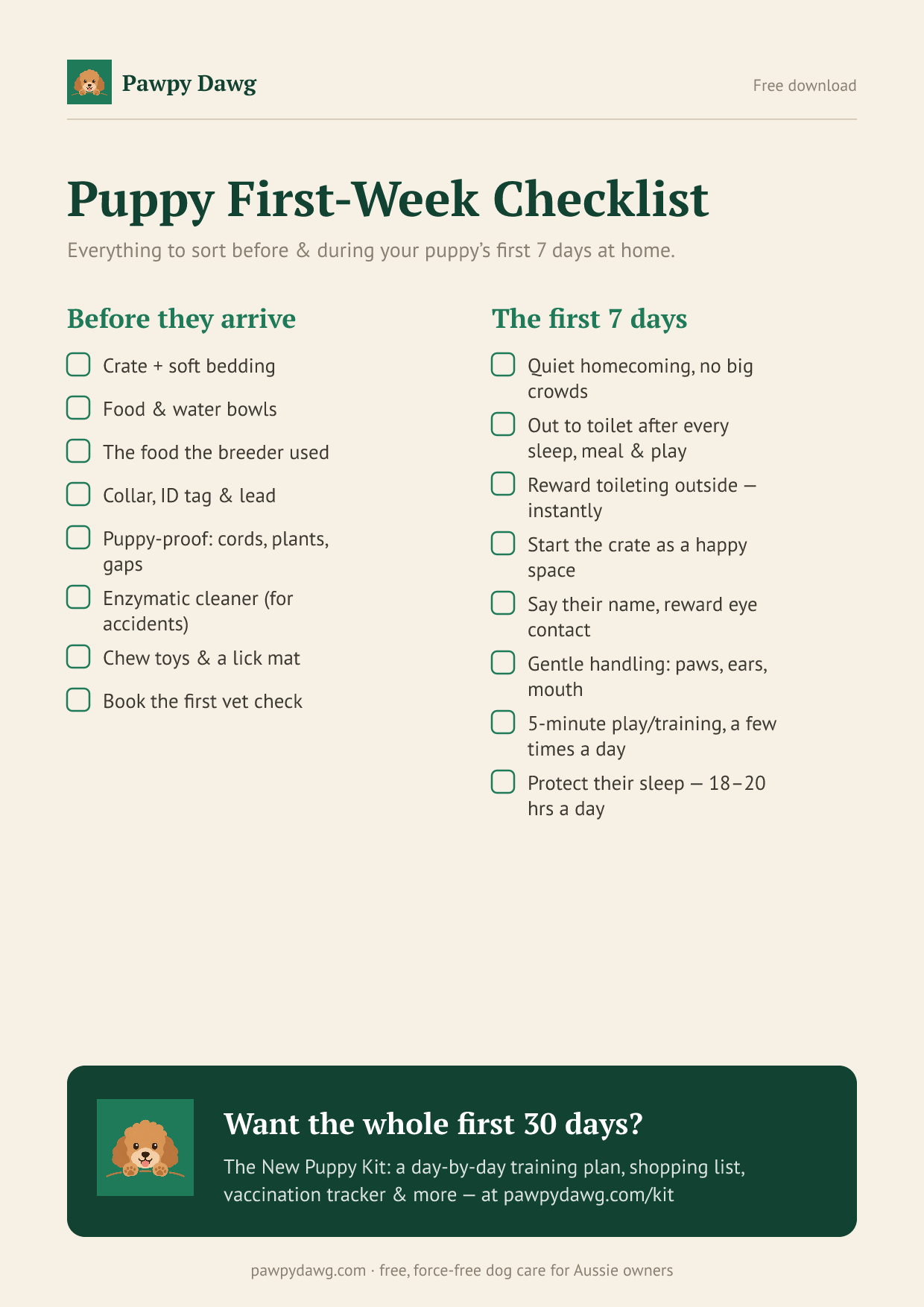
Free printable
Free: the Puppy First-Week Checklist
Everything to sort before and during your puppy's first 7 days home — a printable one-pager. Plus the occasional genuinely useful dog tip. No spam, unsubscribe anytime.
Related guides

Is Pet Insurance Worth It in Australia? The Honest Maths
Is pet insurance worth it in Australia? We crunch real premiums vs real vet bills — cruciate surgery, snake bite & more — so you can decide with confidence.
Read the guide →
How Much a Dog Really Costs Per Year in Australia (2026 Breakdown)
How much does a dog cost per year in Australia? 2026 line-item breakdown covering food, vet, insurance, grooming & the costs first-timers always miss.
Read the guide →
Dog Vaccination Schedule in Australia: What, When and What It Costs
Confused by C3, C5 and kennel cough? Here's your complete dog vaccination schedule Australia cost guide — puppy timelines, adult boosters & typical AUD prices.
Read the guide →