
Foods That Are Toxic to Dogs: The Australian Kitchen and Garden Guide
A vet-informed guide to foods toxic to dogs Australia-wide: chocolate, grapes, macadamias, xylitol, onions, and backyard plants — plus exactly what to do.

Written by Bradley Brown
Founder & editor · Reviewed 2026-11-11

A quick note: this guide is general information, not veterinary advice. For anything urgent or specific to your dog, your vet is always the right call.
Mia's labrador, Scout, got into the fruit bowl on a Sunday afternoon while she was folding laundry. She came back to find the grapes gone — maybe eight or ten of them — and Scout wagging at her like he'd done something clever. Mia googled it, found conflicting information, and spent the next two hours paralysed between "probably fine" and "rush to the emergency vet." She didn't know what to watch for, how much was dangerous, or who to call. Most owners haven't memorised this stuff, and that's completely normal — it only becomes urgent the moment something disappears off the bench.
What's Actually in Your Kitchen and Garden That Can Hurt a Dog
Australia's homes have a few specific hazards worth knowing cold, because knowing them in a panic is much harder than knowing them now.
Grapes and Sultanas
This one is genuinely scary, and Scout's story is a good reason why. Grapes, sultanas, raisins, and currants — including those baked into Anzac biscuits, Christmas cake, and hot cross buns — can cause acute kidney failure in dogs. The maddening thing is that researchers still haven't isolated the exact toxin, which means there is no established safe dose. Some dogs eat a handful and are fine; others go into kidney failure after a single grape. Because individual sensitivity varies so wildly, any grape or sultana ingestion should be treated as an emergency. Call your vet or the Animal Poisons Helpline (1300 869 738) immediately.
Chocolate
Chocolate contains theobromine and caffeine, both of which dogs metabolise far more slowly than humans. The darker the chocolate, the more theobromine it contains — dark chocolate and baking chocolate are the most dangerous, milk chocolate less so, white chocolate barely at all (though still worth watching for the fat load). A rough guide: around 20 mg of theobromine per kilogram of body weight causes mild signs; above 40–50 mg/kg, seizures become a real risk. That translates to roughly 20 g of dark chocolate being potentially serious for a 10 kg dog. Signs include vomiting, restlessness, rapid breathing, and muscle tremors. Theobromine calculators are available online — use your dog's weight and the chocolate type to get a quick risk assessment, then call your vet if the numbers are even borderline.
Macadamia Nuts
Macadamias grow in Queensland and northern NSW backyards and are a common nibble at Christmas. The toxin is unknown, but even small amounts (around 2 g per kilogram of body weight) cause weakness, particularly in the hind legs, vomiting, tremors, and hyperthermia. Signs typically appear within 12 hours and usually resolve within 48 hours without permanent damage — but that window is uncomfortable and veterinary support helps. Don't assume a dog that ate a few off the ground is definitely fine; call ahead and describe the quantity.
Onions, Garlic, Leeks, and Chives
The whole allium family damages red blood cells in dogs, causing a form of haemolytic anaemia. Cooked or raw, fresh or powdered — all forms are toxic, and powder is significantly more concentrated than fresh. Garlic powder in a rissole or onion soup mix stirred through rice can deliver a meaningful dose. Toxicity is dose-dependent: roughly 15–30 g per kilogram of body weight is cited as a threshold for onions, but regular small exposures accumulate. Signs — lethargy, pale gums, reduced appetite, brownish urine — can take several days to appear, which makes this one easy to miss. If your dog regularly cleans up dropped cooking scraps, it's worth flagging at the next vet visit.
Xylitol (Now Often Listed as "Birch Sugar")
Xylitol is an artificial sweetener found in some sugar-free chewing gums, mints, certain peanut butters, baked goods, and increasingly in supplements and throat sprays. In dogs it triggers a rapid insulin release, causing dangerous hypoglycaemia (low blood sugar), and at higher doses it can cause liver failure. As little as 0.1 g per kilogram can cause hypoglycaemia. Check the ingredient list of any peanut butter before using it in a Kong or as a training treat — some Australian brands have included it. Signs include vomiting, wobbliness, collapse, and seizures, often within 30–60 minutes. This is a "go now, call on the way" situation.
Avocado
Persin, found in the flesh, skin, and pit of avocados, causes vomiting and diarrhoea in dogs and can lead to fluid accumulation around the heart and lungs in large amounts. The fleshy part has lower persin concentration than the skin or leaves, but it's still worth keeping avocado out of reach — particularly if you have an avocado tree in the backyard.
The Backyard Is Not Safe By Default
Gardens across Australia commonly contain plants that are toxic to dogs and often overlooked because they're so familiar.
Sago palm (Cycas revoluta) — extremely common in Queensland and WA gardens — is one of the most dangerous plants a dog can ingest. All parts are toxic, but the seeds are the worst. Even one or two seeds can cause liver failure. This one warrants an immediate emergency vet visit with no waiting to see how they go.
Yesterday-today-and-tomorrow (Brunfelsia) produces purple, white, and mauve flowers and is widely planted along fences. All parts are toxic and cause tremors, seizures, and hyperthermia. It's unfortunately attractive and low-growing — exactly where curious dogs investigate.
Mushrooms that pop up after rain in lawns and mulch beds are variable and hard to identify. Most wild mushrooms in Australian gardens are harmless, but the Amanita species (death cap and destroying angel), which do appear in southern Australia, are lethal. The rule is simple: if your dog has eaten a wild mushroom and you can't identify it with certainty, treat it as toxic.
Other common culprits include oleander, lantana, yesterday-today-and-tomorrow, foxglove, and autumn crocus — all present in Australian gardens and all worth checking against before planting.
What to Do When Something Disappears
Speed matters most with grapes, xylitol, and sago palm. For everything else, the approach is the same:
- Don't wait for symptoms. By the time a dog is visibly unwell from kidney failure or liver damage, the window for intervention has narrowed considerably.
- Call before you drive. The Animal Poisons Helpline (1300 869 738, available 24/7, small consultation fee applies) or your vet can tell you in two minutes whether this needs an emergency visit or close monitoring at home. Have the dog's weight, what was eaten, and an estimate of how much ready.
- Don't induce vomiting yourself unless a vet explicitly tells you to. Hydrogen peroxide, salt, and mustard — all suggested online — can cause serious harm.
- Bring evidence. Take the packaging, a photo of the plant, or a sample in a bag. It speeds up treatment.
Mia called the Animal Poisons Helpline with Scout's weight (32 kg) and an estimate of eight grapes. They told her the dose was concerning given the unpredictability, recommended she go to the vet that afternoon, and Scout was given an emetic to bring up the grapes before they'd had time to be absorbed. He was home the same evening, fine. She kept the helpline number on her fridge after that.
Foods That Are Often Flagged But Are Lower Priority
Cooked bones (splintering risk, not toxicity), corn on the cob (obstruction), and fatty off-cuts (pancreatitis risk) don't belong in this article's league — they're hazards, not poisons. Worth knowing, but not the reason to panic at 11 pm.
The genuine list of foods toxic to dogs in Australia is shorter than many websites suggest, but the items on it are serious enough that knowing them precisely is more useful than a vague awareness that "lots of things are dangerous." Print the helpline number. Check the peanut butter label. And if the fruit bowl gets raided — call first, then go.
As an Amazon Associate we earn from qualifying purchases.
Frequently asked questions
How many grapes are toxic to dogs?
There is no established safe amount. Some dogs suffer acute kidney failure after a single grape; others eat more without obvious effect. Individual sensitivity varies unpredictably, so any grape, sultana, raisin, or currant ingestion should be treated as an emergency regardless of quantity. Call the Animal Poisons Helpline (1300 869 738) or your vet immediately.
My dog ate chocolate — do I need to go to the vet?
It depends on the type of chocolate, how much was eaten, and your dog's weight. Dark and baking chocolate are far more dangerous than milk chocolate. Use an online theobromine calculator with your dog's weight and the chocolate type for a quick risk estimate, then call your vet. When in doubt, call — it's a quick conversation that can save you hours of worry.
Is xylitol in Australian peanut butter?
Some brands have included it, so it's worth checking the ingredient list of any peanut butter before giving it to your dog. Look for 'xylitol' or 'birch sugar' in the ingredients. Brands marketed as natural or low-sugar are more likely to contain it. If you're unsure, choose a plain peanut butter with only peanuts and salt listed.
What plants in Australian gardens are most dangerous to dogs?
Sago palm is among the most lethal — even one or two seeds can cause liver failure. Yesterday-today-and-tomorrow (Brunfelsia) causes tremors and seizures and is widely planted in suburban gardens. Oleander, lantana, and unidentified wild mushrooms are also common hazards. If your dog eats any part of a sago palm, go to the emergency vet immediately without waiting to see symptoms.
Can I make my dog vomit at home if they eat something toxic?
No — do not attempt to induce vomiting without explicit veterinary advice. Home methods using salt, hydrogen peroxide, or mustard can cause serious harm including chemical burns, sodium poisoning, or aspiration. Call your vet or the Animal Poisons Helpline first; they will advise whether inducing vomiting is appropriate and may administer a safe emetic at the clinic.
How much does the Animal Poisons Helpline cost in Australia?
The Animal Poisons Helpline (1300 869 738) charges a small consultation fee for the call, but it operates 24 hours a day, 7 days a week. For many situations it can tell you immediately whether you need an emergency vet visit or can safely monitor at home, which often saves a costly after-hours emergency consult.
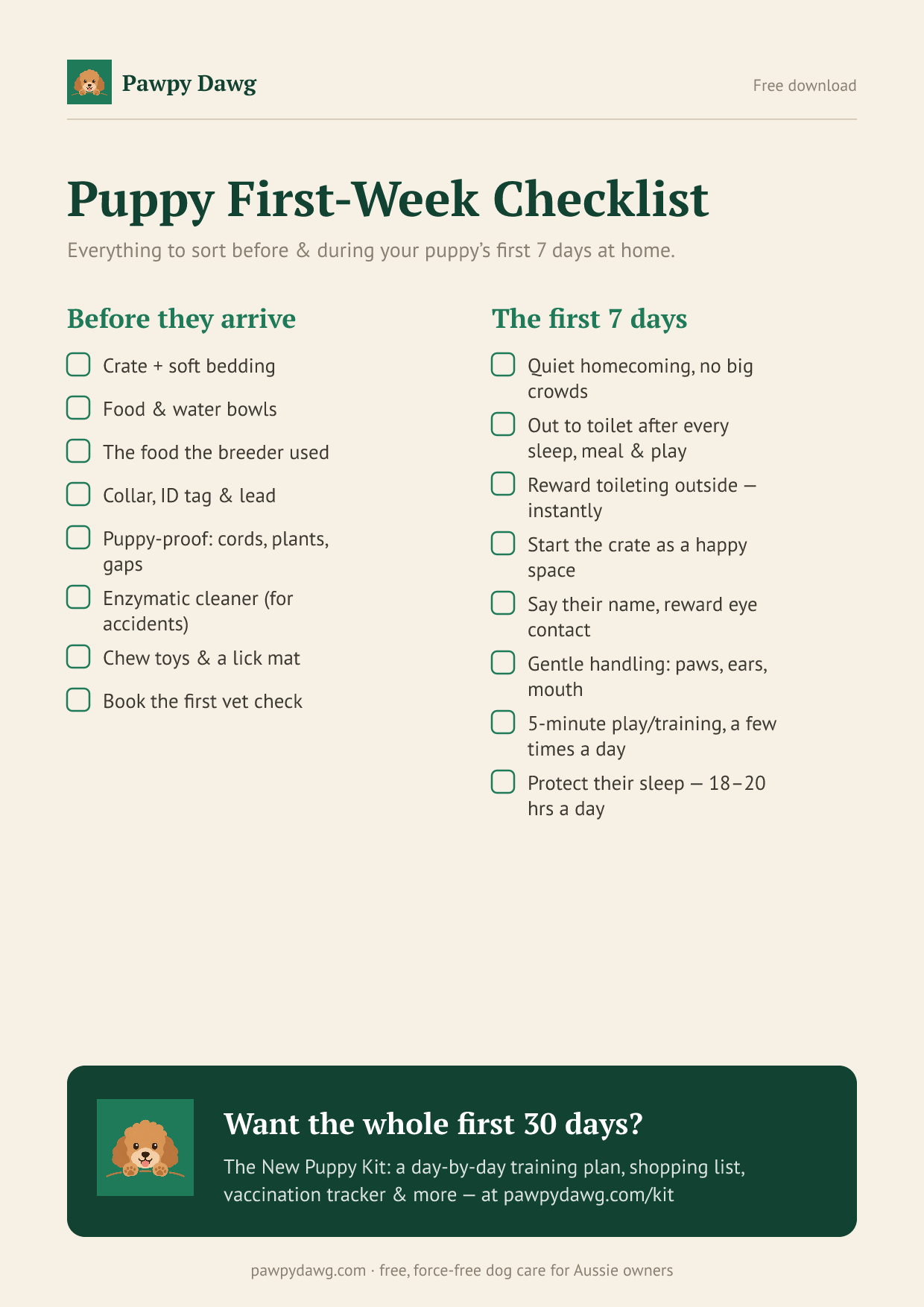
Free printable
Free: the Puppy First-Week Checklist
Everything to sort before and during your puppy's first 7 days home — a printable one-pager. Plus the occasional genuinely useful dog tip. No spam, unsubscribe anytime.
Related guides

Is Pet Insurance Worth It in Australia? The Honest Maths
Is pet insurance worth it in Australia? We crunch real premiums vs real vet bills — cruciate surgery, snake bite & more — so you can decide with confidence.
Read the guide →
How Much a Dog Really Costs Per Year in Australia (2026 Breakdown)
How much does a dog cost per year in Australia? 2026 line-item breakdown covering food, vet, insurance, grooming & the costs first-timers always miss.
Read the guide →
Dog Vaccination Schedule in Australia: What, When and What It Costs
Confused by C3, C5 and kennel cough? Here's your complete dog vaccination schedule Australia cost guide — puppy timelines, adult boosters & typical AUD prices.
Read the guide →