
Paralysis Ticks and Dogs in Australia: Prevention, Signs and Vet Costs
Paralysis tick dog Australia guide: spot early signs, do a proper daily search, compare prevention products, and know what vet treatment costs on the east coast.

Written by Bradley Brown
Founder & editor · Reviewed 2026-11-05

A quick note: this guide is general information, not veterinary advice. For anything urgent or specific to your dog, your vet is always the right call.
Paralysis ticks kill dogs on Australia's east coast every year — and they do it quickly. The good news is that owners who know what to look for and use the right prevention products can stack the odds heavily in their dog's favour.
Which parts of Australia do I actually need to worry about?
The paralysis tick (Ixodes holocyclus) lives in a band roughly 20 kilometres wide along the eastern seaboard, from far north Queensland down through NSW and into eastern Victoria. Heavily bushed coastal and hinterland areas — think the Sunshine Coast hinterland, Sydney's northern beaches and surrounds, the Central Coast, Hunter Valley bush corridors, and the Gippsland ranges — carry the highest risk.
Tick season peaks in spring and early summer (September through January), but in warm, humid regions like south-east Queensland, ticks are active year-round. If you live in or visit any of these areas, treat prevention as a 12-month commitment rather than a seasonal one.
How do I do a tick search that actually finds them?
Most owners do a quick ruffle of the coat and call it done. That misses the majority of ticks. Paralysis ticks prefer to attach around the head, neck, shoulders, and chest — but they'll also hide inside ears, between toes, in skin folds around the groin and armpits, and under the collar.
The method that works:
- Remove the dog's collar and check underneath it first.
- Use your fingertips, not your palms — you're feeling for a small, hard lump the size of a pinhead (unfed) up to a grape (fully engorged).
- Part the coat in rows, working from the nose back toward the tail. Go slowly; a tick at the base of a hair follicle is easy to skip.
- Pay extra attention to the face — around the eyes, lips, inside the ear canal, and under the chin.
- Finish with the groin, armpits, between every toe, and underneath the tail.
The whole process takes five to eight minutes once you're practiced. Do it every day your dog has been in bush or long grass. If you find a tick, remove it with a tick remover or fine-tipped tweezers — grasp it as close to the skin as possible and pull straight out with steady pressure. Don't twist, crush, or apply anything to the tick first.
What prevention products actually work, and which should I use?
There are three main categories, and the right choice depends on your dog's lifestyle and your household.
Spot-on treatments (such as Frontline Plus or Advantix) are applied to the skin on the back of the neck monthly. They're affordable — typically $15–$30 per dose — but need to stay dry for 48 hours after application, which can be inconvenient for dogs that swim regularly. Advantix in particular has strong tick-kill data for paralysis ticks. Important: products containing permethrin are highly toxic to cats, so they're not suitable in households with both species.
Chewable tablets (Nexgard, Bravecto, Simparica) have become the most popular option for active, water-loving dogs. They work systemically, so swimming doesn't reduce effectiveness. Nexgard and Simparica are given monthly; Bravecto lasts three months. Cost runs from roughly $30–$60 per dose depending on dog size and product. These require a vet prescription or vet-approved purchase, and your vet can advise on the best fit for your dog's age and health history.
Tick collars (Seresto) provide continuous protection for up to eight months. They're a solid choice for consistent, low-fuss coverage, though dogs that swim frequently may see reduced longevity. At roughly $60–$80 per collar, the per-day cost is competitive.
One important point: no product offers 100% protection. Daily tick searches remain essential even when your dog is on a prevention product, because a tick can still attach and begin producing toxin before it's killed.
What are the early signs of tick paralysis that owners miss?
This is where being observant saves lives. Early signs appear 3–5 days after a tick attaches and are subtle enough that many owners attribute them to tiredness or a sore muscle.
Watch for:
- A change in the bark — it may sound softer, hoarser, or just slightly "off"
- Vomiting or retching, particularly in the morning
- Wobbliness in the back legs, as if the dog has had a few too many — this is often the first clearly visible sign
- Reluctance to get up or climb stairs
- Laboured or noisy breathing
- Excessive salivation
The wobbliness in the hindquarters (hindlimb ataxia) is the sign most owners recognise — by which point the toxin has had a good head start. If you see it, treat it as an emergency. Don't wait to see if it improves overnight, and don't let the dog eat or drink before getting to a vet, as swallowing becomes dangerous as paralysis progresses.
A dog that's struggling to breathe or is totally unable to stand is in critical condition. Call your vet clinic before you arrive so they can prepare.
How much does tick paralysis treatment cost in Australia?
Honestly, it's significant — and the costs vary depending on how sick the dog is when treatment begins, your location, and whether you're at an emergency clinic after hours.
For a dog that presents with early-to-moderate signs, treatment typically involves:
- Tick antiserum — the most expensive single component, usually $400–$900 depending on the dog's size and the number of vials needed
- Hospitalisation and monitoring — $200–$500 per day; most dogs need one to three days
- Supportive care (IV fluids, sedation, anti-nausea medication) — $150–$400
A moderate case at a standard vet clinic often lands in the $1,500–$3,000 range. Severe cases requiring oxygen therapy, a ventilator, or intensive nursing care at a specialist facility can exceed $8,000–$10,000. Emergency clinic surcharges add another layer on top.
Pet insurance that covers tick paralysis is worth considering if you live in a high-risk area — premiums vary widely, but a comprehensive policy typically runs $60–$120/month for a medium-sized dog. Read the fine print on waiting periods and sub-limits for tick treatment specifically.
The clearest way to keep costs down is to present early. A dog treated in the first 24 hours of showing symptoms almost always does better clinically and costs considerably less to treat than one who's been deteriorating for two days.
My dog recovered — do I need to do anything differently going forward?
Yes, a few things. Dogs that have had tick paralysis can remain sensitive to exercise-induced stress for several weeks after recovery, even once they appear normal. Keep exercise gentle and avoid anything that gets them panting hard until your vet gives the all-clear — usually two to four weeks post-discharge.
Aspiration pneumonia is a real post-tick risk; some dogs inhale fluid or vomit during the period of throat paralysis, and signs of chest infection (coughing, laboured breathing) can emerge days after the dog seems to have recovered. Keep your vet informed of any new symptoms.
Going forward, review your prevention product — if your dog was on one when they got a tick, discuss with your vet whether switching products or combining methods makes sense. And don't scale back on the daily searches. A dog that's had tick paralysis once is not immune; they can absolutely get it again.
Frequently asked questions
How quickly can a paralysis tick kill a dog?
A paralysis tick typically takes 3–5 days after attaching to produce enough toxin to cause visible symptoms. Once severe paralysis or breathing difficulty sets in, a dog can deteriorate and die within 24–48 hours without treatment. Presenting to a vet at the first signs — hindleg wobbling, voice change, or vomiting — dramatically improves the outcome.
Can I use a paralysis tick prevention product designed for dogs on my cat?
No. Many dog tick treatments, particularly those containing permethrin (such as Advantix), are acutely toxic to cats and can be fatal even from brief contact with a treated dog. If you have both dogs and cats in your household, tell your vet so they can recommend a cat-safe option for your dog.
What does an engorged paralysis tick look like on a dog?
An unfed paralysis tick is tiny — about 1–2 mm, oval, and dark brown to reddish-brown. Once it has been feeding for a few days it swells with blood and can reach 10–13 mm, turning a bluish-grey or cream colour. The engorged tick is much easier to spot, but by that stage significant toxin has already been delivered.
Is tick paralysis covered by pet insurance in Australia?
Most comprehensive pet insurance policies in Australia do cover tick paralysis treatment, but the specifics vary. Some policies have sub-limits on tick treatment or waiting periods of up to 30 days before cover begins. Read the product disclosure statement carefully and confirm tick paralysis is included before assuming you're covered.
Should I remove the tick myself or go straight to the vet?
If your dog is showing any signs of paralysis — wobbly legs, changed bark, laboured breathing — go straight to the vet rather than spending time searching for and removing the tick. If your dog is otherwise well and you've found the tick during a routine search, remove it promptly using a tick remover or fine-tipped tweezers (grasp close to the skin, pull straight out), then monitor your dog closely and call your vet if any symptoms develop over the next 24–48 hours.
Do paralysis ticks in Australia affect small dogs more than large dogs?
Small dogs are generally at higher risk of rapid deterioration because they receive a proportionally larger dose of toxin relative to their body weight. However, large dogs are by no means safe — any dog can develop severe paralysis. Dog size also influences the amount of antiserum required, which is one reason treatment costs are higher for bigger breeds.
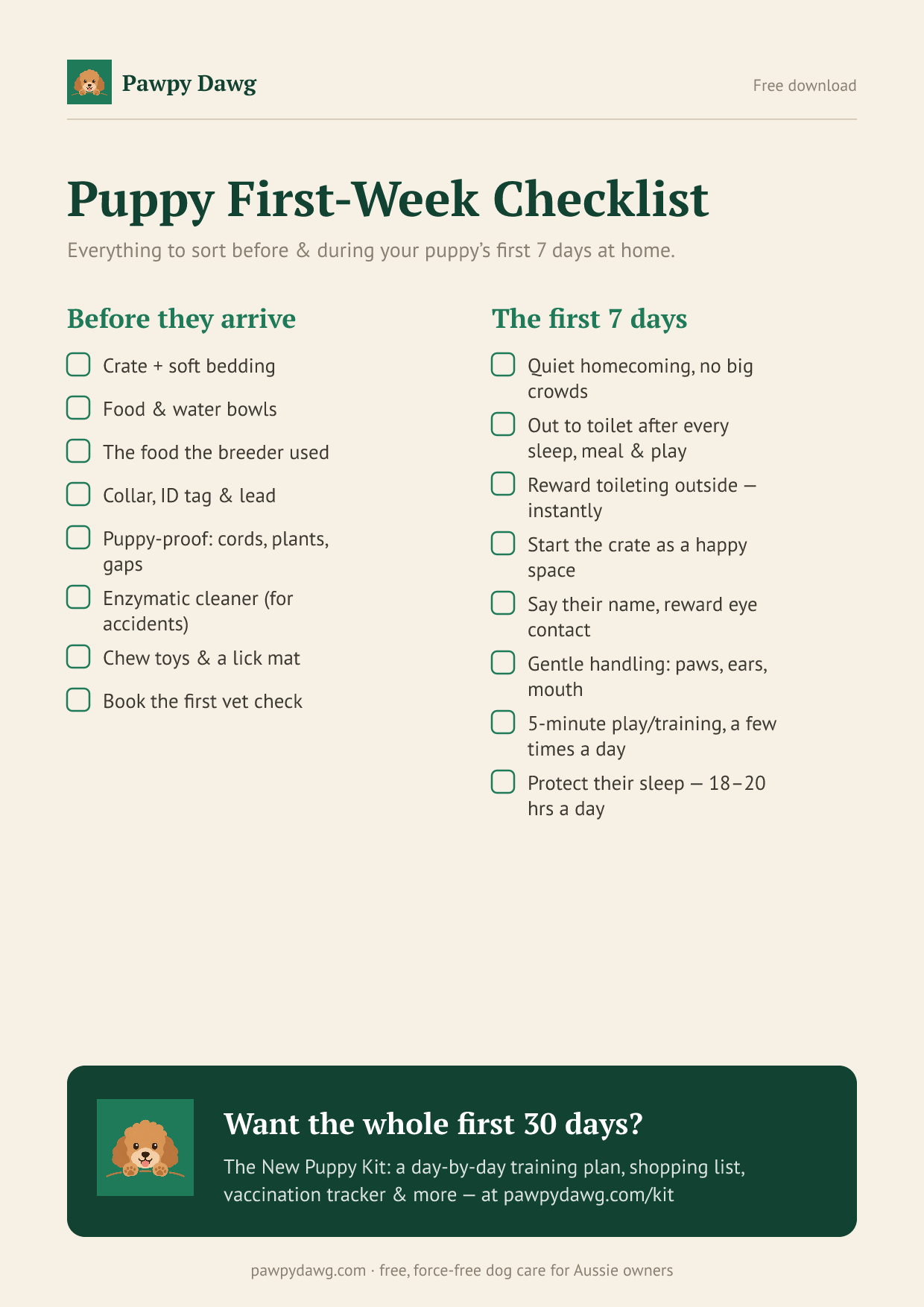
Free printable
Free: the Puppy First-Week Checklist
Everything to sort before and during your puppy's first 7 days home — a printable one-pager. Plus the occasional genuinely useful dog tip. No spam, unsubscribe anytime.
Related guides

Is Pet Insurance Worth It in Australia? The Honest Maths
Is pet insurance worth it in Australia? We crunch real premiums vs real vet bills — cruciate surgery, snake bite & more — so you can decide with confidence.
Read the guide →
How Much a Dog Really Costs Per Year in Australia (2026 Breakdown)
How much does a dog cost per year in Australia? 2026 line-item breakdown covering food, vet, insurance, grooming & the costs first-timers always miss.
Read the guide →
Dog Vaccination Schedule in Australia: What, When and What It Costs
Confused by C3, C5 and kennel cough? Here's your complete dog vaccination schedule Australia cost guide — puppy timelines, adult boosters & typical AUD prices.
Read the guide →