
What an After-Hours Emergency Vet Costs in Australia (and How to Prepare)
Emergency vet cost Australia: real price ranges, when it can wait till morning, how pet insurance and payment plans help, and a simple emergency fund plan.

Written by Bradley Brown
Founder & editor · Reviewed 2026-11-06

A quick note: this guide is general information, not veterinary advice. For anything urgent or specific to your dog, your vet is always the right call.
It's 11 pm on a Tuesday when Priya notices her border collie, Huxley, retching repeatedly without bringing anything up. Her regular vet closed at six. She Googles the nearest 24-hour clinic, sees the after-hours surcharge on their website, and her stomach drops. She has no idea whether Huxley needs emergency care right now or whether she's about to spend $800 on a dog who ate grass. That uncertainty — not the love, not the worry — is the problem this article solves.
What You're Actually Paying For After Hours
Emergency vet clinics carry costs that daytime practices don't: overnight staff wages, specialist on-call fees, and equipment that has to be ready at 2 am on a Sunday. Those costs land on your bill, and they're real — not a rip-off.
Here's what a typical after-hours visit looks like in Australian dollar terms:
| Item | Typical Range (AUD) |
|---|---|
| After-hours / emergency consultation fee | $150 – $350 |
| Triage assessment (some clinics charge separately) | $80 – $150 |
| X-rays (per series) | $300 – $600 |
| IV fluids (per 24 hrs) | $200 – $500 |
| Blood panel | $180 – $400 |
| Overnight hospitalisation | $600 – $1,500+ |
| Surgical procedure (e.g. foreign body removal) | $2,500 – $6,000+ |
| Wound repair / suturing | $400 – $1,200 |
These are broad ranges because geography matters enormously. A clinic in inner Sydney or Melbourne will typically sit at the higher end; regional Queensland or WA may be lower. Always ask for a written estimate before agreeing to treatment beyond the initial consult — reputable clinics expect this question and won't be offended by it.
For Priya and Huxley, the consult alone cost $220. The vet confirmed bloat wasn't present (the nightmare scenario for large dogs), gave Huxley an anti-nausea injection, and sent them home with instructions. Total: around $350. Not trivial, but far less than her worst-case imagine.
Can It Wait Until Morning? An Honest Guide
This is the question every owner is really asking. Getting it wrong in either direction has consequences — a missed emergency can be fatal; unnecessary overnight visits are expensive and stressful for your dog.
Go immediately — do not wait:
- Difficulty breathing or blue/grey gums
- Suspected bloat (distended abdomen, unproductive retching, restlessness in a large-breed dog)
- Seizures lasting more than two minutes, or multiple seizures in a day
- Known or suspected toxin ingestion (rat bait, xylitol, grapes/raisins, human medications)
- Trauma — hit by car, fall from height, dog attack with puncture wounds
- Inability to urinate (especially in male cats, but also dogs — can be life-threatening within hours)
- Eye injuries or sudden loss of vision
- Pale, cold, or white gums — sign of shock or internal bleeding
- Collapse or sudden inability to stand
Monitor at home overnight, see your vet first thing:
- Single vomiting episode with no other symptoms in an otherwise healthy dog
- Mild limping that isn't worsening and the dog is bearing some weight
- Small surface cut that isn't bleeding heavily
- Loose stools without blood and normal energy levels
- Mild itching or skin irritation
When in doubt, call. Almost every emergency clinic has a triage phone line. A 90-second call can tell you whether Huxley's retching warrants a midnight drive or a morning appointment. Use it.
How Pet Insurance Actually Works in an Emergency
Australian pet insurance does not typically pay the vet directly on the night. You pay the bill, then claim. This means you need access to funds upfront — insurance reimburses you later, usually within 5–10 business days for straightforward claims.
What matters most when choosing a policy for emergency coverage:
- Annual limit – Some budget policies cap at $5,000 annually; a single surgery can exceed that. Look for $10,000–$15,000 minimum if you want genuine peace of mind.
- Excess – Most Australian policies carry a per-condition or per-year excess of $100–$300. Know yours before you're standing at a reception desk at midnight.
- Percentage reimbursed – Policies typically reimburse 70–90% of the eligible claim after the excess. That remaining 10–30% is still your cost.
- Waiting periods – Emergency accident cover usually kicks in after 48 hours; illness cover often has a 30-day wait. Read the PDS before you need it.
- Exclusions – Pre-existing conditions are almost universally excluded. A dog with a known hip problem won't have that hip covered.
Providers operating in Australia include PetSure-underwritten brands (Budget Direct, Woolworths, Real Pet Insurance), Bow Wow Meow, Knose, and others. Compare on Canstar or the insurer's PDS directly — not just the marketing summary.
Payment Plans and What to Do Without Insurance
If you're uninsured and facing a bill you can't pay that night, ask about these options before assuming you have no choices:
Humm (formerly Oxipay) and Zip Pay — many clinics are set up for buy-now-pay-later services. Humm can cover up to $30,000 in some cases; Zip typically up to $3,000. Apply on your phone in the waiting room.
VetPay — a finance product specifically designed for vet bills, available at participating clinics. Repayment terms of 3–24 months.
Payment plans directly with the clinic — some practices, particularly independent ones, will arrange informal plans, especially if you're an existing client. Ask directly and honestly; they'd rather recover the money over time than write it off.
RSPCA and charity assistance — if cost genuinely prevents you from accessing care, contact your state RSPCA or the Lort Smith Animal Hospital (Victoria). Some local councils also have hardship provisions. These aren't for everyone, but they exist.
Building Your Own Emergency Buffer
The simplest and cheapest long-term solution is a dedicated savings buffer. The maths is straightforward:
A common emergency vet cost in Australia — say, a consult, bloods, and one night's hospitalisation — lands around $1,500–$2,500. If you set aside $20–$25 per week into a separate savings account from the day you bring a puppy home, you'll have $1,000 by the end of the year. Keep it separate so you're not tempted to raid it.
A combined approach works best for most Australian owners: a $1,000–$1,500 emergency fund for the gap and excess, plus a mid-tier insurance policy for the catastrophic stuff. That way you're never choosing between your dog's health and your rent.
Priya didn't have insurance the night Huxley got sick. She put the $350 on her credit card and paid it off the following fortnight. The next week, she opened a dedicated savings account — $25 auto-transferred every Monday — and started comparing pet insurance policies. Neither move required a dramatic lifestyle change. Both mean that the next 11 pm Tuesday is a lot less terrifying.
Frequently asked questions
How much does an emergency vet visit cost in Australia?
An after-hours emergency consultation typically costs $150–$350 on top of any treatment fees. If your dog needs X-rays, blood tests, or hospitalisation, the total bill can reach $1,500–$3,000 or more for a serious case. Costs vary by city, clinic, and what care is needed.
Do I have to pay the emergency vet bill upfront?
Most Australian emergency clinics require payment on the night. If you can't pay in full, ask about buy-now-pay-later services like Humm or Zip, or the vet-specific finance product VetPay. Some clinics will also arrange a direct payment plan, particularly for existing clients — always ask rather than assume.
Will pet insurance cover an emergency vet visit?
Yes, most comprehensive Australian pet insurance policies cover emergency treatment, but you pay the vet first and claim reimbursement afterwards — typically within 5–10 business days. Check your policy's annual limit, excess, and reimbursement percentage so you're not surprised on the night.
How do I know if my dog needs emergency care or can wait until morning?
Signs that need immediate care include breathing difficulty, unproductive retching in large breeds (possible bloat), collapse, pale gums, seizures, known toxin ingestion, and trauma. Single vomiting episodes, mild limping, or small surface cuts in an otherwise alert dog can usually wait for a morning appointment. When unsure, call the emergency clinic's triage line — it's free and takes two minutes.
What is the cheapest way to handle vet emergencies in Australia?
The most cost-effective long-term approach is combining a dedicated emergency savings buffer of $1,000–$1,500 (covering your excess and gap) with a mid-tier pet insurance policy for bigger bills. Setting up a $20–$25 weekly auto-transfer into a separate account from the time you get your dog is enough to build a meaningful buffer within a year.
Are after-hours vet fees tax deductible in Australia?
Generally, no — pet costs are personal expenses and not tax deductible for most owners. The exception is working dogs (such as livestock dogs on a farm), where vet costs may be deductible as a business expense. Speak with your accountant if your dog qualifies as a working animal.
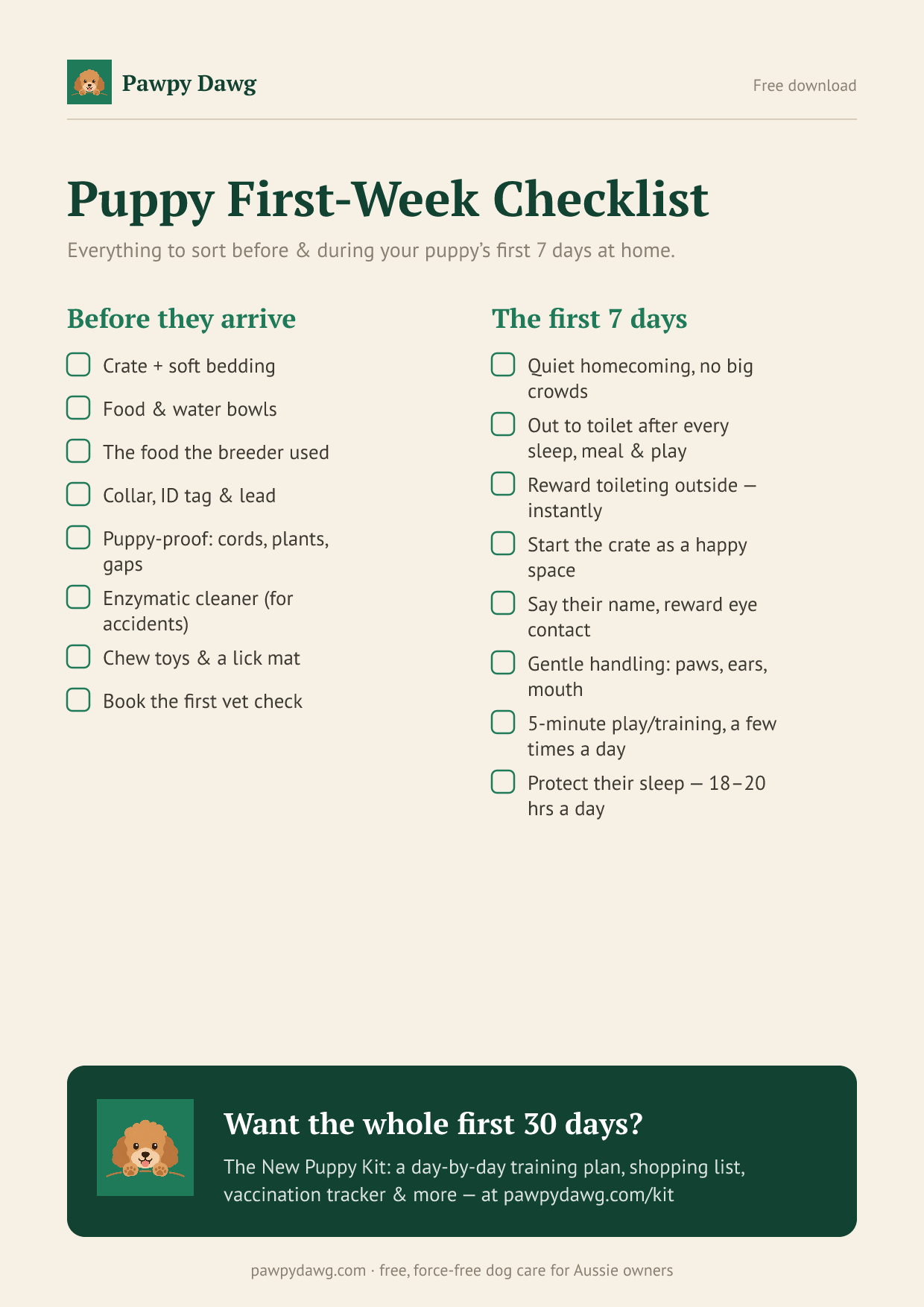
Free printable
Free: the Puppy First-Week Checklist
Everything to sort before and during your puppy's first 7 days home — a printable one-pager. Plus the occasional genuinely useful dog tip. No spam, unsubscribe anytime.
Related guides

Is Pet Insurance Worth It in Australia? The Honest Maths
Is pet insurance worth it in Australia? We crunch real premiums vs real vet bills — cruciate surgery, snake bite & more — so you can decide with confidence.
Read the guide →
How Much a Dog Really Costs Per Year in Australia (2026 Breakdown)
How much does a dog cost per year in Australia? 2026 line-item breakdown covering food, vet, insurance, grooming & the costs first-timers always miss.
Read the guide →
Dog Vaccination Schedule in Australia: What, When and What It Costs
Confused by C3, C5 and kennel cough? Here's your complete dog vaccination schedule Australia cost guide — puppy timelines, adult boosters & typical AUD prices.
Read the guide →