
Adopting a Rescue Dog in Australia: Costs, Process and the First Month
Thinking about adopting a rescue dog in Australia? Understand shelter vs rescue differences, real costs, and a calm first-month plan that sets your dog up to thrive.

Written by Bradley Brown
Founder & editor · Reviewed 2026-11-10
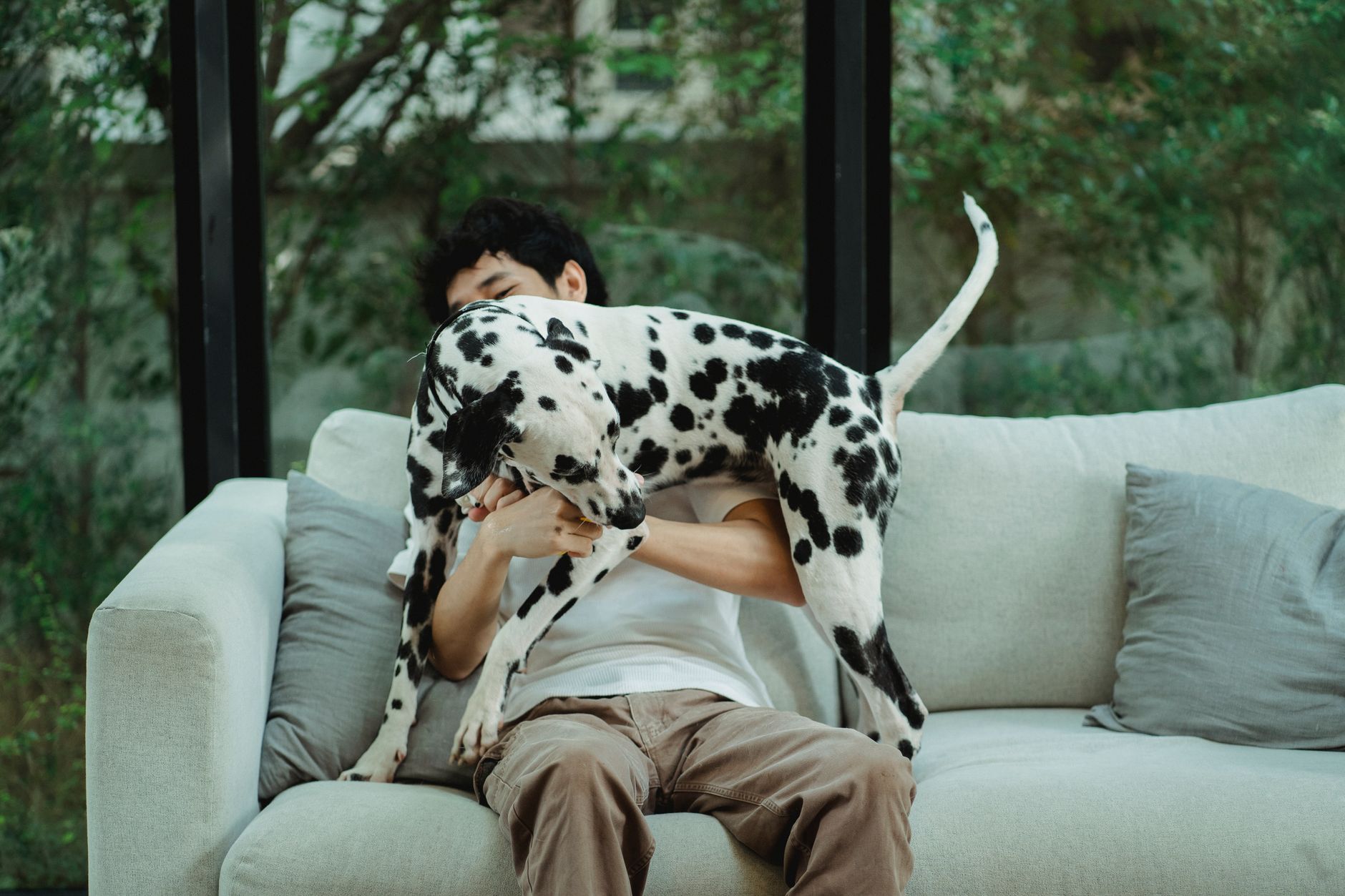
You've finally done it — you've submitted the application, chosen a dog, and now the reality of bringing a rescue home is hitting you all at once. Or maybe you're still in the research phase, overwhelmed by the number of organisations, fees, and conflicting advice. Either way, the process of adopting a rescue dog in Australia is more straightforward than it looks, and the first month goes smoother than most people expect — especially once you understand what's actually happening inside your dog's head.
Your Quick Win for Today
Before anything else: lower your expectations for the first three days — intentionally. Your dog is not broken, not "difficult," and not a reflection of your parenting. They are flooded. New smells, new sounds, new humans. The single most helpful thing you can do right now is decide to do less: fewer visitors, fewer outings, fewer interactions. Set up a quiet corner with a crate or bed, drop some treats nearby without making a fuss, and just exist in the same space. That's it. That's a genuinely good first day.
Shelters vs Rescue Groups: What's the Difference
Many people use the terms interchangeably, but they operate very differently — and knowing this affects your experience.
Council pounds and government shelters (like those run by local councils or the RSPCA) are open-intake facilities. They accept any animal surrendered or seized in their area. Adoption fees are generally lower — typically $50–$250 AUD — but the vetting of adopters is often less involved, and the dog may have had limited behavioural assessment.
Rescue organisations and foster-based rescues (think Rescue Collective, PetRescue-listed groups, or breed-specific rescues) pull dogs from pounds or take owner surrenders and place them in foster homes until adoption. These dogs are often better assessed for temperament, house-training, and compatibility with kids or other animals. Fees are higher — usually $350–$650 AUD — but here's what that typically covers:
| What's Usually Included | Council/Pound | Foster-Based Rescue |
|---|---|---|
| Desexing | ✅ | ✅ |
| Microchipping | ✅ | ✅ |
| Council registration | Sometimes | Rarely (you arrange) |
| Vaccinations (C5) | Partial | Usually up to date |
| Vet health check | Basic | Often thorough |
| Parasite treatment | Basic | Usually included |
| Behavioural assessment | Minimal | Often detailed |
| Foster home insights | ❌ | ✅ |
The foster home insight alone is worth the price difference. A good rescue can tell you whether your dog sleeps through the night, is relaxed on a lead, or goes into meltdown when the postie arrives.
The Application and Approval Process
Most Australian rescues use an online application through PetRescue or their own website. Expect questions about your living situation, yard fencing, work hours, and experience with dogs. Some will conduct a home check — in person or via video call. This is not an interrogation; it's matchmaking. Answer honestly. A good rescue would rather redirect you to a better-suited dog than place one that struggles in your home.
Approval timelines vary from 48 hours to two weeks. If you're waiting, use that time to buy the basics: a flat collar, a 1.8-metre lead, a crate or pen, food and water bowls, and a bag of whatever food the rescue has been feeding (switch gradually to avoid stomach upset).
The 3-3-3 Settling Rule
This is the most evidence-aligned framework for understanding rescue dog behaviour, and it's widely used by behaviourists and rescues alike:
- 3 days — Your dog is overwhelmed. They may not eat, drink, play, or toilet normally. Some shut down; some are hyperactive. Both are stress responses, not personality.
- 3 weeks — They begin to relax into routine. You'll see their real quirks emerge — the good ones and the ones you'll want to work on.
- 3 months — Most dogs feel genuinely secure by now. This is when training sticks, bonding deepens, and behaviour stabilises.
Don't judge your dog — or yourself — in the first three days. Don't judge yourself for judging your dog in the first three days either. It's completely normal.
A Calm First-Month Plan (5–10 Minutes a Day)
Week 1 — Decompress: Minimal handling, no visitors. Let the dog explore on their own terms. Use a long line in the yard if recall isn't established. Feed meals from your hand occasionally to build positive association.
Week 2 — Gentle structure: Introduce consistent meal times and two short, calm walks. Begin one five-minute training session daily using just sit and name recognition with high-value treats (small pieces of cooked chicken work brilliantly).
Week 3 — Expand slowly: Add one new experience every couple of days — a car trip, a new walking route, meeting one trusted friend. Watch for stress signals (yawning, lip-licking, turning away) and retreat before the dog hits threshold.
Week 4 — Assess and adjust: By now you have real data. What's going well? What needs professional input? A single session with a force-free trainer costs around $100–$150 AUD and is worth it if you're seeing reactivity, resource guarding, or separation anxiety early.
What to Have Ready Before Pick-Up Day
- Crate or playpen (crates reduce anxiety for many dogs — don't skip this)
- Enzymatic cleaner for accidents (Nature's Miracle or similar)
- Adaptil diffuser or spray (pheromone-based, not a miracle cure but takes the edge off)
- A vet appointment booked within the first week
- The rescue's phone number saved — good rescues want you to call with questions
The dogs coming through Australian rescues are not damaged goods. Most are ordinary dogs in an extraordinary situation. Give them time, give yourself grace, and lean on the rescue when you need to — that's what they're there for.
As an Amazon Associate we earn from qualifying purchases.
Frequently asked questions
How much does it cost to adopt a rescue dog in Australia?
Adoption fees typically range from $50–$250 AUD at council pounds and $350–$650 AUD through foster-based rescue organisations. The higher fee from rescues usually covers desexing, microchipping, vaccinations, parasite treatment, and a thorough vet check, so it often represents good value compared to sourcing these separately.
What is the 3-3-3 rule for rescue dogs?
The 3-3-3 rule describes three common adjustment phases: the first 3 days (overwhelm and shutdown), the first 3 weeks (routine begins and real personality emerges), and the first 3 months (genuine security and stable behaviour). It's a widely used framework among behaviourists and rescue organisations to help owners set realistic expectations and avoid misjudging their dog too early.
What's the difference between a rescue group and a shelter in Australia?
Council pounds and RSPCA shelters are open-intake facilities that accept any surrendered or seized animal and have lower adoption fees. Foster-based rescue groups pull dogs from pounds and place them in private homes, allowing for detailed behavioural assessments and insights about the dog's daily habits. Foster rescues typically charge more but provide significantly more information about the individual dog.
How long does the rescue dog adoption process take in Australia?
The timeline varies by organisation. After submitting an application — usually through PetRescue or the rescue's own website — approval can take anywhere from 48 hours to two weeks. Some rescues conduct home checks (in person or via video), which can add a few days. Using that waiting period to prepare your home and buy supplies makes the transition much smoother.
My rescue dog won't eat or play — is something wrong?
This is a very common stress response, particularly in the first three days after adoption. Dogs in a new environment can shut down behaviourally — refusing food, being uninterested in play, and sleeping excessively. Keep the environment calm and low-stimulation, offer food without pressure, and give it a few days. If the dog still isn't eating after 48–72 hours or shows other symptoms, contact your vet.
Do I need to do training with a rescue dog?
Basic training — even just five minutes a day working on name recognition and sit — builds trust and communication far more than it teaches obedience. Most rescue dogs respond well once they've had a couple of weeks to decompress. If you're seeing reactivity, resource guarding, or significant separation anxiety in the first month, one session with a force-free trainer (around $100–$150 AUD) can prevent small issues from becoming ingrained habits.
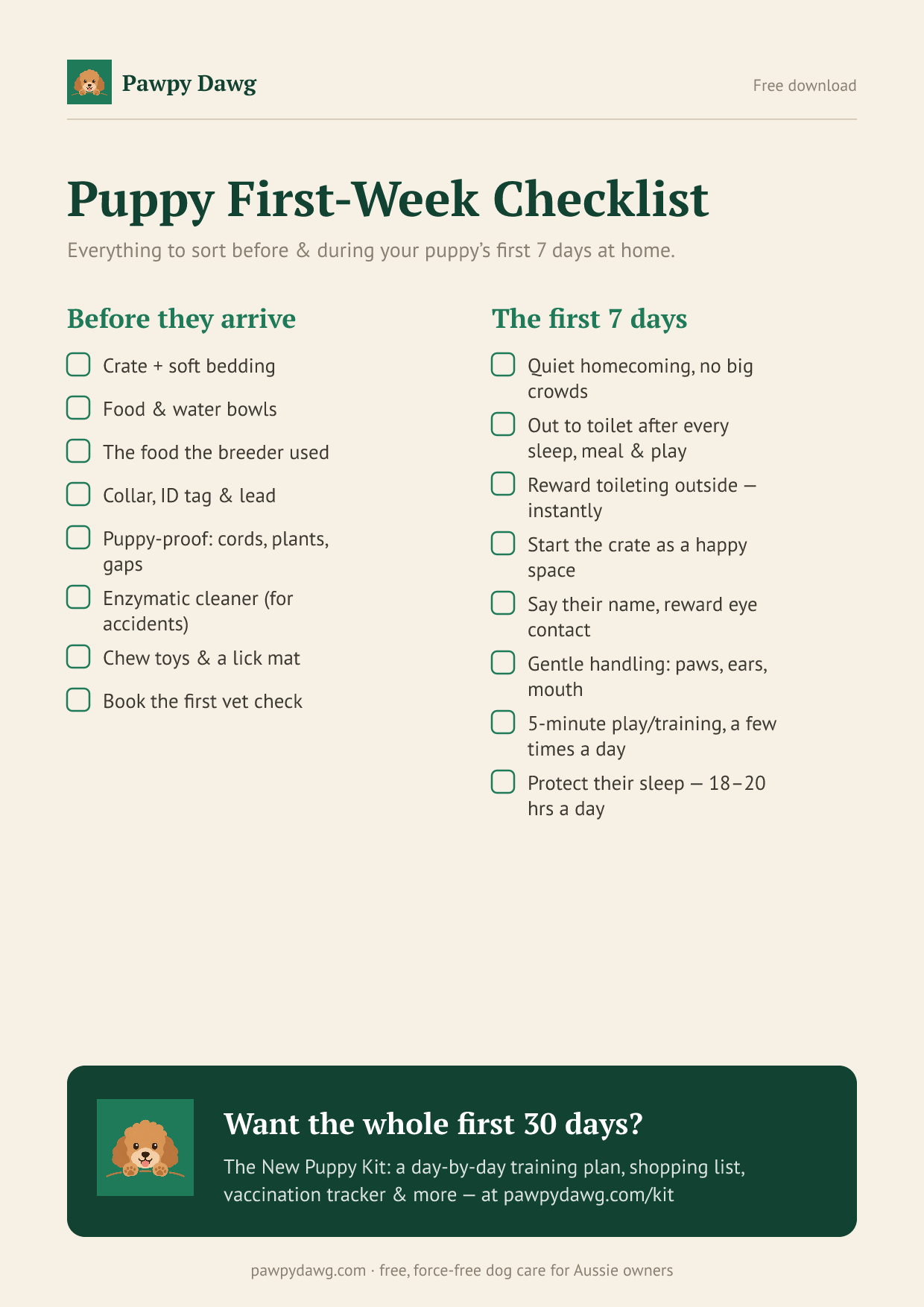
Free printable
Free: the Puppy First-Week Checklist
Everything to sort before and during your puppy's first 7 days home — a printable one-pager. Plus the occasional genuinely useful dog tip. No spam, unsubscribe anytime.
Related guides

Is Pet Insurance Worth It in Australia? The Honest Maths
Is pet insurance worth it in Australia? We crunch real premiums vs real vet bills — cruciate surgery, snake bite & more — so you can decide with confidence.
Read the guide →
How Much a Dog Really Costs Per Year in Australia (2026 Breakdown)
How much does a dog cost per year in Australia? 2026 line-item breakdown covering food, vet, insurance, grooming & the costs first-timers always miss.
Read the guide →
Dog Vaccination Schedule in Australia: What, When and What It Costs
Confused by C3, C5 and kennel cough? Here's your complete dog vaccination schedule Australia cost guide — puppy timelines, adult boosters & typical AUD prices.
Read the guide →