
Storms and Fireworks: Helping a Scared Dog Through New Year's Eve
If your dog scared of fireworks and storms is dreading New Year's Eve, here's how to build a safe den, desensitise early, and survive the night.

Written by Bradley Brown
Founder & editor · Reviewed 2026-11-10
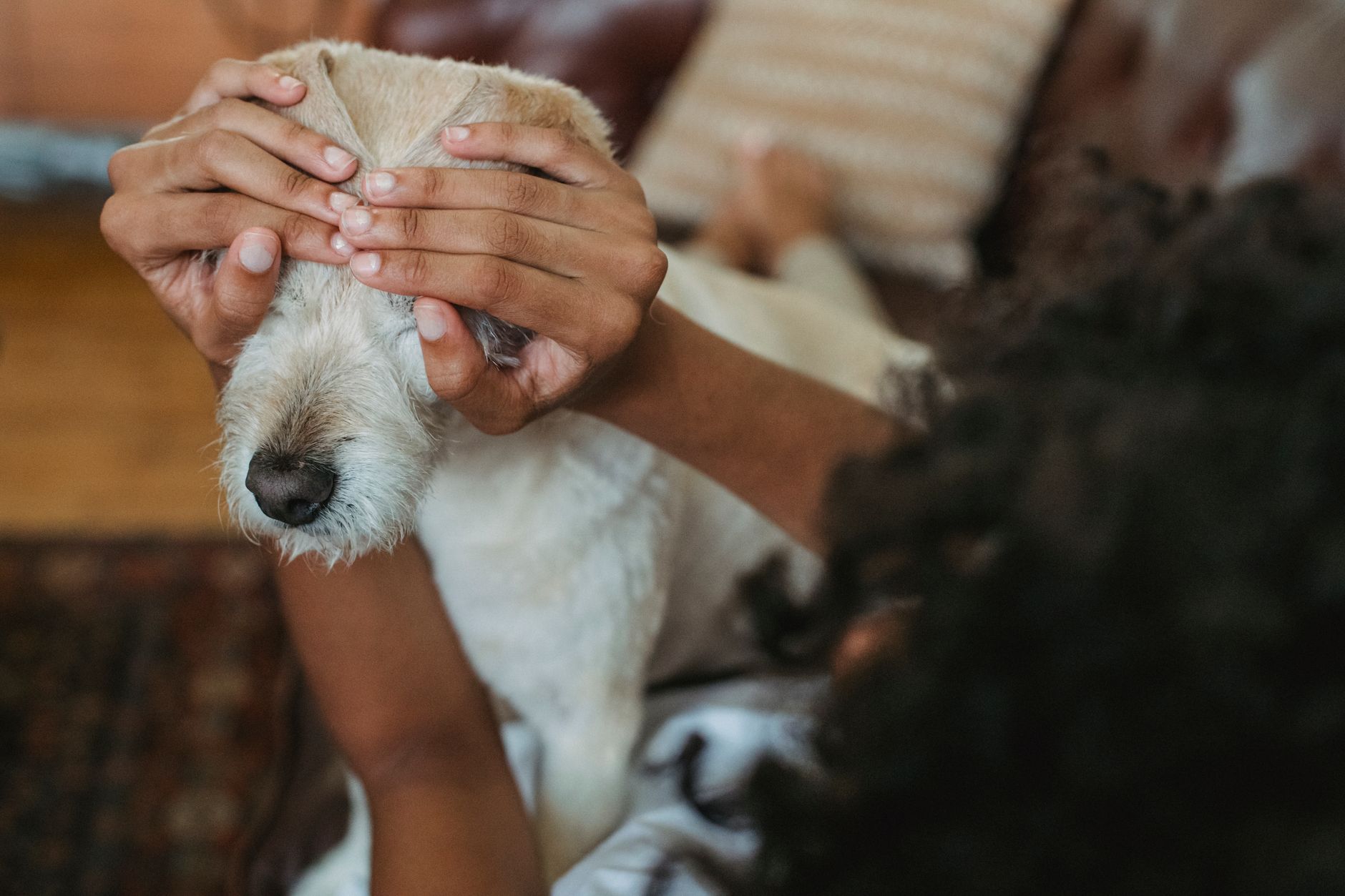
Mia, a four-year-old kelpie cross in suburban Brisbane, starts panting the moment the sky turns grey. Her owner, Priya, has tried everything she can think of — sitting on the floor with her, turning the TV up loud, even wrapping Mia in an old jumper. Last New Year's Eve, Mia broke through a fly-screen door and was found two streets away, shaking under a parked car. Priya felt terrible. She hadn't done anything wrong. Neither had Mia.
What's actually happening in your dog's brain
Noise phobia in dogs is a genuine anxiety disorder, not a training failure. When a dog like Mia hears a thunderclap or a firework burst, her amygdala fires a threat response that floods her body with adrenaline and cortisol — the same chemistry that makes a human jump at a sudden noise, only far more intense and much harder to switch off. Some dogs have a genetic predisposition to it. Herding breeds, rescue dogs with unknown histories, and dogs who had limited sound exposure as puppies are all overrepresented, but any dog can develop it. The fear can also worsen each year if nothing changes, because every bad experience reinforces the neural pathway.
The good news: the brain is plastic. With the right approach — started early enough — most dogs reach a point where they cope rather than panic. "Cope" is a realistic and worthwhile goal. "Doesn't notice at all" is rarer, but it does happen.
Building the den: your most important first move
A dog who is scared of fireworks and storms needs somewhere that feels genuinely safe — not just a spot you've pointed at and hoped for the best. The goal is a small, enclosed space that the dog chooses freely and associates with calm before any stressful event occurs.
How to set it up:
- Choose a low-traffic interior room — a walk-in wardrobe, under a bed, or a laundry. Avoid rooms with large windows if possible.
- Add a crate lined with unwashed clothing that smells like you, or a covered crate with blankets draped over three sides.
- Leave it accessible 24/7 for at least three weeks before New Year's Eve so the dog self-selects it on normal days.
- Feed meals near or inside the den for a week to build a positive association.
- Add a white noise machine or a fan. This genuinely blunts the sharp crack of fireworks — it's not just placebo.
Priya set up Mia's den in the wardrobe off the main bedroom in early December. By Christmas, Mia was sleeping there voluntarily most nights. That alone changed what happened on New Year's Eve.
Sound desensitisation: start at least four weeks out
Desensitisation means gradually exposing your dog to recorded storm and firework sounds at a volume so low it produces no fear response — then slowly, over weeks, increasing it. Done correctly, it retrains the brain's threat assessment. Done too fast, it makes things worse, so patience is the whole game here.
A practical four-week schedule (5–10 minutes a day):
| Week | Volume level | What you're watching for |
|---|---|---|
| 1 | Barely audible — you can talk over it comfortably | No ear flicks, no lip licking, dog stays relaxed |
| 2 | Background noise level — like a TV in another room | Dog notices, looks up briefly, then settles |
| 3 | Moderate — clearly audible across the room | Dog glances at speaker, returns to what they were doing |
| 4 | Realistic — neighbours could hear it faintly | Dog may orient briefly but doesn't freeze, pant, or pace |
Play the sounds during something your dog already enjoys — a chew, a lick mat, or while you scatter-feed kibble on the floor. The good experience runs alongside the sound. Use free YouTube searches for "fireworks sounds for dog training" or "thunderstorm sounds dogs" — these work fine.
If your dog reacts at any volume level, drop back down. There's no shame in spending two weeks on week-one volume. Rushing is the only way to ruin this.
On the night: what to actually do
New Year's Eve itself is about management, not training. The desensitisation work is done; now you're just making the environment as low-threat as possible.
- Close windows and draw heavy curtains to muffle sound and block lightning flashes.
- Put the den to work. Don't lead your dog there — let them go. If they're in the den, leave them alone unless they come to you.
- Stay home if you can. Your calm presence matters. You don't need to perform calm — just be nearby and unbothered.
- Don't comfort-flood. You can absolutely pat and reassure your dog if they seek contact — that will not "reward the fear," which is an outdated idea. What you want to avoid is anxious hovering, which signals to the dog that something genuinely bad is happening.
- Keep feeding going. High-value treats or a frozen Kong in the den can help some dogs. If your dog is too stressed to eat, note it — that's a sign the anxiety is severe and worth discussing with a vet.
- Don't punish any fear behaviour. Mia broke through a screen door. That's a symptom, not a choice.
Consider fitting a well-adjusted ID tag and ensuring your microchip details are current before the night — more dogs go missing around New Year's Eve than almost any other time of year in Australia.
When it's beyond home management: the vet conversation
If your dog is in the category of truly severe phobia — unable to eat, injuring themselves, taking hours to recover after the event — a conversation with your vet before New Year's Eve is not an overreaction. It's the responsible move.
Options your vet may discuss include:
- Situational anxiolytics like trazodone or clonidine, which take the physiological edge off without fully sedating the dog. These need to be trialled before the event to check the dose works for your individual dog.
- Melatonin, which is available over the counter and has some evidence for mild storm anxiety in dogs, though results vary.
- Sileo (dexmedetomidine oromucosal gel), a licensed veterinary product applied to the gums that acts quickly and is specifically indicated for noise aversion. Ask your vet if it's available in your area; pricing is typically in the $60–$100 AUD range per syringe.
- Longer-term anxiolytics (such as fluoxetine or sertraline) for dogs with year-round generalised anxiety — these take weeks to work but can change the baseline.
Thundershirts and DAP (Dog Appeasing Pheromone) diffusers are worth trying as low-risk add-ons, though the evidence base is modest. They work well for some dogs and not at all for others. Use them alongside the den and sound work, not instead of it.
Mia got through last New Year's Eve in her wardrobe den with a frozen Kong, a white noise machine, and a low-dose trazodone from the vet. Priya sat in the bedroom reading. Mia didn't love it — but she stayed inside, she ate her Kong, and she was asleep by 1 a.m. That's a win worth building on.
As an Amazon Associate we earn from qualifying purchases.
Frequently asked questions
How early should I start desensitising my dog to fireworks sounds?
Ideally, start four to six weeks before the event — so early December for New Year's Eve. This gives you time to work through the volume levels slowly without rushing. Even two weeks of consistent daily sessions is better than nothing if you're starting late.
Will comforting my scared dog make the fear worse?
No — this is a persistent myth. You cannot reinforce an emotional state like fear the same way you reinforce a behaviour. If your dog seeks contact, offering calm reassurance is fine. What you want to avoid is visibly anxious hovering, which can signal to your dog that there's a real threat.
What is the best calming medication for dogs scared of fireworks in Australia?
There's no single best option — it depends on the severity of your dog's anxiety and their health history. Sileo gel, trazodone, and clonidine are commonly used situational options in Australia; your vet can advise what's appropriate and ensure you trial it before the actual event. Never use human anxiety or sleep medications without veterinary guidance.
My dog destroys things or tries to escape during storms. Is that normal?
Yes, and it's one of the more serious expressions of noise phobia. Escape attempts and destructive behaviour during storms or fireworks indicate a high level of physiological arousal — the dog is in survival mode, not being naughty. This severity warrants a vet conversation about medication before the next event.
Can I use a Thundershirt instead of doing desensitisation training?
A Thundershirt can help some dogs and is worth trying as a low-risk addition, but the evidence suggests it works best as part of a broader strategy rather than a standalone fix. Desensitisation and a well-established den are more reliably effective, particularly for moderate to severe cases.
My dog only gets scared of thunderstorms, not fireworks. Does the same approach apply?
Largely yes, though storm phobia can be trickier because dogs may also react to barometric pressure changes, static electricity, and the smell of rain — not just the sound. The den, desensitisation to storm recordings, and vet-prescribed anxiolytics for severe cases all apply equally. Some dogs also benefit from anti-static body wraps during storms specifically.
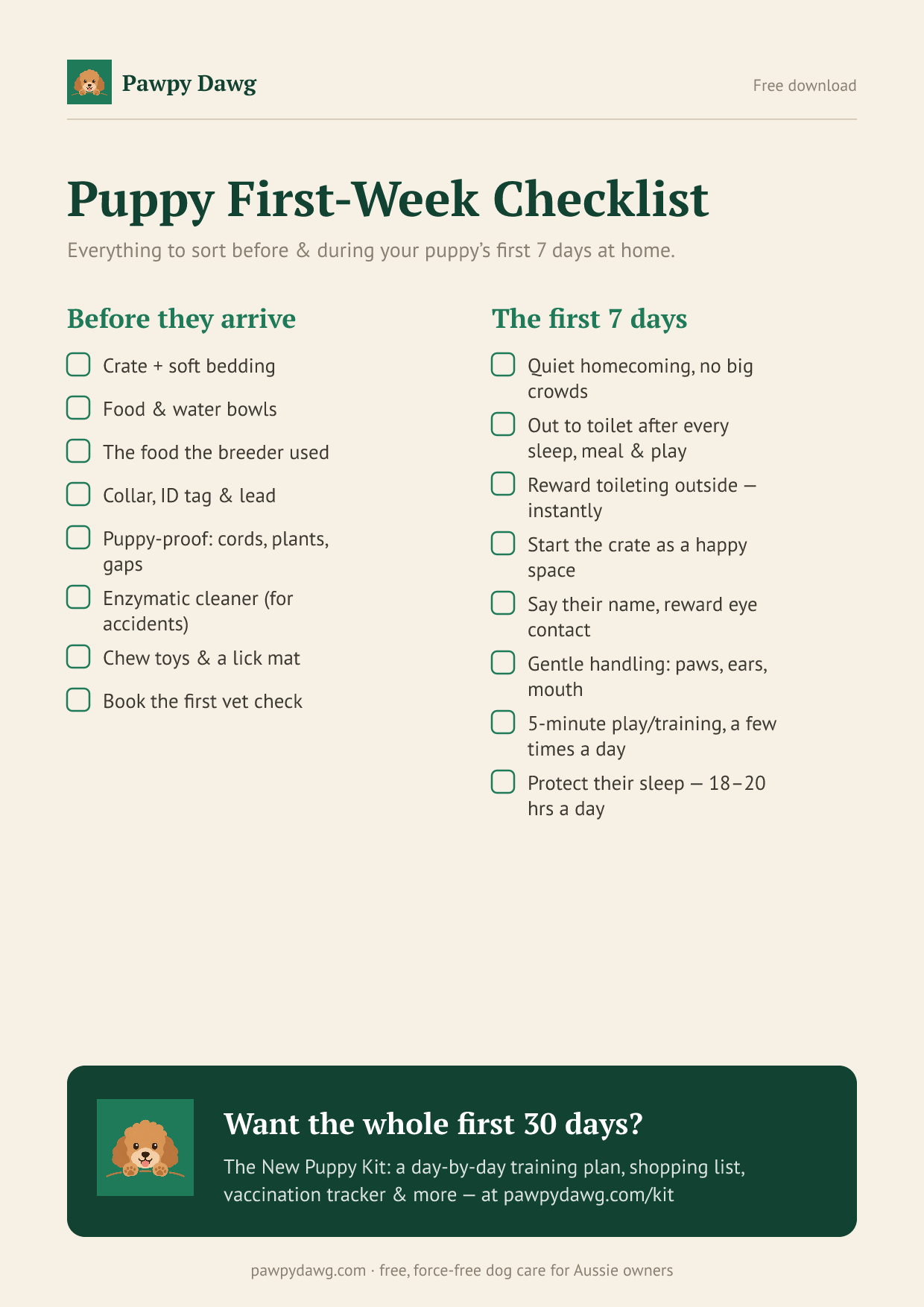
Free printable
Free: the Puppy First-Week Checklist
Everything to sort before and during your puppy's first 7 days home — a printable one-pager. Plus the occasional genuinely useful dog tip. No spam, unsubscribe anytime.
Related guides

Is Pet Insurance Worth It in Australia? The Honest Maths
Is pet insurance worth it in Australia? We crunch real premiums vs real vet bills — cruciate surgery, snake bite & more — so you can decide with confidence.
Read the guide →
How Much a Dog Really Costs Per Year in Australia (2026 Breakdown)
How much does a dog cost per year in Australia? 2026 line-item breakdown covering food, vet, insurance, grooming & the costs first-timers always miss.
Read the guide →
Dog Vaccination Schedule in Australia: What, When and What It Costs
Confused by C3, C5 and kennel cough? Here's your complete dog vaccination schedule Australia cost guide — puppy timelines, adult boosters & typical AUD prices.
Read the guide →