
Rainy-Day Enrichment: 15 Ways to Tire Out Your Dog Indoors
Stuck inside on a rainy day? These 15 indoor enrichment for dogs ideas burn real energy using sniff games, food puzzles, DIY toys and 5-minute training drills.

Written by Bradley Brown
Founder & editor · Reviewed 2026-11-10
The most repeated piece of rainy-day advice — "just let them run laps inside" — is almost useless for most dogs, and actively counterproductive for high-drive breeds. Zoomies burn a little adrenaline, then leave the dog buzzing and you with knocked-over drinks. The research on canine cognition is clear: mental effort tires dogs out faster than physical effort alone. A 15-minute sniff session activates the same parasympathetic "rest and digest" response as a long walk. That's the lever worth pulling when it's bucketing outside.
Here are 15 activities sorted by how much effort they ask of you, because on a rainy Tuesday you probably don't have a lot to spare.
"A Tired Dog Is a Good Dog" — So Run Them Into the Ground
This myth sends owners jogging their dogs up and down hallways until someone pulls a hamstring. The problem: exercise tolerance builds quickly, so the dog who needed 30 minutes last month now needs 45, then 60. You're on a treadmill with no exit.
Worse, aerobic exercise alone can ramp up arousal in already-stimulated dogs. Border Collies, Kelpies, Malinois and similar breeds get more wound up, not less, when given only physical outlets.
The fix is cognitive load. The olfactory cortex takes up roughly 40 times more brain real estate in dogs than in humans. Working that system — sniff games, scatter feeding, nose work — produces genuine tiredness without the arousal spike.
Low-effort sniff games (you barely move):
- Scatter a handful of dry kibble across a textured bath mat and let them fossick.
- Hide 5–6 small treats around one room, say "find it," leave them to it.
- Crumple newspaper loosely into a cardboard box, bury a few treats, done.
Puzzle Feeders Are for Smart Dogs — My Dog's Too Simple for That
Every dog, regardless of breed or age, is capable of working a food puzzle. The assumption that your Staffy or Golden "won't get it" sells them short and also misunderstands how puzzles work — dogs don't solve them through abstract reasoning, they solve them through smell, paw pressure and persistence. That's not a cognitive barrier, it's literally what they were built to do.
The trick is starting below the dog's level so the first session ends in success, not frustration.
Food puzzle progression (5 minutes each, done when the food's gone):
- Day 1–3: A Kong stuffed loosely with wet food. Frozen makes it last longer — prep the night before.
- Day 4–7: A snuffle mat or muffin tin with tennis balls covering each cup.
- Week 2+: A proper puzzle board (brands like Nina Ottosson are widely available in Australia, $25–$70 AUD).
One meal a day fed this way replaces the bowl entirely. No extra food, no extra prep beyond what feeding already requires.
Training Is Only Worth Doing in Long Sessions
Five minutes of training is not a consolation prize — it's often more effective than 30-minute sessions because dogs learn best when they're fresh and sessions end before attention drifts. Research on memory consolidation in animals supports short, frequent repetition over long single blocks.
Rainy days are perfect for skills that don't need outdoor space.
Short training drills that work indoors:
- Sit-stay duration: Add one second at a time. A solid 30-second stay is genuinely useful in real life.
- Hand targeting: Touch your palm = click/treat. Fast to teach, foundation for dozens of other skills.
- Go to mat: The single most underrated calmness skill. Dog lies on a mat on cue, stays there. Directly reduces frantic behaviour.
- Rear-end awareness: Have the dog step back feet onto a low book. Builds body awareness and tires dogs out surprisingly fast.
Keep sessions to 5–10 minutes, end on a win, and resist the urge to squeeze in one more repetition when the dog starts yawning or sniffing the floor — those are "I'm done" signals.
DIY Enrichment Is a Faff — You Need Proper Gear
The pet enrichment industry is booming precisely because it's marketed as essential. It isn't. Some of the most effective indoor enrichment for dogs costs nothing.
DIY options that actually work:
- The towel roll: Lay a towel flat, scatter treats across it, roll it up. Dog unrolls it. Takes 30 seconds to set up.
- Cardboard box dig pit: Fill a large box with scrunched paper, plastic bottles (lids off), and old fabric. Hide treats. Let them excavate.
- The muffin tin game: 12-cup muffin tin, treats in some cups, tennis balls over all of them. Dog removes balls to find food.
- Lick mat from a plate: Smear peanut butter, plain yoghurt or mashed banana on a flat plate. Licking is genuinely calming — it activates the parasympathetic nervous system the same way sniffing does.
- Ice block treats: Freeze kibble or dog-safe veg in a container of water. Give it on a towel. Supervision needed; remove when it gets small enough to be a choke hazard.
- Sock tug toy: Stuff an old sock with another old sock, knot the end. Free, washable, works as a tug or a throw.
Tug, done correctly, is not an aggression trigger — that's another myth worth retiring. It's high-value interaction that burns energy and builds engagement with you. The only rule: you decide when the game starts and ends.
Putting It Together on a Rainy Day
You don't need all 15. Pick one from each effort tier and you've got a 20-minute plan that leaves the dog genuinely calm:
- Scatter their breakfast across a bath mat (2 minutes of your time).
- Run a 5-minute "go to mat" training session mid-morning.
- Set up a towel roll or cardboard dig box in the afternoon.
That's it. Dogs don't need novelty every day — they need engagement. Even repeating the same sniff game three days running gives them something meaningful to do, and meaningful is what turns a frustrated, bouncy dog into one who can settle.
The guilt about skipping a walk is understandable, but it's misplaced. A well-enriched indoor day often produces a calmer dog than a rushed 15-minute walk in the rain ever will.
As an Amazon Associate we earn from qualifying purchases.
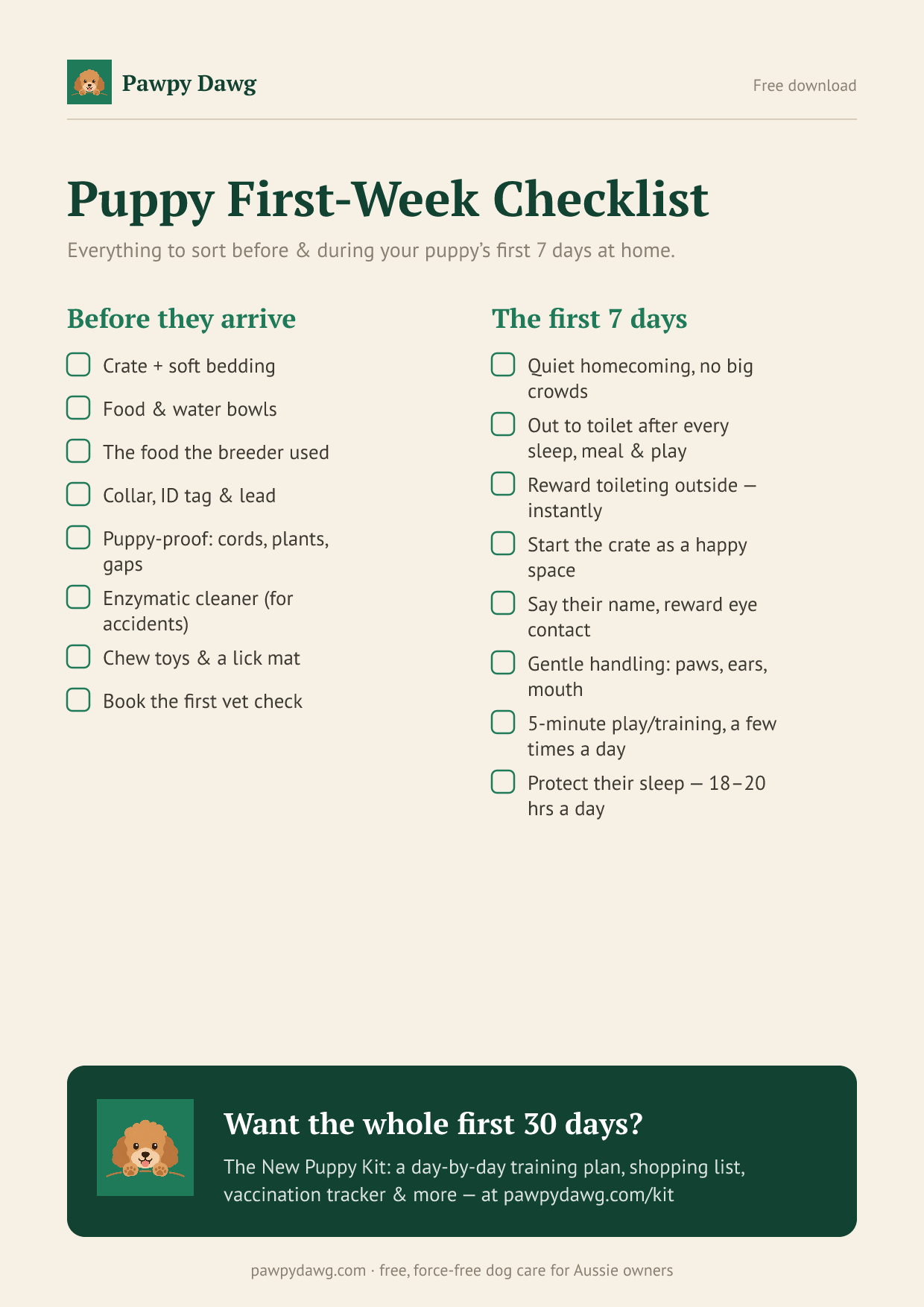
Free printable
Free: the Puppy First-Week Checklist
Everything to sort before and during your puppy's first 7 days home — a printable one-pager. Plus the occasional genuinely useful dog tip. No spam, unsubscribe anytime.
Related guides

Is Pet Insurance Worth It in Australia? The Honest Maths
Is pet insurance worth it in Australia? We crunch real premiums vs real vet bills — cruciate surgery, snake bite & more — so you can decide with confidence.
Read the guide →
How Much a Dog Really Costs Per Year in Australia (2026 Breakdown)
How much does a dog cost per year in Australia? 2026 line-item breakdown covering food, vet, insurance, grooming & the costs first-timers always miss.
Read the guide →
Dog Vaccination Schedule in Australia: What, When and What It Costs
Confused by C3, C5 and kennel cough? Here's your complete dog vaccination schedule Australia cost guide — puppy timelines, adult boosters & typical AUD prices.
Read the guide →