
Best Dogs for Apartment Living in Australia (and Strata Rules to Check)
Choosing the best dogs for apartments Australia isn't just about breed size. Learn which traits actually matter, what strata rules require, and how to set up your space.

Written by Bradley Brown
Founder & editor · Reviewed 2026-11-10
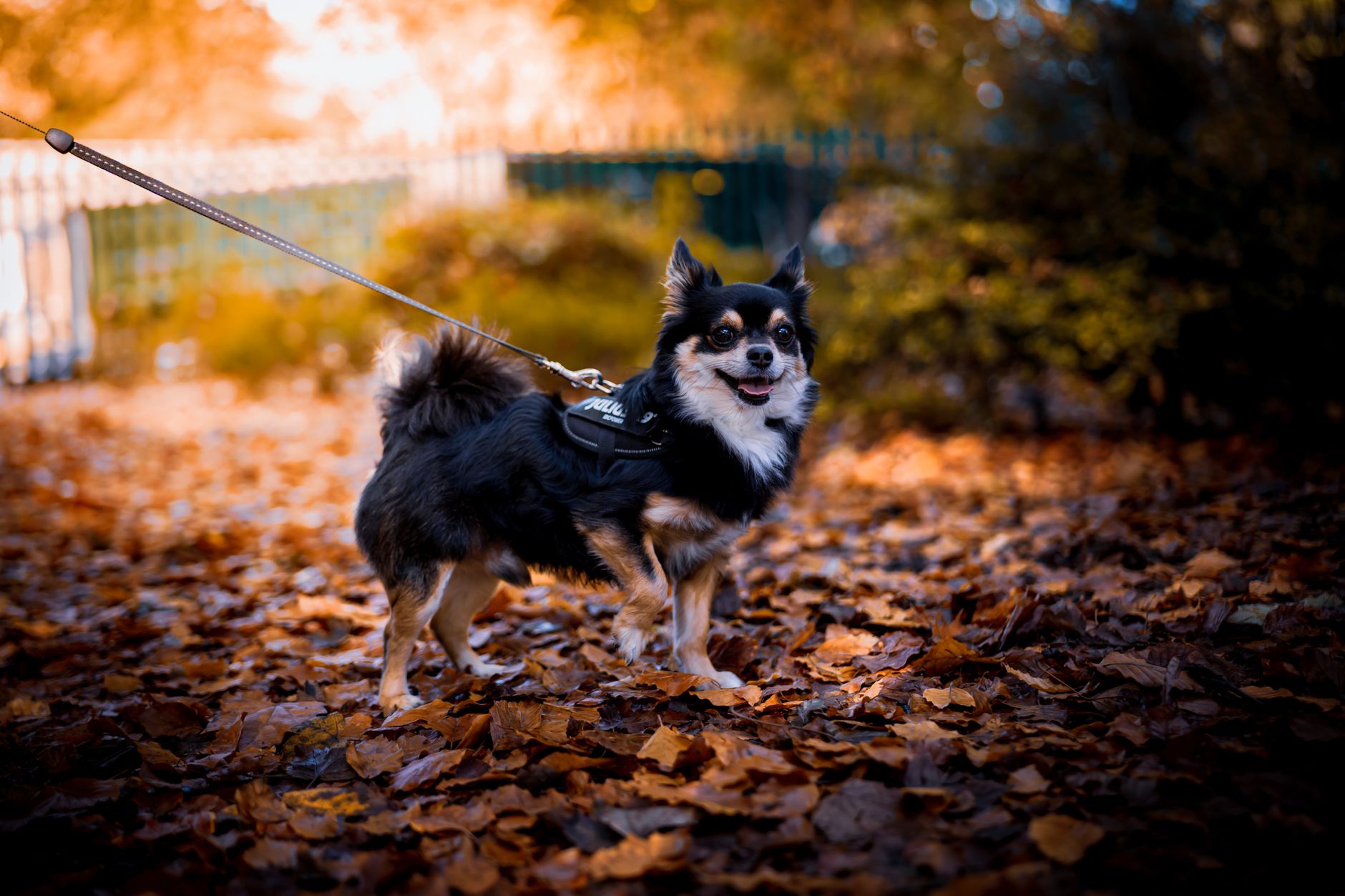
The most common piece of advice people get when searching for a dog to suit apartment living is "just get a small breed." It sounds logical, but it backfires constantly. Some of the most destructive, anxious, and noise-complaint-generating dogs in apartment blocks are small ones — Jack Russell Terriers, Miniature Pinschers, and Beagles among them. Meanwhile, a Greyhound will sleep contentedly on your couch for eighteen hours if you give it a solid thirty-minute run once a day.
Breed size is a shortcut that skips the real question: does this dog's temperament, exercise needs, and noise profile match your lifestyle and your building? Here's what to actually look for.
"Get a small dog and it'll be fine in an apartment"
Small dogs were often bred for jobs — ratting, flushing game, tracking scent — that require intense energy output and independent thinking. That drive doesn't disappear because they weigh five kilograms.
Reality: The traits that predict apartment success are low-to-moderate exercise requirements, calm baseline temperament, low tendency to vocalise, and an ability to settle alone. Breed size is loosely correlated with some of these, but it is not the trait itself.
Dogs that genuinely do well in smaller spaces tend to share these characteristics:
| Trait | Why it matters in an apartment |
|---|---|
| Low-moderate daily exercise needs | Easier to meet without a yard; less frustration energy |
| Settles quickly after activity | Won't pace or destructively redirect indoors |
| Low-to-moderate bark tendency | Reduces strata noise complaints and neighbour tension |
| Adaptable to routine | Tolerates the predictable rhythms of apartment life |
| Comfortable with close proximity to humans | Apartment living means little personal space for the dog too |
Breeds that tick most of these boxes regardless of size include Greyhounds and Whippets, Cavalier King Charles Spaniels, Basset Hounds, Shih Tzus, Maltese, French Bulldogs (with caveats around health), Pugs (same caveat), and larger calm breeds like the Great Dane or Mastiff — yes, really. A bored Border Collie or a high-drive Malinois in an apartment is a welfare problem waiting to happen, whatever anyone tells you at the pet shop.
"Strata won't let you have a dog, so don't bother asking"
This one stops a lot of potential owners before they even start. It is also outdated.
Reality: In 2021, New South Wales law changed so that strata schemes cannot have a blanket ban on pets. Owners corporations can set reasonable conditions (size limits, registration requirements, keeping dogs on-lead in common areas), but a flat "no pets" rule for owner-occupiers is no longer enforceable in NSW. Similar reforms have progressed across other states — Queensland updated its laws in 2023, and other jurisdictions are catching up.
What you do need to check before you commit to a dog:
- Your state's current strata legislation (NSW, QLD, VIC, WA, SA, TAS, ACT, NT all have different rules — check the relevant state government tenancy or strata authority website)
- The by-laws specific to your building — these may set a weight limit (commonly 10 kg), restrict the number of pets, or require approval before bringing a dog home
- Your lease, if you're renting — landlords in most states can still refuse pets, though reforms in Victoria, Queensland and Tasmania have shifted this significantly
- Body corporate approval processes — many buildings require a written application; starting this before you get the dog is far less stressful than after
Renters in particular should get any approval in writing and keep a copy. Verbal okays disappear.
"A dog will be miserable if it can't access a garden"
Owners feel enormous guilt about this, and it is largely misplaced.
Reality: Dogs do not miss gardens. They miss adequate exercise, mental stimulation, and your company. A dog with two decent daily walks, a sniff-focused outing a few times a week, and regular interaction is far more content than a dog left in a large backyard alone all day.
What actually matters for a dog thriving without outdoor access at home:
- At least two walks daily — even fifteen to twenty minutes each is enough for many lower-energy breeds
- Sniff time counts more than distance — letting your dog follow its nose on a "sniff walk" is genuinely tiring; sniffing activates the dog's nervous system in a way that pure physical exercise doesn't
- Mental enrichment indoors — a Kong stuffed with wet food and frozen, a licki mat, a snuffle mat, a short five-minute training session. These don't need to be elaborate
- A settled departure routine — the main welfare risk in apartments is separation anxiety, which is a training issue, not a space issue. Brief, calm departures practiced regularly from puppyhood (or from day one with a rescue) make a significant difference
"Rescue dogs won't adapt to apartment life"
The assumption here is that rescue dogs are unpredictable, possibly traumatised, and need a "proper" house to decompress. Some rescues do have specific needs. But this is not the category rule.
Reality: Many rescue organisations now assess dogs specifically for apartment suitability. Greyhound adoption groups, in particular, are well-versed in placing these dogs into small spaces — they come desexed, assessed for cat-friendliness, and with foster-home behavioural data. Adult rescues also have a significant advantage over puppies for apartment living: what you see is largely what you get. No unknown adult-size, no unknown adult temperament. A three-year-old Cavalier cross from rescue who has been living in a foster apartment is a known quantity.
If you're going through a rescue, tell them honestly: apartment, no outdoor space, X hours alone per day, neighbouring units close. A good rescue coordinator will steer you toward the right dog.
Setting up your apartment before the dog arrives
You don't need much. A crate or pen gives the dog a defined, safe space (never use it as punishment). A mat near your most-used area gives them a "place" to settle. Baby gates can section off rooms while a new dog finds its feet. Non-slip matting on hard floors protects joints and gives dogs confidence moving around.
For noise management — which is your biggest strata risk — identify your dog's triggers early. If the lift, the hallway, or the door buzzer sets them off, counter-conditioning those sounds from week one is far easier than fixing an entrenched habit six months later. Keep a bag of small treats near the front door for the first few months. Every buzzer = treat. That's it.
The dogs that struggle in apartments are almost always dogs who weren't the right fit for the owner's actual lifestyle, or who didn't get the early settling-in work. That's not a space problem. It's a matching problem — and it's one you can solve before you bring a dog home.
As an Amazon Associate we earn from qualifying purchases.
Frequently asked questions
What is the best dog breed for an apartment in Australia?
There's no single best breed — it depends on your daily routine and building rules. Greyhounds, Cavalier King Charles Spaniels, Shih Tzus, Maltese, Basset Hounds, and even large calm breeds like Great Danes can all suit apartments well. Focus on a dog's exercise needs, bark tendency, and ability to settle alone rather than body size.
Can strata body corporates ban dogs in NSW and other Australian states?
In NSW, blanket bans on pets in strata schemes are no longer enforceable following 2021 legislative changes. Queensland and several other states have also updated laws to give owners more rights to keep pets. However, buildings can still set reasonable conditions, so always check your specific by-laws and get written approval before bringing a dog home.
How much exercise does an apartment dog need each day?
Most apartment-suitable breeds do well with two walks of fifteen to thirty minutes each per day, plus mental enrichment indoors such as puzzle feeders or short training sessions. Sniff-focused walks are especially valuable — following their nose genuinely tires dogs out more than a fast walk of the same length.
Are renters in Australia allowed to keep dogs?
It depends on the state. Victoria, Queensland, and Tasmania have introduced reforms making it harder for landlords to refuse pets outright, while other states still allow landlord refusal. Always get permission in writing before getting a dog, and check the current rules for your specific state's residential tenancy legislation.
How do I stop my apartment dog from barking and causing noise complaints?
Identify what triggers the barking — common culprits include the lift, door buzzer, or hallway foot traffic — and counter-condition those triggers early by pairing them with treats. Adequate daily exercise and mental stimulation also reduce anxiety-driven barking significantly. If barking is severe or linked to separation, a registered veterinary behaviourist or accredited trainer is worth consulting.
Is it cruel to keep a dog in an apartment with no garden?
No — dogs don't miss gardens, they miss adequate exercise, stimulation, and company. Research consistently shows that dogs in smaller spaces with attentive owners and regular walks fare far better than dogs left alone in large yards. The key factors are daily outings, mental enrichment, and a settled routine around your departures and arrivals.
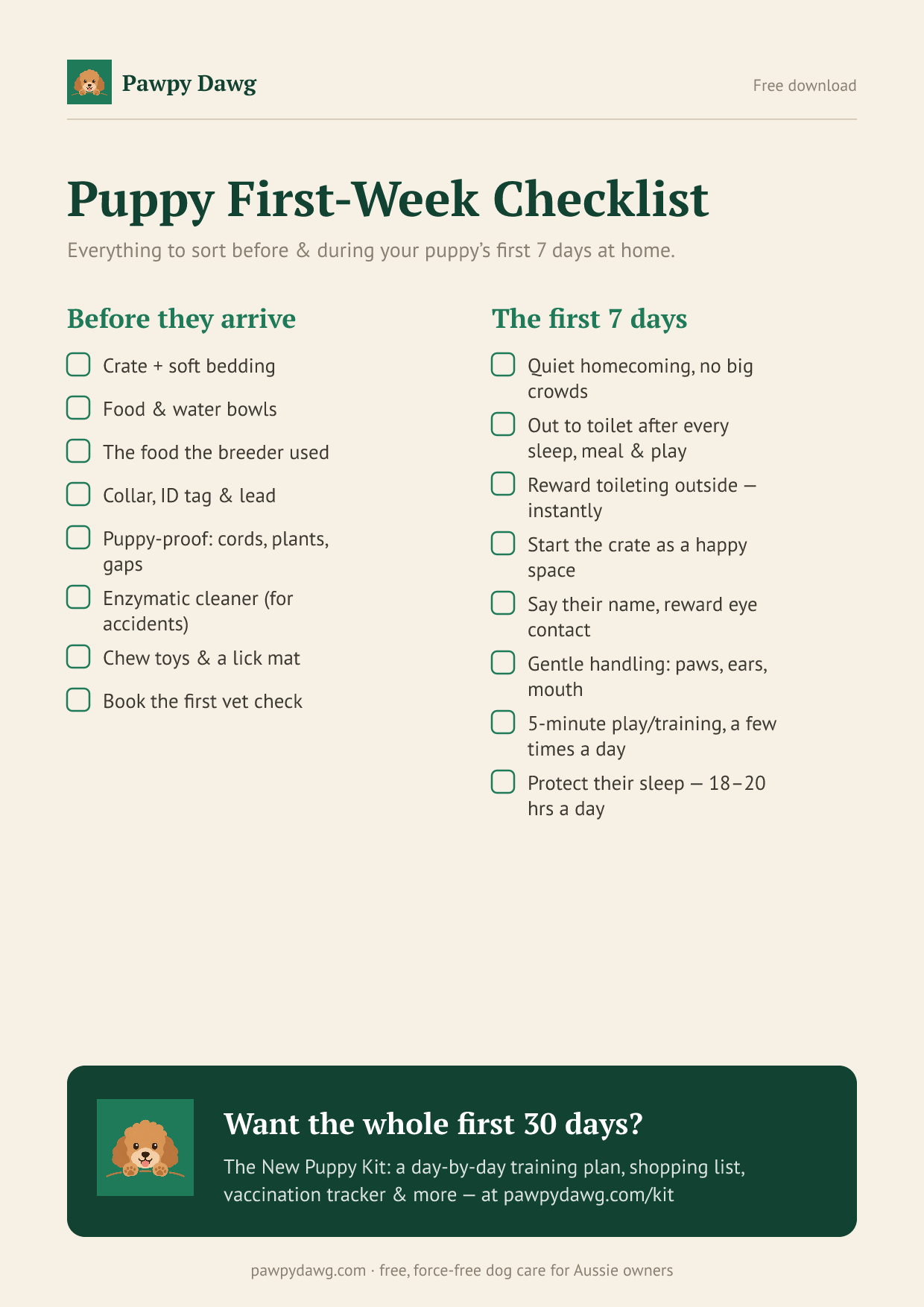
Free printable
Free: the Puppy First-Week Checklist
Everything to sort before and during your puppy's first 7 days home — a printable one-pager. Plus the occasional genuinely useful dog tip. No spam, unsubscribe anytime.
Related guides

Is Pet Insurance Worth It in Australia? The Honest Maths
Is pet insurance worth it in Australia? We crunch real premiums vs real vet bills — cruciate surgery, snake bite & more — so you can decide with confidence.
Read the guide →
How Much a Dog Really Costs Per Year in Australia (2026 Breakdown)
How much does a dog cost per year in Australia? 2026 line-item breakdown covering food, vet, insurance, grooming & the costs first-timers always miss.
Read the guide →
Dog Vaccination Schedule in Australia: What, When and What It Costs
Confused by C3, C5 and kennel cough? Here's your complete dog vaccination schedule Australia cost guide — puppy timelines, adult boosters & typical AUD prices.
Read the guide →