
Slow Feeders and Puzzle Bowls: Do They Work and Which to Buy
Does a slow feeder bowl actually help your dog? Learn why fast eating is risky, which styles work best, and how to introduce one without frustration.

Written by Bradley Brown
Founder & editor · Reviewed 2026-11-13
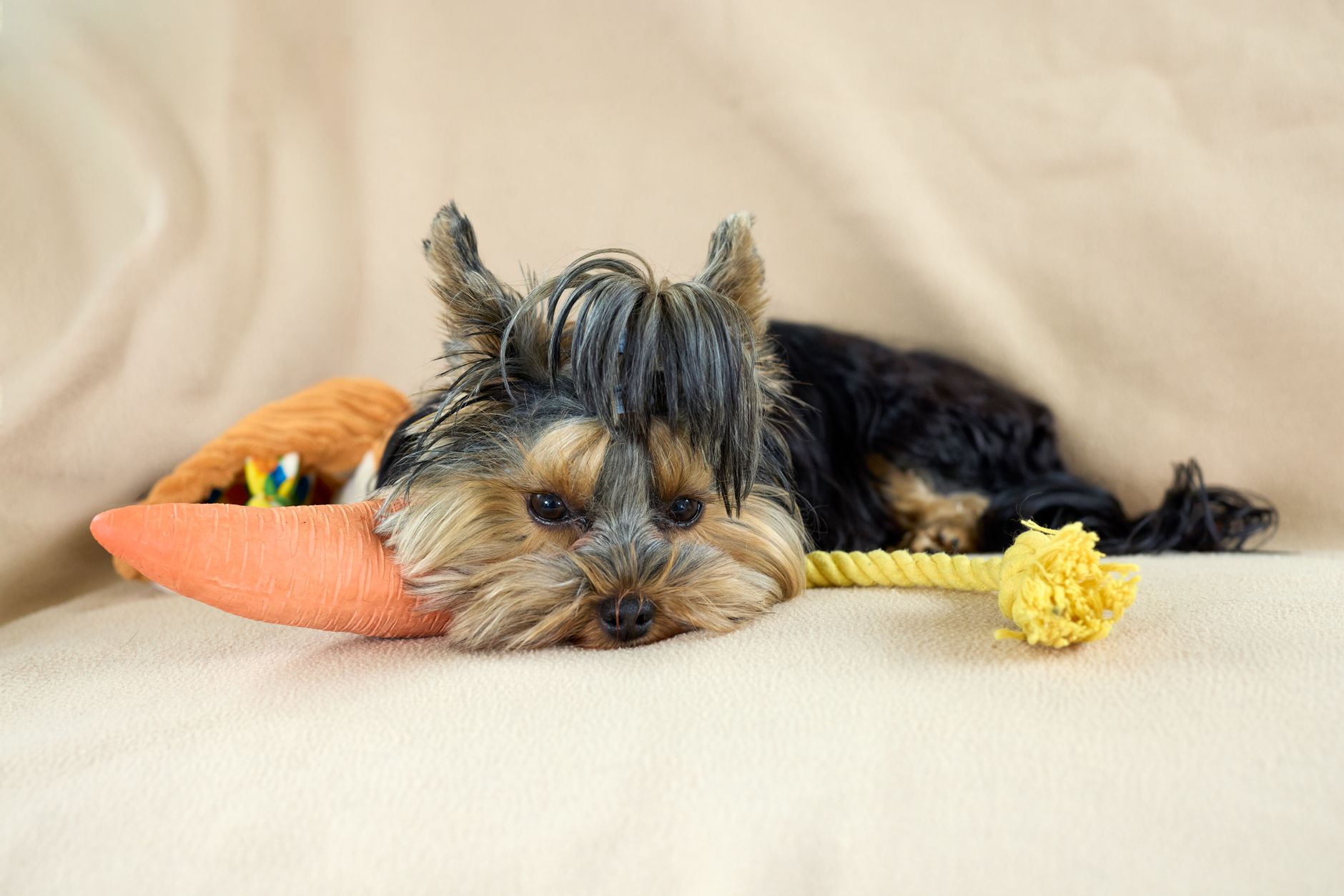
If your dog inhales a full bowl of food in under thirty seconds, you've probably watched it happen with a mix of awe and unease. That instinct to eat fast isn't bad behaviour — it's deeply wired. But it does carry real risks, and a slow feeder bowl for dogs is one of the simplest tools you can add to a daily routine without any training required.
Why speed-eating is worth taking seriously
Dogs that eat very fast tend to swallow large amounts of air alongside their food. This causes visible bloating and discomfort in many dogs, but in deep-chested breeds — think German Shepherds, Great Danes, Weimaraners, Standard Poodles — it raises the risk of gastric dilatation-volvulus (GDV), a life-threatening condition where the stomach twists. GDV requires emergency surgery and kills quickly if untreated. Vets are clear that anything reducing the rate of food intake in at-risk breeds is worthwhile.
Beyond GDV risk, fast eaters are more likely to regurgitate undigested food shortly after meals, and they tend to feel hungry again sooner because rapid eating doesn't give satiety signals time to kick in. Slower eating genuinely improves digestion and helps dogs feel fuller for longer.
What a slow feeder actually is (and what it isn't)
A slow feeder bowl is any bowl designed to interrupt the dog's ability to take large mouthfuls. That's the whole mechanism. The dog has to work around ridges, mazes, pegs, or raised sections to reach the food, which forces smaller bites and breaks up the rhythm.
They're not puzzle feeders in the full sense — puzzle feeders ask a dog to solve a problem to release food, which provides cognitive stimulation. A slow feeder bowl just slows consumption. Both are useful, but they serve different purposes. If your dog is eating too fast, a slow feeder is the right tool. If your dog is bored, restless, or under-stimulated, a puzzle feeder addresses that separately.
The main slow feeder styles:
- Maze bowls — flat or shallow bowls with raised walls forming a labyrinth pattern. Good for wet food and kibble. Easy to clean. Most widely available.
- Peg or pillar bowls — raised cylindrical pegs dotted across the bowl floor. Work well with kibble but can be harder to scrub clean around the base of each peg.
- Lick mats — flat silicone mats with a textured surface, designed for wet food, raw, or peanut butter (xylitol-free). Excellent for dogs who eat so fast that maze bowls barely slow them down.
- Snuffle mats — fabric mats with strips or pockets that hide kibble. Slower still, and add an element of sniff-based enrichment. Good for dogs who've mastered maze bowls quickly.
- Topple or wobble feeders — the dog nudges a weighted toy to dispense kibble. Best for dogs who also need mental stimulation and exercise around mealtimes.
Days one and two: picking the right starting point
Gauge how fast your dog currently eats. If they finish 200g of kibble in under 45 seconds, start with a lick mat or a snuffle mat — maze bowls will barely register as a challenge. If they take one to two minutes, a standard maze bowl will be effective.
Don't start with the hardest option available. A dog that repeatedly fails to get food out of a feeder in the first few sessions may refuse to use it at all. The goal in the first two days is for the dog to associate the new bowl with a positive, slightly effortful experience — not frustration.
Spread the food across the feeder loosely rather than packing it in. Packing it in creates a solid mass that's nearly impossible to eat from and defeats the purpose entirely.
Days three to five: watching what changes
By day three, most dogs have worked out the basic navigation. You'll notice them slowing down on their own as they get better at extracting food efficiently. That's fine — a slight speed increase as they learn is normal and doesn't mean the feeder has stopped working.
Watch for pawing or flipping the bowl. This usually means the feeder is too hard for the food type (wet food in a tight maze, for instance), or the bowl isn't stable enough. A non-slip mat underneath, or a feeder with a suction base, fixes the flipping issue immediately.
If the dog walks away from the feeder mid-meal and doesn't return, the feeder is too difficult. Drop back to something easier. Meals should take two to five minutes — not ten.
Week two: signs it's genuinely helping
By the end of the first week and into the second, look for:
- Meals consistently taking two to four minutes rather than under one
- Less visible abdominal distension immediately after eating
- Reduced regurgitation (if that was happening)
- The dog settling calmly after meals rather than pacing or immediately demanding more
If your dog is still vomiting after meals despite a slow feeder, or if the bloating looks severe and the dog is trying to vomit without producing anything, that's an emergency vet call — don't wait.
What to spend, and what's genuinely not worth the money
Decent slow feeder bowls in Australia range from about $15 to $45. The LickiMat range (made in Australia) sits around $20–$30 and holds up well to dishwasher cleaning. The Outward Hound Fun Feeder is around $20–$35 and widely stocked at Petbarn and PetO. Both are good starting points.
You don't need to spend $60+ on a feeder. The expensive options often just look more attractive — the slowing mechanism is identical.
What doesn't work well:
- Bowls with very deep, narrow channels that trap wet food and go mouldy between washes
- Cheap feeders with sharp plastic edges at the base of maze walls — they can graze the dog's muzzle
- Feeders that are too small for the dog's snout to reach comfortably
Check that the maze opening width suits your dog's face. A flat-nosed breed (Bulldog, Pug, French Bulldog) needs a shallow maze or a lick mat — standard maze bowls are physically difficult for them to use.
DIY options that actually work
You don't need to buy anything to slow a dog down at mealtimes.
- Muffin tin method: spread kibble across a 12-cup muffin tin. The dog has to move between cups. Free, effective, easy to wash.
- Tennis ball in the bowl: one or two tennis balls placed in a standard bowl forces the dog to eat around them. Crude, but it works.
- Scatter feeding: throw kibble across a patch of grass or a mat. Sniffing out individual pieces slows eating significantly and adds enrichment.
- Freeze the meal: mix wet food or kibble with a little water or bone broth, spread on a lick mat, freeze overnight. Frozen meals take far longer to eat and work well on hot days.
None of these cost anything beyond what you already have. If your dog has a GDV risk and you're waiting for a feeder to arrive, the muffin tin method is a perfectly adequate stopgap.
Week three and beyond: when to step it up
Once your dog reliably takes two or more minutes to finish meals, you can experiment with slightly harder feeders or introduce puzzle feeding separately from mealtimes. At this point, the slow feeder has done its core job.
Some dogs plateau — they get efficient enough at a feeder that meal times creep back down toward one minute. If that happens, rotate between two feeders, switch to scatter feeding a few nights a week, or try a wobble feeder. Variety keeps the eating pace honest without requiring you to buy a new product every month.
A slow feeder bowl for dogs is a low-effort, low-cost change with a genuinely meaningful payoff for dogs prone to gulping. Five minutes to set up, nothing to train, nothing to maintain beyond washing it. That's a good ratio.
As an Amazon Associate we earn from qualifying purchases.
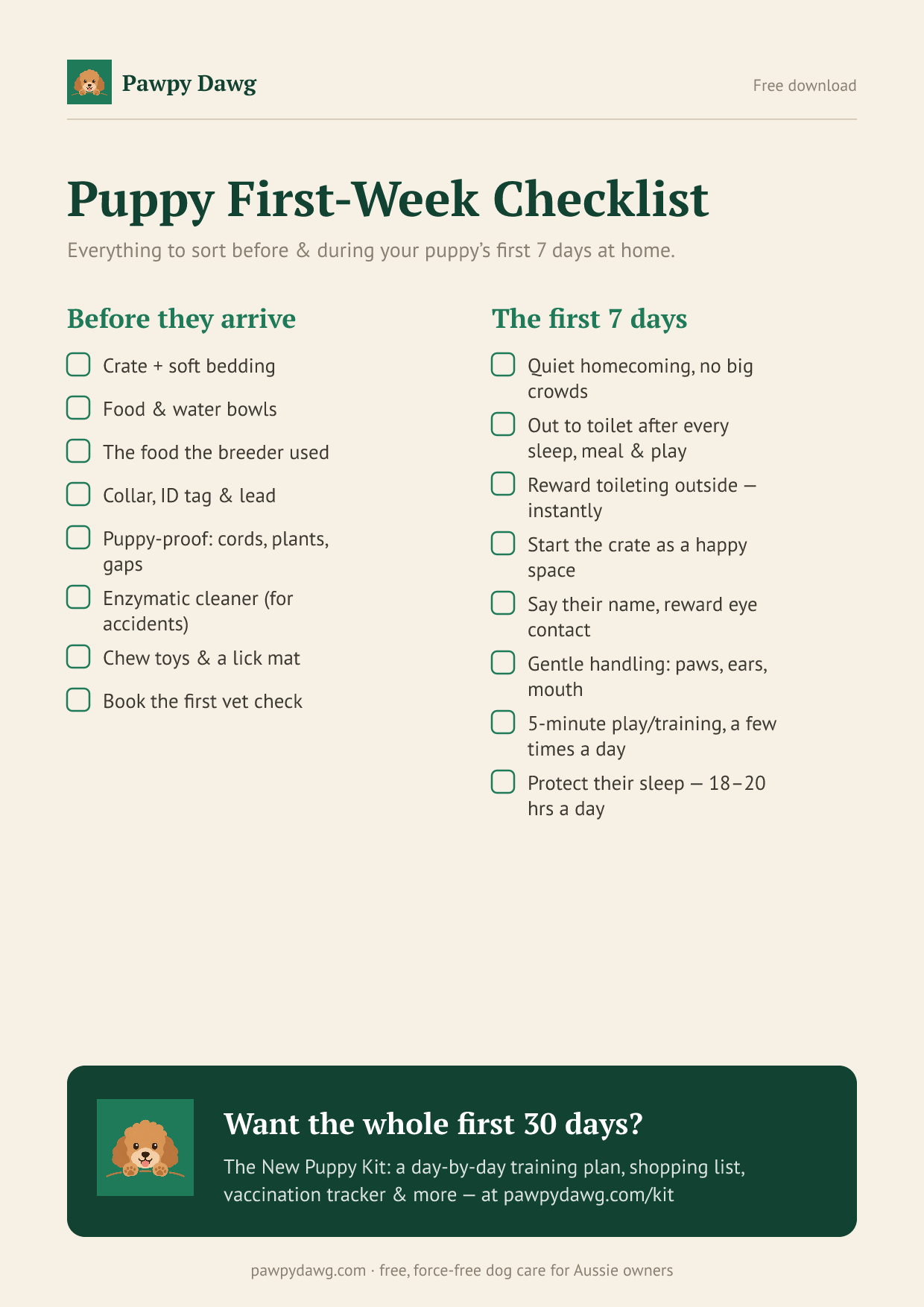
Free printable
Free: the Puppy First-Week Checklist
Everything to sort before and during your puppy's first 7 days home — a printable one-pager. Plus the occasional genuinely useful dog tip. No spam, unsubscribe anytime.
Related guides

Is Pet Insurance Worth It in Australia? The Honest Maths
Is pet insurance worth it in Australia? We crunch real premiums vs real vet bills — cruciate surgery, snake bite & more — so you can decide with confidence.
Read the guide →
How Much a Dog Really Costs Per Year in Australia (2026 Breakdown)
How much does a dog cost per year in Australia? 2026 line-item breakdown covering food, vet, insurance, grooming & the costs first-timers always miss.
Read the guide →
Dog Vaccination Schedule in Australia: What, When and What It Costs
Confused by C3, C5 and kennel cough? Here's your complete dog vaccination schedule Australia cost guide — puppy timelines, adult boosters & typical AUD prices.
Read the guide →