
Do Dogs Need Winter Coats? An Australian Guide
Do dogs need winter coats in Australia? Find out which breeds truly feel the cold, how to get the right fit, and when a coat actually does more harm than good.

Written by Bradley Brown
Founder & editor · Reviewed 2026-11-13
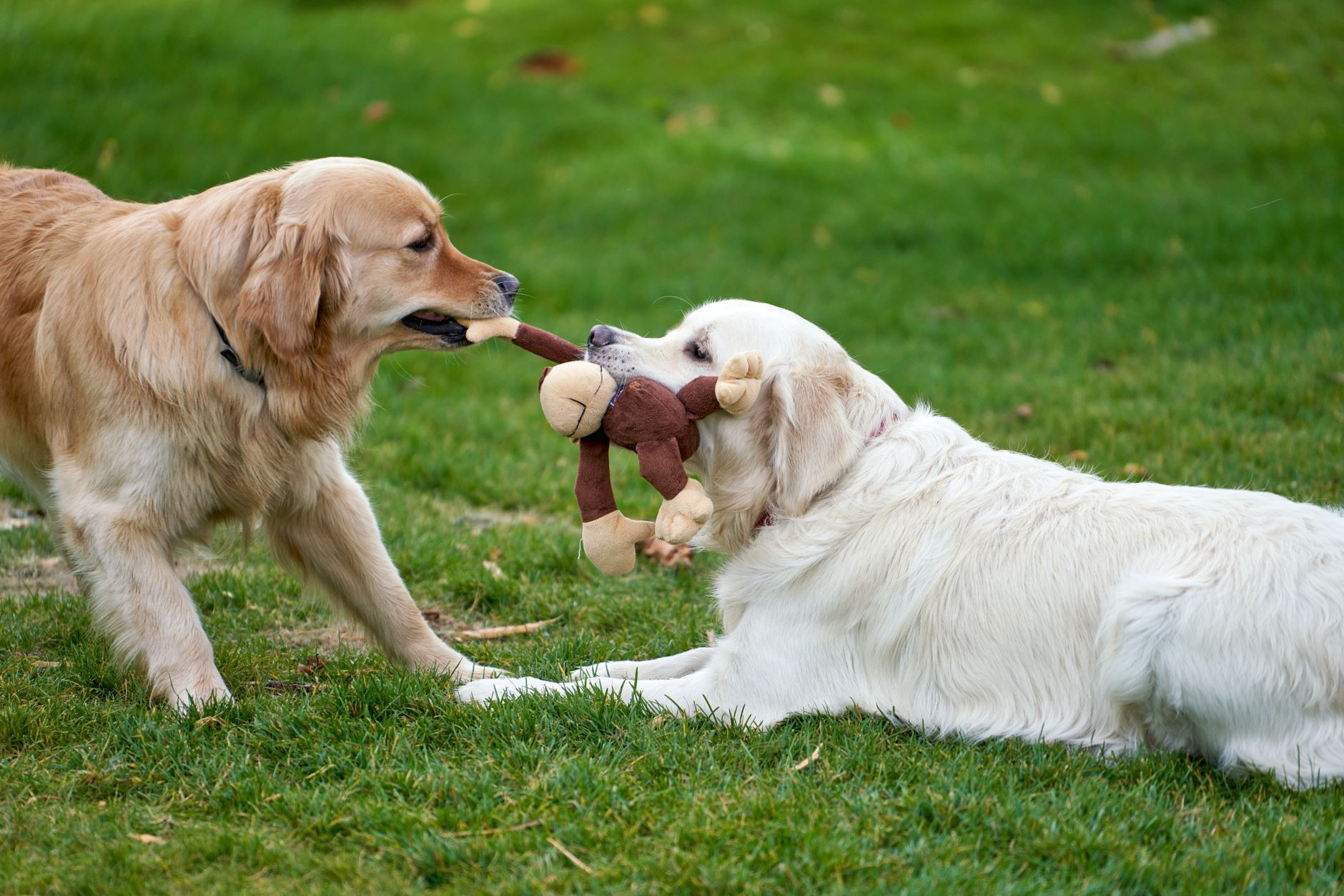
Australia's winters are mild by global standards, but "mild" covers a lot of ground. A July morning in Hobart or the Snowy Mountains is genuinely cold — single digits, damp, and sometimes icy. Melbourne's winters are overcast and wet. Even Sydney dips low enough at night to make a thin-coated small dog shiver on an early walk. The question isn't really whether Australian winters are cold enough to matter; it's whether your dog's biology is equipped to handle the specific conditions you're asking it to walk in.
The physiology behind why some dogs feel it and others don't
Dogs regulate body temperature differently from humans, but they are absolutely not immune to cold. The key factors are coat type, body composition, age, and health status.
Coat type and density are the most obvious variables. Double-coated breeds — Huskies, Malamutes, Bernese Mountain Dogs, Golden Retrievers, Border Collies — carry a dense undercoat that traps warm air close to the skin. This is genuine insulation, evolved for cold climates. Single-coated breeds have one layer of guard hair and little to no insulation beneath it. Think Greyhounds, Whippets, Vizslas, Dobermanns, Boxers, and Weimaraners. When ambient temperature drops, these dogs lose body heat fast because there's almost nothing buffering the skin from the cold air.
Body composition compounds this. Fat provides some insulation, and muscle mass generates heat through metabolism. Lean, fine-boned breeds — Greyhounds again are the textbook example — have almost no subcutaneous fat and a large surface-area-to-body-mass ratio. Heat radiates away from them quickly. A Labrador carrying healthy muscle and a moderate fat layer handles 10°C far more comfortably than a retired racing Greyhound of the same weight.
Size matters, but not in a simple "small dogs get cold" way. A tiny dog does have proportionally more surface area relative to its mass, which accelerates heat loss. But a well-insulated Miniature Schnauzer with a thick double coat will manage cold better than a large, single-coated Ridgeback. Focus on coat type first, then size.
Age and health shift the picture considerably. Puppies under about six months haven't fully developed thermoregulation. Senior dogs — roughly eight-plus for large breeds, ten-plus for small — often have reduced metabolic rate and may also be dealing with arthritis or other conditions that cold genuinely worsens. Dogs with hypothyroidism, Cushing's disease, or any condition that affects coat quality or circulation are more vulnerable than their breed might suggest. If your vet has flagged any of these, factor it in.
Which dogs genuinely benefit from a coat in Australian conditions
For the purpose of deciding whether to buy a coat, you can sort most dogs into one of three groups.
Almost certainly benefit from a coat: Greyhounds, Whippets, Italian Greyhounds, Miniature Pinschers, Chihuahuas, Xoloitzcuintlis, Chinese Cresteds, Boxers, Vizslas, Weimaraners, Dobermanns, and other lean single-coated breeds. Also: any dog that is visibly shivering on walks, any senior dog showing reluctance to move in the cold, puppies in the cooler months, and dogs recovering from illness or surgery where maintaining body temperature matters.
Situationally benefit: Small or medium dogs with moderate single coats — Staffordshire Bull Terriers, French Bulldogs, Boston Terriers. In Melbourne or Canberra in July, yes. In Brisbane in June, probably not. The same dog may need a coat on a 6°C wet morning and nothing on a 14°C sunny one.
Unlikely to need a coat, and may be harmed by one: Double-coated breeds in good health — Huskies, Malamutes, Samoyeds, Australian Shepherds, Border Collies, Golden and Labrador Retrievers, most Spitz-type breeds. Their undercoat is doing exactly what it evolved to do. Adding a coat over a dense double coat can trap heat, cause overheating during exercise, and in some coats, mat the undercoat or prevent it from functioning properly. If your Husky has been clipped — a practice most groomers and vets advise against — their insulation is compromised, and that changes the calculation.
A quick behavioural read is useful too. A dog that seeks warmth indoors, curls tightly, or shivers during or after walks is telling you something. A dog that bounds enthusiastically outside and flops in a cool spot when it gets back doesn't need help staying warm.
Sizing a coat correctly — where most people go wrong
A poorly fitted coat is worse than no coat. It can restrict movement, cause chafing, slip and tangle in the dog's legs, or create pressure points that cause discomfort. Here's how to get it right.
You need three measurements: back length (base of the neck to the base of the tail), chest girth (the widest point of the chest, usually just behind the front legs), and neck girth. Of these, chest girth is the most critical — it's where coats most often go wrong. Measure with a soft tape and add about 2–3 cm for comfort.
Always cross-reference your measurements against the specific brand's size chart, not a generic sizing guide. A "medium" varies significantly between brands. When a coat arrives, check the following before the tags come off:
- You can slide two fingers flat under the chest strap without forcing
- The coat doesn't pull tight across the shoulders when the dog walks or sits
- The hem doesn't hang past the base of the tail (can interfere with toileting)
- The dog's movement — particularly its natural gait and stride — looks unaffected
If the dog immediately tries to remove it, freezes, or starts moving awkwardly, something is wrong with the fit or the dog needs time to adjust. Introduce the coat indoors with treats and short sessions before expecting the dog to wear it outside.
Fabric and construction: frosty mornings vs wet weather
Not all dog coats are built for the same conditions, and Australia's winter variation means matching fabric to climate matters.
For cold, dry mornings — think Canberra, alpine Victoria, inland NSW — you want insulation. Fleece-lined coats or coats with a polyester fill (similar to a human puffer jacket) hold warmth well and are lightweight. Fleece alone works at mild cold but loses effectiveness when wet, so for anywhere with winter rain, fleece should be under a water-resistant outer shell, not on its own.
For wet, mild winters — coastal areas, much of Melbourne's winter, Tasmania's wetter months — the priority is water resistance rather than heavy insulation. A waxed canvas coat, a ripstop nylon shell, or a softshell with a DWR (durable water repellent) coating will keep the dog drier and prevent that specific misery of a soaking wet dog still somehow shivering. Wet fur loses its insulating properties almost entirely, so keeping the coat dry matters as much as adding warmth.
Avoid coats that aren't breathable, particularly for dogs that move at any pace. If a dog is trotting or running in a fully waterproof but non-breathable coat, it will overheat even in cold weather. Look for materials described as "breathable waterproof" or softshell fabrics that offer some weather resistance without sealing in body heat.
Reflective trim is worth having on any coat used for early morning or evening walks — not for warmth, but because Australian drivers aren't expecting to share the road with a black dog at 6:30am in winter.
For Greyhounds specifically: their unusual barrel chest and deep girth means standard coats often don't fit well. Several Australian brands — Chilly Dogs, Pawsome Couture, and specialty Greyhound coat makers — produce patterns specifically for the sighthound shape. It's worth buying breed-specific if you have one.
When a coat does more harm than good
This is the part that tends to get skipped in pet-retail contexts, because there's no money in telling you not to buy something.
Putting a coat on a double-coated dog that doesn't need one can cause overheating, which is genuinely dangerous. It can also compress and mat the undercoat, reducing the coat's natural insulating ability over time and creating grooming problems. If you've bought a coat for your Golden Retriever because it looked cute, there's no crisis — just don't make it a regular thing on active walks.
Coats can also create dependency in dogs that aren't particularly cold-sensitive. This isn't a major welfare concern, but it's worth knowing: if you dress a healthy, moderately coated dog in a coat every winter, it may become less comfortable without one. The coat replaces the mild thermoregulatory effort the dog would otherwise manage on its own.
Extended coat-wearing without checks can cause skin issues. Any coat left on for hours — particularly in a dog that is active and sweating, or one with any skin condition — can trap moisture and lead to hotspots or fungal issues. Remove coats when the dog is indoors in a heated environment, and check the skin beneath regularly.
For dogs with brachycephalic (flat-faced) anatomy — Bulldogs, Pugs, French Bulldogs — there's an additional consideration. These dogs are already prone to overheating because their airway anatomy makes panting less efficient. If you're walking a Frenchie in cold weather and they appear to need a coat, choose something very lightweight and remove it at the first sign of heavy panting.
The honest summary: if your dog's breed, body type, age, or health puts them in the "likely to feel the cold" category, a well-fitted coat on a cold morning is a straightforward welfare improvement. If your dog is a healthy, well-insulated adult in moderate conditions, the coat is probably more for you than for them — and that's fine, as long as you're checking for fit and overheating.
For dogs used to coats: if you notice unusual skin irritation, persistent scratching at the coat, or changes in coat texture under the garment, raise it with your vet. Allergic contact dermatitis from coat linings, though uncommon, does occur, and it's worth ruling out if something seems off.
Frequently asked questions
At what temperature does a dog need a coat in Australia?
There's no universal threshold, because breed and body type matter more than the number on the thermometer. As a rough guide, lean single-coated breeds like Greyhounds and Whippets benefit from a coat once it drops below around 10°C. Small thin-coated dogs may feel it at 12–13°C, especially with wind or rain. Double-coated breeds like Border Collies and Labradors generally don't need help until temperatures are well below what most Australian winters deliver.
Do Greyhounds need a coat in winter?
Yes — Greyhounds are one of the breeds that most clearly benefit from a coat in cooler weather. They have a single, very thin coat, almost no subcutaneous fat, and a large surface area relative to their body mass, which means they lose heat quickly. In most southern Australian cities, a Greyhound will genuinely be more comfortable in a coat on winter mornings. Look for sighthound-specific sizing, as their deep chest and narrow waist don't suit standard coat patterns.
Can a dog overheat in a winter coat?
Yes, and it's the most common coat-related mistake. Double-coated breeds like Huskies, Golden Retrievers, and Australian Shepherds can overheat even in cold weather if a coat traps their natural body heat. Even appropriate coat-wearing dogs can overheat during active exercise. Remove the coat if the dog is panting heavily, and don't leave coats on during vigorous play or indoor time in a heated house.
How do I measure my dog for a coat?
Take three measurements with a soft tape: back length (base of neck to base of tail), chest girth (widest point of the chest, behind the front legs), and neck girth. Chest girth is the most important — it's where fit most often fails. Add 2–3 cm to your chest measurement for comfort, and always check the specific brand's size chart rather than relying on generic S/M/L labels.
Should I put a coat on my dog overnight?
Generally not, unless your dog sleeps outside in genuinely cold conditions. If a dog sleeps indoors — even in a cool room — a coat can trap moisture, cause overheating, and lead to skin irritation if worn for hours. A warm, draught-free sleeping spot with a blanket the dog can burrow into is usually a better solution. If your dog sleeps outside and your climate warrants it, a specifically designed outdoor dog coat or kennel bedding is safer than a walking coat worn overnight.
Do Staffy dogs need a coat in winter?
In warmer parts of Australia — Queensland, the Northern Territory, coastal WA — a Staffy is unlikely to need a coat. In Melbourne, Canberra, or Tasmania, a Staffordshire Bull Terrier's short single coat provides limited insulation, and a lightweight coat on cold, wet mornings is a reasonable call. Watch for shivering or reluctance to go outside as your cue.
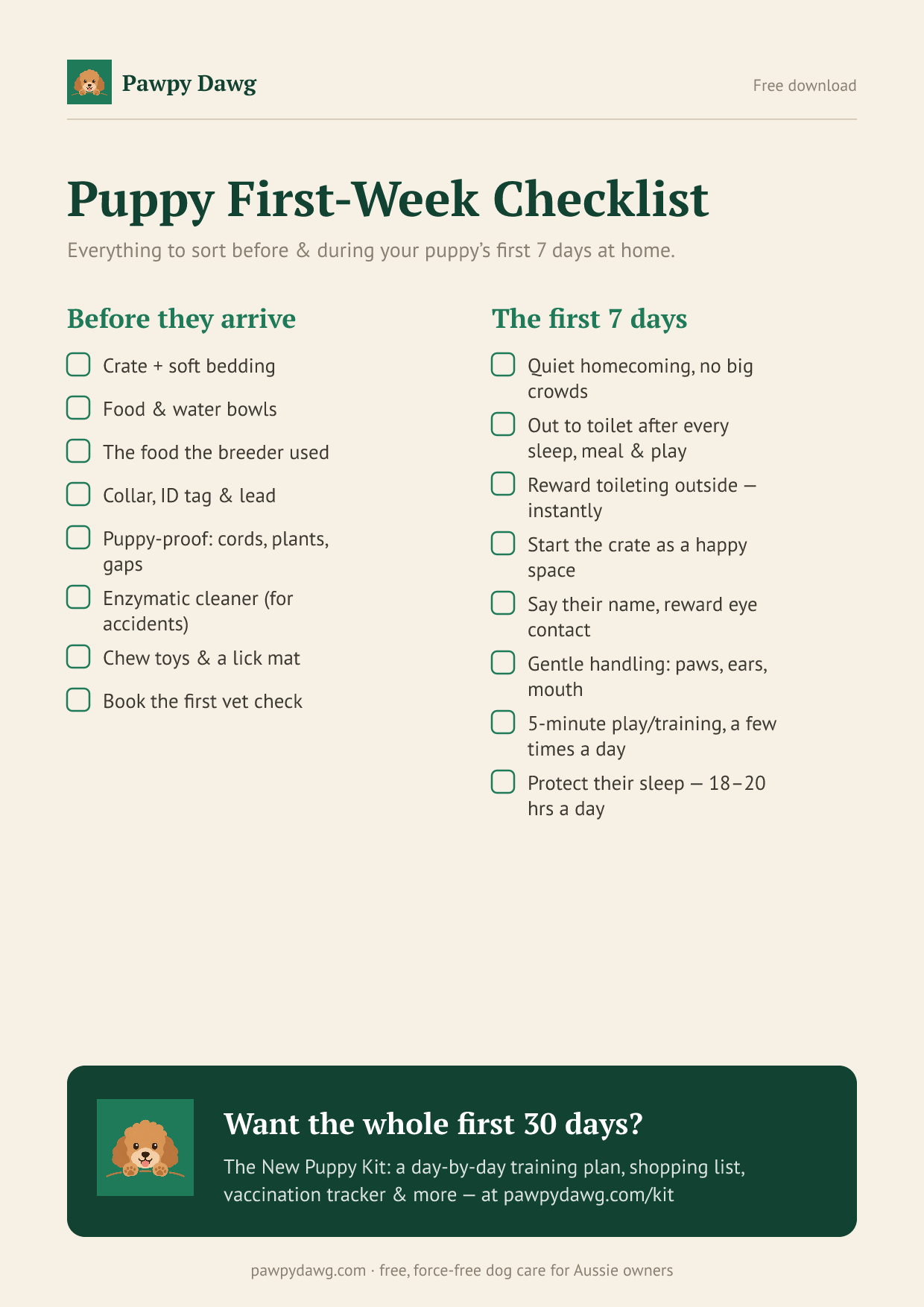
Free printable
Free: the Puppy First-Week Checklist
Everything to sort before and during your puppy's first 7 days home — a printable one-pager. Plus the occasional genuinely useful dog tip. No spam, unsubscribe anytime.
Related guides

Is Pet Insurance Worth It in Australia? The Honest Maths
Is pet insurance worth it in Australia? We crunch real premiums vs real vet bills — cruciate surgery, snake bite & more — so you can decide with confidence.
Read the guide →
How Much a Dog Really Costs Per Year in Australia (2026 Breakdown)
How much does a dog cost per year in Australia? 2026 line-item breakdown covering food, vet, insurance, grooming & the costs first-timers always miss.
Read the guide →
Dog Vaccination Schedule in Australia: What, When and What It Costs
Confused by C3, C5 and kennel cough? Here's your complete dog vaccination schedule Australia cost guide — puppy timelines, adult boosters & typical AUD prices.
Read the guide →