
Escape-Proofing Your Yard: Fences, Gates and Digging Fixes for Australian Homes
Create an escape proof yard for your dog with the right fence height, digging fixes, secure gate latches, and renter-friendly options that actually work.

Written by Bradley Brown
Founder & editor · Reviewed 2026-11-12
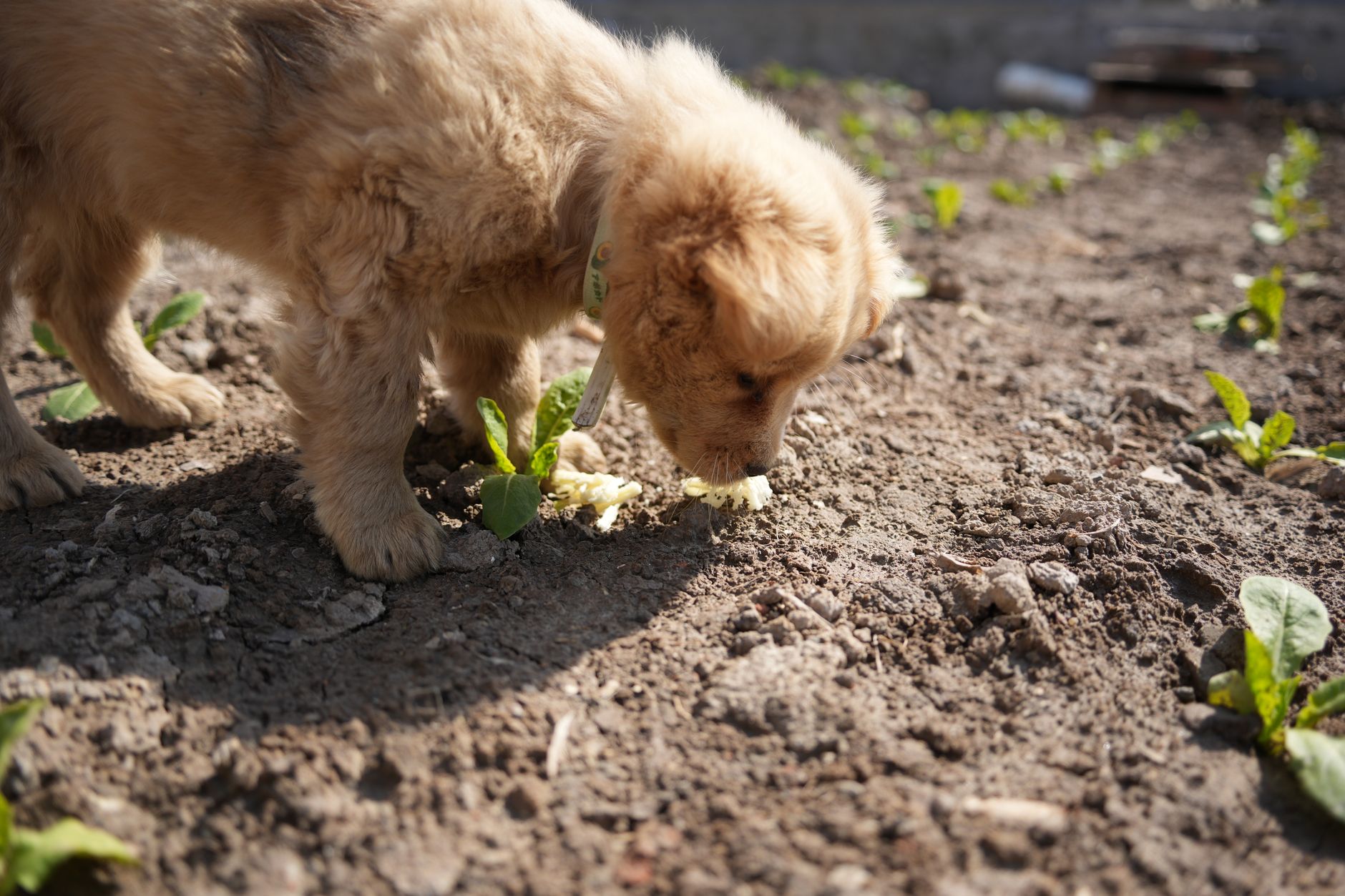
You've come home to a gap in the fence, a neighbour's text, or a dog sitting smugly on the wrong side of the gate — and you're done. The urge to escape is deeply wired into most dogs, so if your yard keeps failing, it doesn't mean you've raised a bad dog or that you're a bad owner. It means the setup hasn't caught up with your dog's particular brand of determination yet. Here's how to fix that.
The Quick Win You Can Do Before Dinner Tonight
If your dog is getting out through the gate, grab a carabiner clip (a few dollars at any hardware store) and thread it through both the latch handle and the gate frame. It won't fix every problem, but it stops the most common escape — a dog who has learned to nose or paw the latch open. That buys you time to work through the rest.
Why Dogs Actually Escape
Understanding the motivation cuts your problem-solving time in half. Most escapes fall into one of four categories:
- Boredom and under-stimulation — a dog with too much energy and nothing to do will work the perimeter like a puzzle until something gives.
- Prey drive — a cat, possum, or bike rider goes past and the dog is over the fence before their brain catches up.
- Separation anxiety — the dog is trying to find you, not trying to have an adventure.
- Reproductive drive — entire dogs, particularly males, will travel kilometres for a mate in season.
The fix for anxiety is different from the fix for prey drive, so it's worth watching when and how your dog escapes before you spend money on hardware.
Fence Height by Jumper Type
There's no single height that suits every dog. Use this as a guide:
| Dog Type | Minimum Fence Height |
|---|---|
| Small breeds (under 10 kg) | 1.2 m |
| Medium breeds, low prey drive | 1.5 m |
| Medium–large breeds, athletic | 1.8 m |
| Large dogs with high prey drive (e.g. Kelpie, Malinois, Husky) | 2.0 m+ |
| Confirmed jumpers of any size | Coyote roller or angled topper |
A dog that clears a 1.8 m fence from a standing position is rare, but they exist. More often, dogs are climbing rather than jumping — using fence rails, a nearby trampoline, a wheelie bin, or a garden bed as a launch pad. Walk your fence line and remove anything within about a metre of it that could act as a step up.
Coyote rollers (spinning PVC pipes mounted along the top of the fence) are legal, effective, and increasingly available from Australian suppliers for around $30–$60 per metre. They work by giving the dog nothing solid to grip when they attempt to haul themselves over.
Angled fence toppers — a bracket that angles inward at 45 degrees — do a similar job. Both can often be retrofitted onto an existing fence without replacing it entirely.
Stopping Diggers at the Fence Line
Diggers are arguably harder to stop than jumpers because the work happens quietly and over time. These are the methods that hold up in practice:
Dig guard / L-footer: Bury a length of welded wire mesh or chain mesh horizontally along the base of the fence, extending inward about 60 cm underground and 30 cm flat along the ground surface beneath the turf. When the dog starts digging, they hit mesh immediately. This is the most durable solution.
Concrete footings: Pouring a 20–30 cm wide concrete strip along the inside base of the fence stops digging permanently. It's not cheap — expect $80–$150 per linear metre if you hire someone — but it's a one-time fix.
Large rocks or pavers: Placing flat pavers or heavy rocks flush against the inside fence line is a free or low-cost option that works well for moderate diggers. Determined dogs will eventually shift them, so monitor and rearrange as needed.
Trench and fill with gravel: A 30 cm deep trench filled with chunky gravel along the fence line is uncomfortable to dig through and deters most casual diggers. Less effective for dogs with serious motivation.
Address the reason for digging too. Dogs often dig along fence lines because they can smell or hear something on the other side. A visual barrier — shade cloth, reed fencing, or a solid-panel bottom section — reduces the stimulus.
Gate Security Beyond the Basic Latch
Gates are the most common failure point because they get used daily and latches wear out. A proper escape proof yard needs gate security at two levels:
Primary latch: A gravity latch or key-lockable deadbolt is significantly more secure than a standard spring latch. Gravity latches self-close and require a deliberate lift to open — a dog cannot nose this open. Available at Bunnings for around $15–$30.
Secondary backup: The carabiner trick mentioned earlier, or a padlock, or a simple gate chain. If you have visitors or tradespeople who may forget to close the gate properly, a self-closing hinge mechanism ($25–$45) is worth every cent.
Check that your gate actually sits flush in the frame. A gate that rattles or has a gap at the bottom is an invitation — reinforce gaps with a horizontal timber rail or kick plate.
Renter-Friendly Fixes That Don't Require Landlord Approval
Renters often feel stuck, but there are genuinely effective options that leave no permanent mark:
- Free-standing exercise pen panels (available from pet stores from around $80–$180 for a full set) can create a secondary inner barrier near a problem fence section.
- Temporary welded wire panels secured with cable ties to existing fence posts. Remove when you leave.
- Shade cloth or reed screening zip-tied to chain-link fence removes the visual trigger for dogs who react to movement outside.
- Dog-proof door and gate latches that replace existing fittings and can be uninstalled — most landlords won't object if you restore the original hardware on vacating.
- Tether systems with a long lead and anchor stake in a safe, shaded area when you can't supervise — not a permanent solution, but useful while you save up for a bigger fix.
If your dog is escaping due to separation anxiety, no fence is ultimately the solution — that's a training and behavioural management issue. A vet or accredited behaviourist (look for a member of the Australian Veterinary Association or the Pet Professional Guild Australia) can help you build a proper anxiety plan. Likewise, desexing an entire dog who is escaping for reproductive reasons is the single most effective intervention, often cutting the behaviour out entirely.
Frequently asked questions
What is the best fence height to stop a dog from jumping?
It depends on your dog's size and athleticism. Most medium to large dogs are contained by a 1.8 m fence, but high-energy breeds like Kelpies, Huskies, and Belgian Malinois may need 2.0 m or more. Adding a coyote roller or inward-angled topper to an existing fence is often more effective than simply adding height, since most dogs are climbing rather than truly jumping.
My dog keeps digging under the fence — what actually works?
The most reliable fix is an L-shaped dig guard: welded wire mesh buried about 60 cm down and extending 30 cm inward along the base of the fence. For a lower-cost option, lay flat pavers flush against the fence line inside the yard. Removing the visual or scent trigger — such as adding shade cloth to block the dog's view through the fence — also reduces the motivation to dig in the first place.
How do I stop my dog from opening the gate latch?
Replace spring latches with a gravity latch or key-lockable deadbolt, which require a deliberate upward or rotational movement that dogs cannot replicate. As an immediate fix, loop a carabiner clip through the latch handle and the gate frame — it costs a few dollars at a hardware store and takes thirty seconds to install.
Are there escape-proofing options for renters who can't modify the fence?
Yes. Free-standing exercise pen panels can create an inner barrier near a problem fence section with no permanent changes. Welded wire panels can be cable-tied to existing posts and removed when you leave. Shade cloth zip-tied to chain-link fencing reduces visual triggers, and dog-proof latch replacements can be uninstalled and original hardware restored at the end of a tenancy.
Why does my dog only try to escape when I leave the house?
This is a classic sign of separation anxiety — your dog is attempting to follow or find you rather than seeking an adventure. Better fencing will slow them down, but it won't address the underlying distress. Speak with your vet or a qualified animal behaviourist, as separation anxiety responds well to a structured desensitisation programme.
Will desexing stop my dog from escaping?
If the escape behaviour is driven by reproductive instinct — common in entire males who can detect a female in season from a considerable distance — desexing is highly effective and often eliminates the behaviour entirely. If the dog is escaping for other reasons such as boredom or anxiety, desexing alone won't solve it, and you'll need to address those motivations separately.
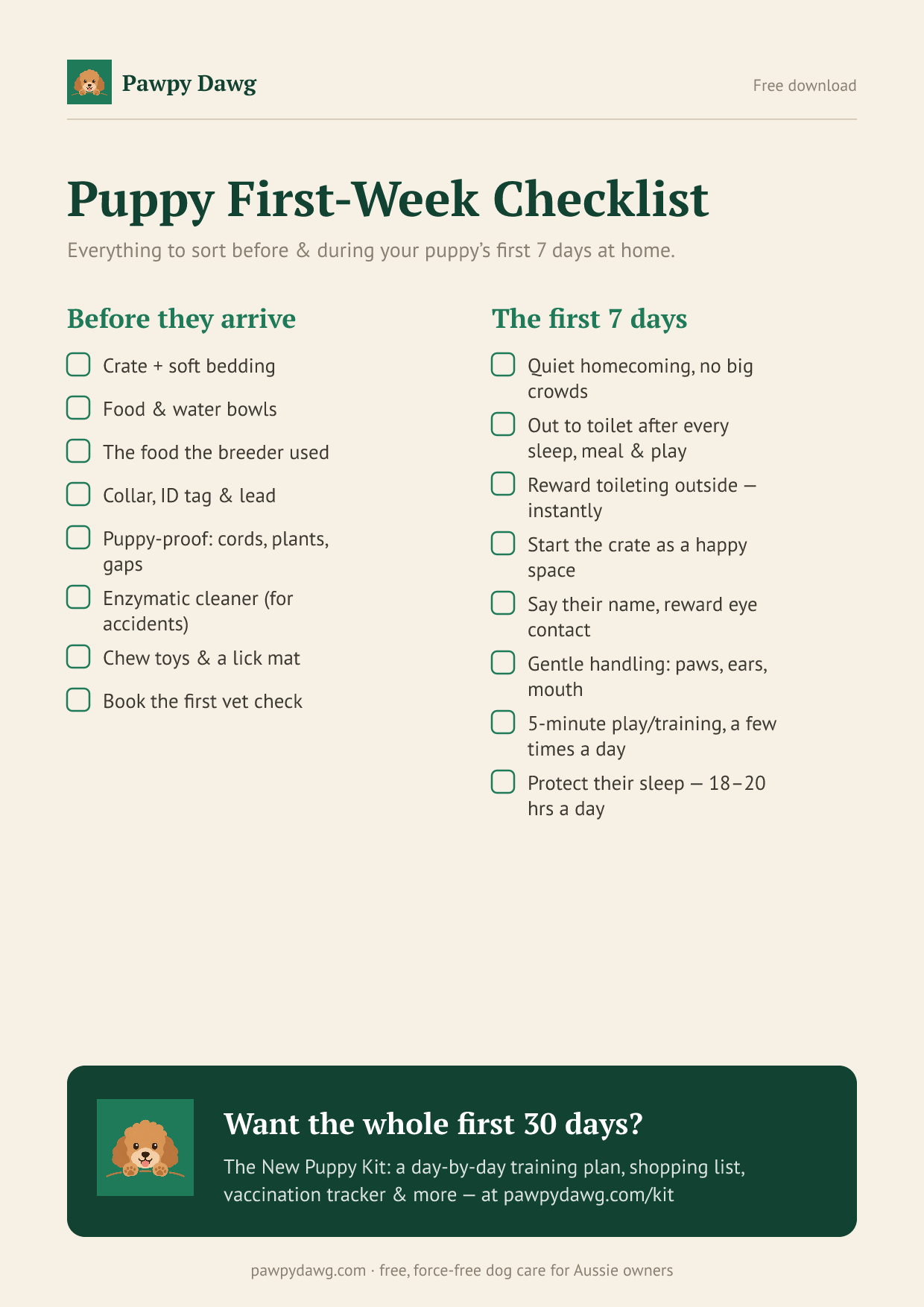
Free printable
Free: the Puppy First-Week Checklist
Everything to sort before and during your puppy's first 7 days home — a printable one-pager. Plus the occasional genuinely useful dog tip. No spam, unsubscribe anytime.
Related guides

Is Pet Insurance Worth It in Australia? The Honest Maths
Is pet insurance worth it in Australia? We crunch real premiums vs real vet bills — cruciate surgery, snake bite & more — so you can decide with confidence.
Read the guide →
How Much a Dog Really Costs Per Year in Australia (2026 Breakdown)
How much does a dog cost per year in Australia? 2026 line-item breakdown covering food, vet, insurance, grooming & the costs first-timers always miss.
Read the guide →
Dog Vaccination Schedule in Australia: What, When and What It Costs
Confused by C3, C5 and kennel cough? Here's your complete dog vaccination schedule Australia cost guide — puppy timelines, adult boosters & typical AUD prices.
Read the guide →