
Keeping Dogs Cool in Australian Summer: Mats, Shade and Gear That Work
Practical, vet-aligned tips to keep dog cool summer Australia — cooling mats, shade setups, vests and water gear that actually work in dry and humid heat.

Written by Bradley Brown
Founder & editor · Reviewed 2026-11-08
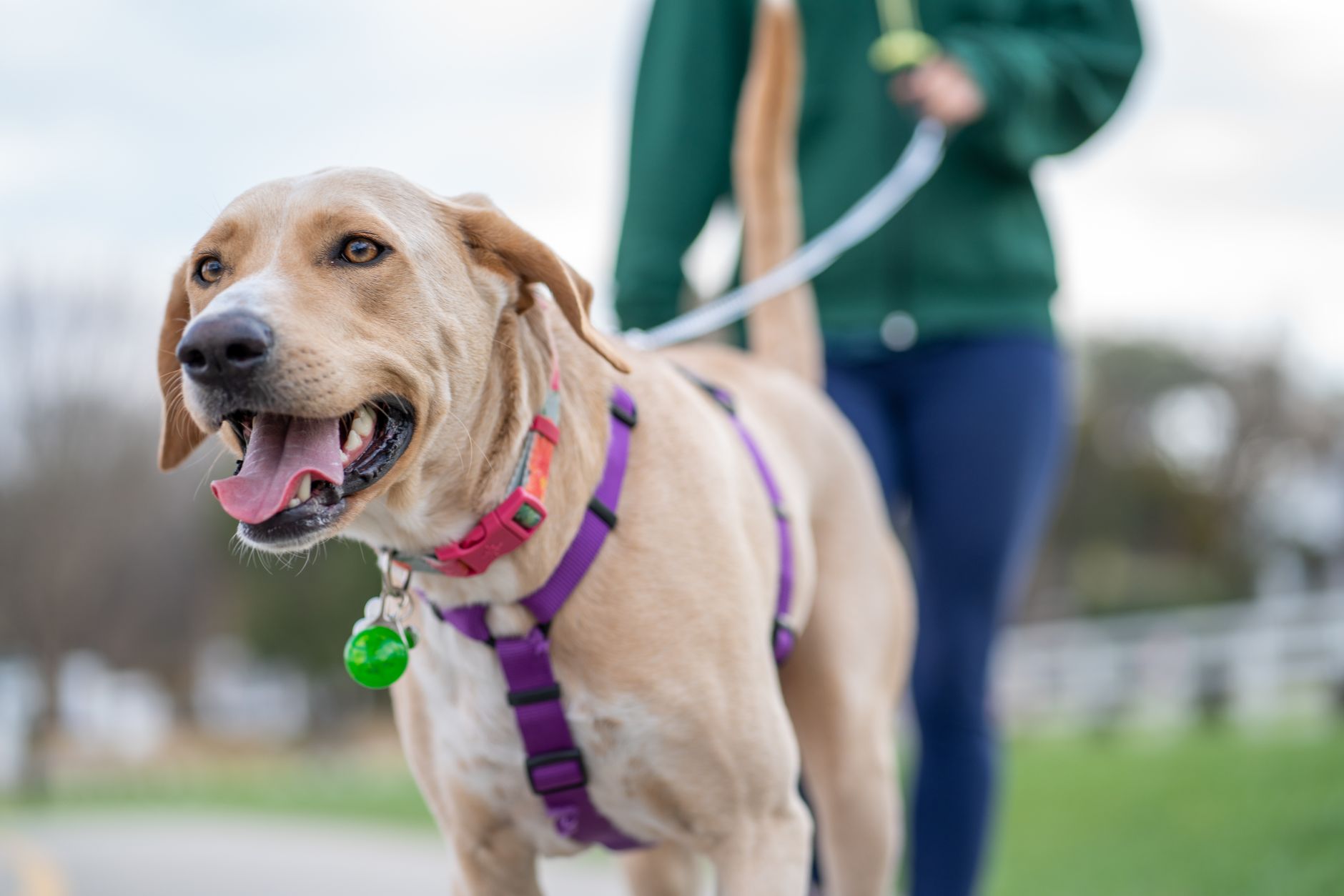
Australian summers don't ease in gently — they arrive fast, and dogs feel every degree of it. Here's what actually works to keep your dog comfortable and safe, whether you're home with them or not.
Which cooling mat is worth buying, and do they actually work?
Cooling mats do work, but not all of them work the same way, and the differences matter depending on where you live.
Gel-filled self-cooling mats are the most common type. They use a pressure-activated gel that absorbs body heat and re-cools passively over time. These are genuinely useful in dry climates — Canberra, Perth's inland suburbs, regional NSW — where the mat can discharge heat into cooler ambient air. In humid coastal conditions (Brisbane, Darwin, coastal Queensland), they still provide some relief but re-cool more slowly because the surrounding air temperature is high and there's nowhere for the absorbed heat to go efficiently.
Water-filled mats work by conduction — the cooler water draws heat from your dog's body. These tend to outperform gel mats in humidity because you can refresh the water. Some owners store a water-filled mat in a cool room or near an air conditioner between uses, which resets it fast.
Elevated mesh beds (sometimes called cot beds) are underrated. They let air circulate under the dog's belly — a key area for heat exchange — and they don't absorb and trap warmth the way a foam or memory-foam bed does. For dogs left outside in shade, a raised mesh bed often works better than any cooling mat because it's passive, requires no recharging, and allows airflow from all directions.
What doesn't work well: putting a gel mat in full sun and expecting it to stay cool — it won't. Any mat needs to be in a shaded, ventilated space to function. For indoor use, cooling mats near (not directly under) a fan are noticeably more effective.
Rough price range: gel mats run $30–$90 AUD depending on size, water mats $40–$110 AUD, and quality elevated cot beds $50–$150 AUD. The cot bed is usually the best value because it lasts for years with zero ongoing effort.
How much shade is enough, and how do I set it up properly?
The standard advice — "make sure your dog has shade" — doesn't go far enough. The shade needs to follow the sun, stay ventilated, and not trap radiated heat.
Fixed structures like fences and solid walls create shade, but they also absorb heat all morning and radiate it back for hours into the afternoon. A dog pressed against a brick wall at 3 pm is gaining heat, not losing it. The most effective shade options are:
- Shade sails positioned to track the arc of the sun across your yard. A single shade sail that covers the morning area may leave a dog unprotected by early afternoon. Ideally, overlap two smaller sails to maintain shaded ground from mid-morning through late afternoon.
- Purpose-made dog shade tents or kennel shade covers with ventilated mesh sides. These allow airflow while blocking direct solar radiation — solid-sided kennels in summer can become ovens, especially if they're dark-coloured.
- Dense tree canopy is genuinely one of the best options because it also cools the air beneath it through transpiration. If you have a mature tree, that's your best shade asset.
The ground surface matters too. Concrete and paving stone absorb and radiate heat — if you can't hold your bare hand on the surface for seven seconds, it's too hot for your dog's paws and belly. Where possible, position the shaded area over grass, bark chips, or pavers that have been in shade long enough to cool down.
Minimum shaded area: enough that your dog can lie flat, fully stretched, without any part of them catching direct sun. For large breeds, that's roughly 2 × 1.5 metres of usable cool ground.
Do cooling vests actually help, or are they just expensive accessories?
Cooling vests help in specific situations and can be counterproductive in others — it depends on the mechanism and the conditions.
Evaporative cooling vests work by the same principle as sweating: water evaporates from the vest fabric and draws heat from the body. These are effective when the air is dry and there's some airflow — moving, exercising dogs outdoors in low-humidity conditions, or dogs near a fan. In high humidity, evaporation slows dramatically and the vest mostly keeps the dog damp and uncomfortable. If you're in Darwin or coastal Queensland in January, an evaporative vest is likely not your friend.
Phase-change vests contain inserts that melt at a fixed temperature (usually around 16–18°C), absorbing a large amount of heat in the process. These are more expensive ($80–$200 AUD) but more effective in humid conditions because they don't rely on evaporation — they're drawing heat directly. The insert needs to be re-frozen between uses, which limits them to shorter outings.
Both types are most useful during activity — a walk in the early morning, a trip to the vet — rather than for a dog sitting still at home. For a dog spending the day indoors or in a shaded yard, a wet towel draped loosely over the back and shoulders achieves much the same result as an evaporative vest at zero cost.
What's the safest way to set up water for a dog left home alone on a hot day?
The main failure points are: a single bowl that gets knocked over, water that heats up in the sun, or insufficient volume for a dog that pants heavily all day.
A few simple fixes cover most of these risks:
- Use at least two water sources in different locations. If one tips, the dog still has access.
- A large, heavy ceramic or stainless-steel bowl stays cooler longer than plastic, and is harder to knock over than a lightweight dish. Litre-volume matters — small dogs need at least 500 ml available; large dogs should have 2+ litres accessible throughout the day.
- Freeze a block of ice in a large container the night before and add it to the water bowl in the morning. It won't stay frozen all day, but it significantly delays water temperature from climbing in the first few hours — often the most dangerous window.
- Automatic water dispensers with a reservoir are worth the $25–$60 AUD investment if you're regularly away for 6–8 hours. Look for stainless-steel contact surfaces rather than all-plastic models.
- Keep water sources in shade. A bowl in direct afternoon sun can reach temperatures a dog simply won't drink from, leaving them without hydration at the worst time of day.
Adding a small paddling pool in the shade is a genuine option for dogs who'll use one. Some dogs wade willingly; others ignore it entirely. If your dog is a wader, a hard-sided plastic pool ($30–$60 AUD from a hardware or discount store) filled to ankle depth gives them a self-managed cooling tool that requires almost no effort from you.
How do I know if my dog is getting too hot, and when does it become an emergency?
Dogs don't sweat through their skin the way humans do — they cool primarily through panting and, to a minor extent, through paw pads. This makes them far less efficient at heat dissipation, and means they can tip into heatstroke faster than owners expect.
Early signs to watch for: heavy, laboured panting that seems disproportionate to activity; drooling more than usual; seeking cool surfaces (tiles, shade) urgently; restlessness or reluctance to move.
Heatstroke signs — which require immediate veterinary attention — include: glazed or unfocused eyes, gums that are bright red, pale, or grey, vomiting, stumbling or collapse, and seizures. These can develop within minutes once a dog's core temperature climbs above 41°C.
If you suspect heatstroke: move the dog to a cool area immediately, apply cool (not iced) water to the paw pads, groin, and neck, and get to a vet without delay. Do not use ice-cold water — it can cause blood vessels to constrict and trap heat in the core.
Flat-faced breeds (French Bulldogs, Pugs, British Bulldogs), heavily coated breeds, senior dogs, puppies, and overweight dogs are all at higher risk and need closer monitoring in any conditions where you'd struggle to keep dog cool in Australian summer heat.
Can I leave a fan running all day, and is it enough without air conditioning?
A fan alone provides meaningful relief in dry heat — moving air accelerates evaporation from the respiratory tract and skin, which helps dogs cool down. In dry conditions, a floor or pedestal fan pointed toward a shaded rest area makes a real difference.
In high humidity, a fan moves warm, moisture-laden air around and provides less benefit. It's still better than nothing, but it won't substitute for air conditioning on a Darwin or Brisbane summer afternoon.
If you can't leave air conditioning running all day, designate the coolest room in the house — typically one that doesn't receive direct afternoon sun — and confine your dog there with a fan, fresh water, and a cooling mat or wet towel. Closing blinds or curtains on sun-facing windows can drop room temperature by several degrees without costing anything.
Leaving an air conditioner on for a dog while you're at work is a reasonable choice in extreme heat. If cost is a concern, a setpoint of 26–27°C keeps a healthy adult dog safe and costs significantly less than running the system at a human-comfortable 22°C.
Frequently asked questions
What temperature is too hot for a dog to be outside in Australia?
As a general guide, once air temperature exceeds 32°C, most dogs should have very limited outdoor exposure and constant access to shade and water. At 35°C and above — common in many Australian cities in summer — time outside should be minimal and closely supervised, particularly for flat-faced breeds, older dogs, and overweight dogs. Humidity amplifies the risk considerably, so a 30°C humid day can be more dangerous than a dry 34°C day.
Are cooling mats safe to leave with a dog unsupervised?
Most gel and water-filled cooling mats are safe for unsupervised use, but check for chew-resistance if your dog is a chewer — ruptured gel mats can expose dogs to the filling, which can cause gastrointestinal upset. Elevated mesh cot beds are the safest unsupervised option as there's nothing to puncture or ingest.
How often should I change my dog's water on a hot day?
Ideally, refresh water at least twice on a very hot day — once in the morning and once at midday if possible. If you're away all day, using two or more large bowls and adding ice blocks in the morning significantly reduces the risk of your dog being left with warm, unappetising water by afternoon.
Should I wet my dog's coat to cool them down?
Yes, wetting the coat is effective, particularly if there's airflow to aid evaporation. Focus on the paw pads, inner thighs, and neck where blood vessels are close to the surface. Use cool rather than cold water — very cold water can cause surface vessel constriction, which is counterproductive. Avoid soaking thick double coats and leaving the dog in a closed, still room, as trapped moisture without airflow slows cooling.
Is it safe to walk my dog in Australian summer heat?
Walk before 8 am or after 7 pm during summer to avoid peak heat. Always check the pavement with your hand — if it's too hot to hold your palm on it for seven seconds, it's too hot for your dog's paws. Carry water for any walk over 15 minutes, and cut walks short if your dog is panting heavily or slowing down.
Do certain dog breeds struggle more in Australian heat?
Yes. Brachycephalic (flat-faced) breeds like French Bulldogs, Pugs, and British Bulldogs are at significantly higher risk because their restricted airways make panting less efficient. Double-coated Nordic breeds (Huskies, Malamutes), very large breeds, senior dogs, puppies, and overweight dogs also need extra care. These dogs may need air conditioning rather than passive cooling methods alone on extreme heat days.
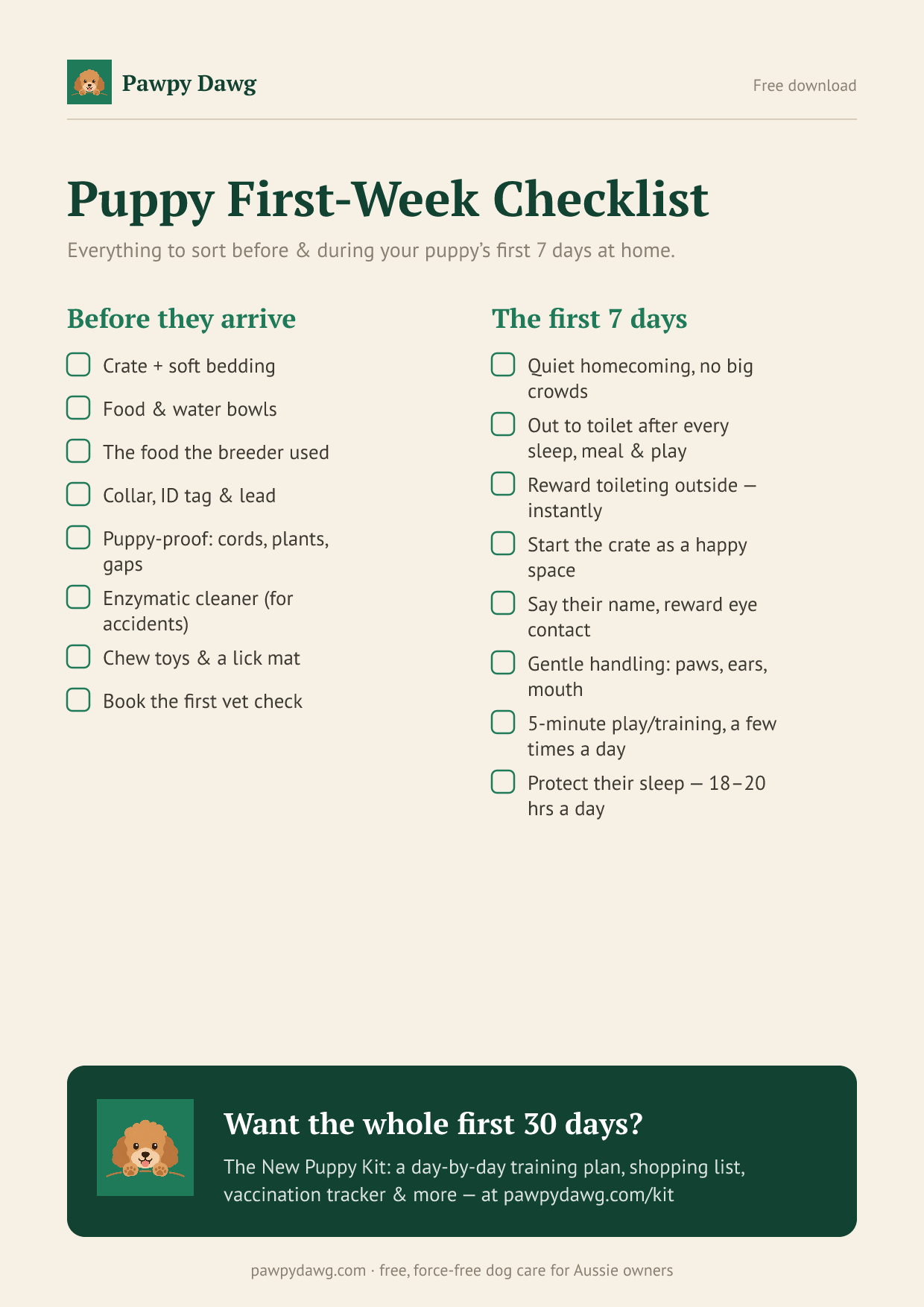
Free printable
Free: the Puppy First-Week Checklist
Everything to sort before and during your puppy's first 7 days home — a printable one-pager. Plus the occasional genuinely useful dog tip. No spam, unsubscribe anytime.
Related guides

Is Pet Insurance Worth It in Australia? The Honest Maths
Is pet insurance worth it in Australia? We crunch real premiums vs real vet bills — cruciate surgery, snake bite & more — so you can decide with confidence.
Read the guide →
How Much a Dog Really Costs Per Year in Australia (2026 Breakdown)
How much does a dog cost per year in Australia? 2026 line-item breakdown covering food, vet, insurance, grooming & the costs first-timers always miss.
Read the guide →
Dog Vaccination Schedule in Australia: What, When and What It Costs
Confused by C3, C5 and kennel cough? Here's your complete dog vaccination schedule Australia cost guide — puppy timelines, adult boosters & typical AUD prices.
Read the guide →